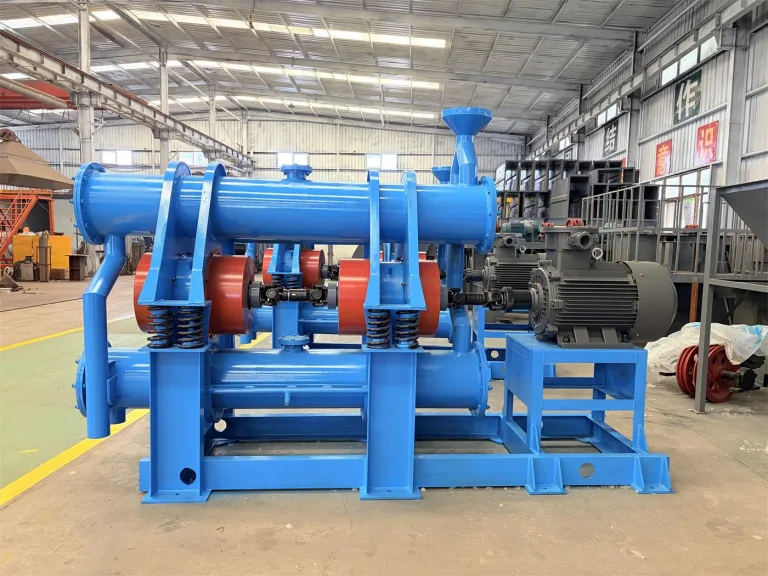
Mineral fillers, ceramic raw materials, and inorganic chemical powders often require grinding to a few microns. Achieving the right vibration mill particle size also requires controlling coarse particles and maintaining production output.
This article explains the particle size range of vibrating mills, how to interpret mesh and micron specifications, and which operating conditions affect grinding results. It also covers grinding time and practical testing methods to verify target fineness and production output.
What Is a Vibration Mill?
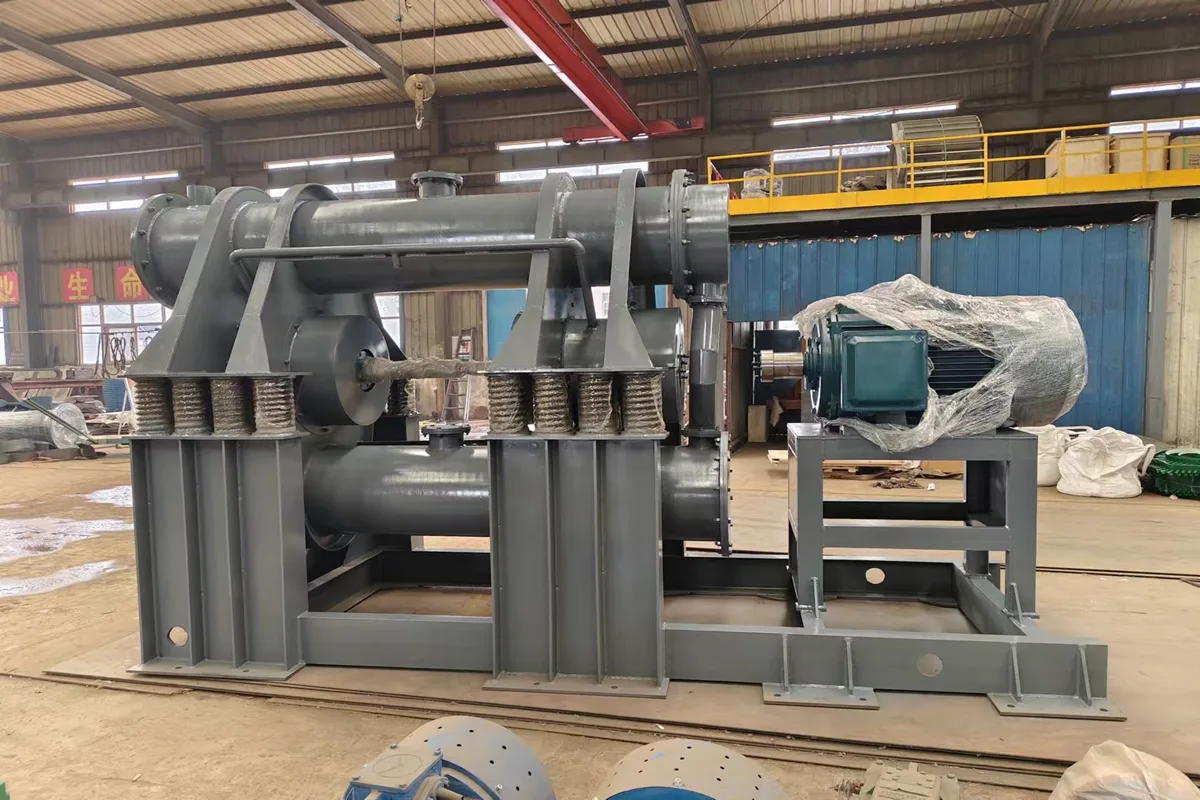
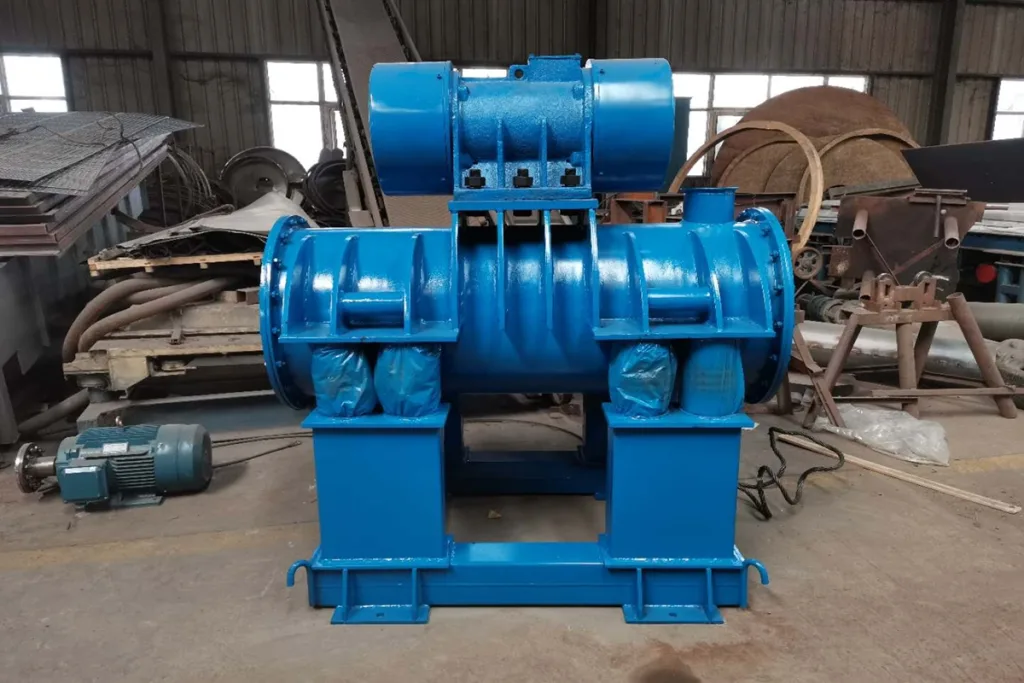
A vibration mill is a fine-grinding machine that uses rapid chamber vibration to drive grinding media against the material. Repeated impact and friction break particles into smaller sizes. Common applications include quartz and other mineral fillers, ceramic raw materials, and inorganic oxides.
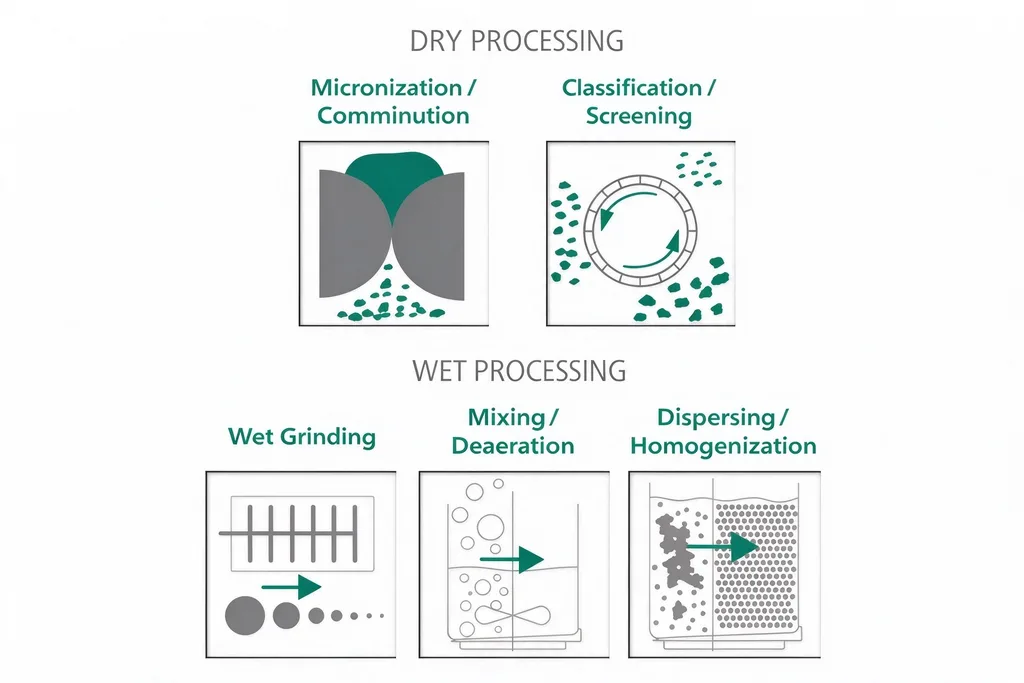
The material can be processed as dry powder or slurry. As grinding progresses, the media must break increasingly small particles. Media size, material behavior, and the time available for grinding determine how far this size reduction can continue.
How Fine Can a Vibration Mill Grind?

A vibrating mill can grind materials to several tens of microns. With suitable materials and operating conditions, it can also achieve single-digit micron or even submicron particle sizes. Common applications include fine grinding of mineral fillers and ultra-fine grinding of ceramic raw materials and inorganic oxides.
For target particle sizes of several tens of microns, the main priorities are controlling coarse particle content and maintaining the required production rate. When the target size drops to just a few microns, grinding media size and grinding time become more important. If too many coarse particles remain in the product, consider extending the grinding time or using a closed-circuit grinding process with classification and material return. Oversized particles are separated and fed back into the mill for further grinding.
For ultra-fine powders below 1 μm, particle dispersion and agglomeration must also be considered alongside grinding performance. Fine particles tend to form agglomerates, which can limit further size reduction and affect particle size measurements. For materials suitable for wet processing, wet grinding can improve particle dispersion. Testing is needed to confirm the final particle size and processing capacity.
When evaluating grinding results, the particle size distribution requirements must also be clearly defined. For micron and submicron powders, D50, D90, and D97 are commonly used to describe particle size and the coarse particle distribution, rather than relying only on mesh size.
D50, D90, and D97: Which Values Matter?
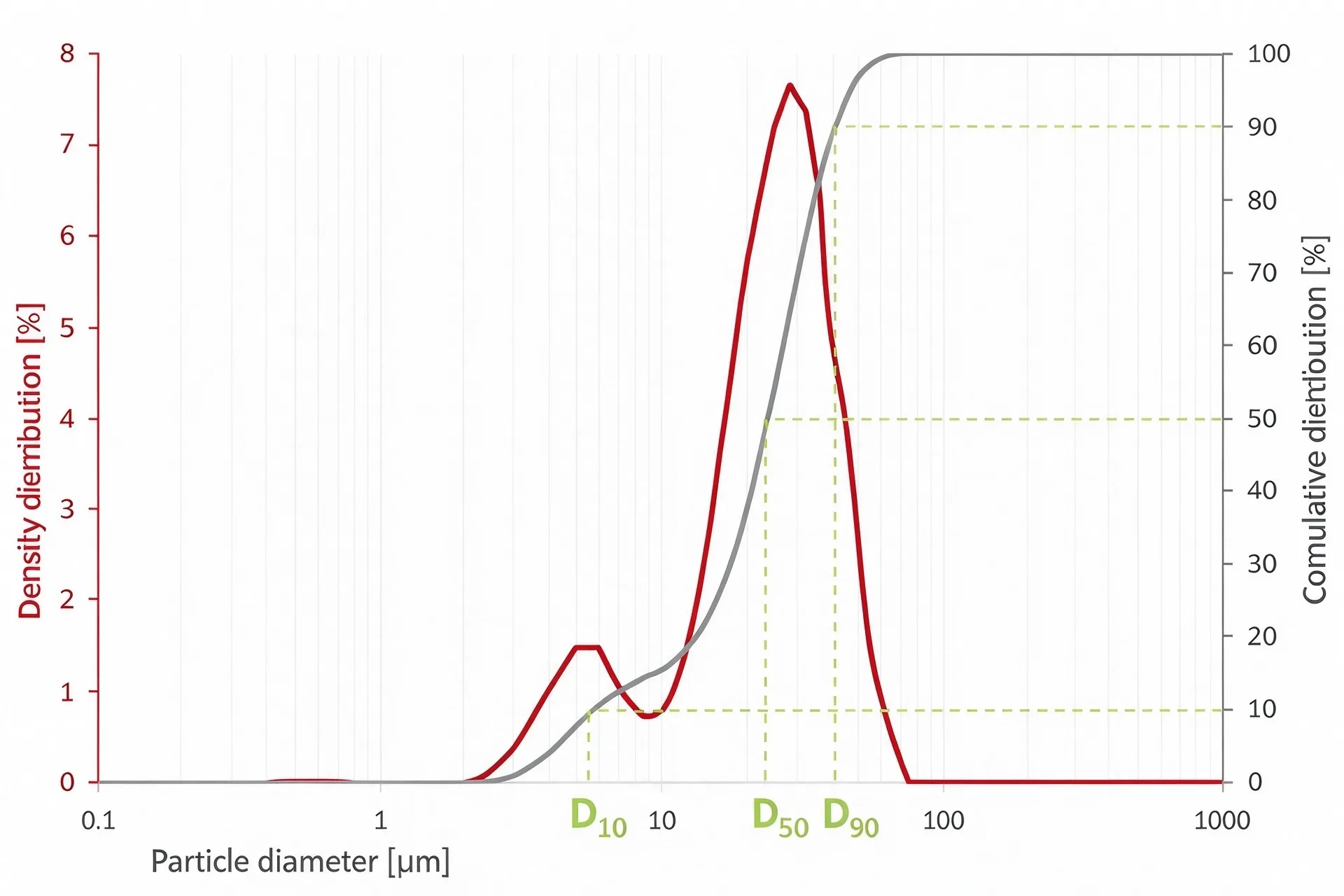
In a volume-based laser particle-size report, D50 is the median size: 50% of the measured particle volume lies below that diameter. D90 and D97 describe the sizes below which 90% and 97% of the volume fall. D50 describes the central part of the distribution; D90 or D97 helps assess the coarse fraction.
Consider the following particle size comparison. Two powders both have a D50 of 5 μm, but their D90 values are 12 μm and 30 μm, respectively. Although their median particle sizes are the same, the second powder has a coarser upper particle size distribution. For fillers or ceramic raw materials with strict coarse particle limits, this difference may determine whether the powder meets the required grade.
Define both the median particle size and the coarse particle limit, as both affect product performance. D50 is not the arithmetic mean particle size, and D90 does not represent the largest particle present. If oversized particles can cause defects in downstream processes, include a specific coarse particle residue limit in the product requirements.
What Affects Vibration Mill Particle Size?
Once the target particle size is defined, grinding conditions can be adjusted to achieve it. Feed size, material properties, grinding media, vibration settings, and powder flow all influence grinding efficiency and the time required to reach the target.
Feed Size and Material Grindability
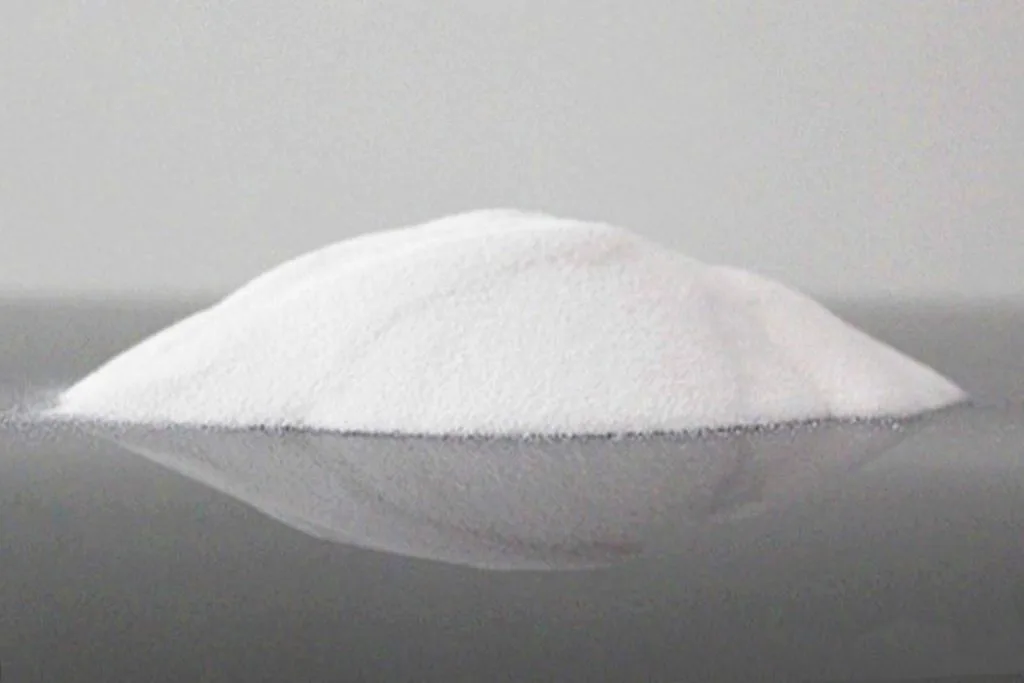
Large feed particles require more time and energy for initial breakage. Pre-crushing can reduce the grinding load and create a more consistent feed. Material properties also matter: brittle minerals break readily under impact, while sticky or ductile materials may coat the media or deform instead of breaking. These characteristics should be considered before adjusting grinding time.

Grinding Media Size and Loading
Larger media produce stronger impacts for breaking coarse particles, while smaller media provide more contact points for fine grinding. If coarse particles remain, check whether the media are large enough to break them. For further fine grinding, smaller media or a suitable combination of sizes may help. The media charge and material load should also be balanced to maintain effective movement and contact.
Vibration Settings and Feed Rate
Vibration amplitude and frequency affect media movement and energy transfer. Adjust these settings within the equipment’s operating range and monitor particle size and temperature. In continuous grinding, a lower feed rate increases material residence time but reduces throughput. If finer grinding requires a lower feed rate, additional grinding capacity may be needed to maintain the planned output.
Wet or Dry Grinding, Temperature, and Agglomeration
During dry fine grinding, powder may stick to the media or form agglomerates, reducing effective grinding contact. Wet grinding with a compatible liquid or dispersant can improve particle dispersion when slurry processing is suitable. Temperature also matters: heat-sensitive materials may require cooling, while excessive heat can increase coating and buildup. If particle size stops decreasing, check agglomeration, media coating, and cooling before extending the grinding cycle.
How Does Grinding Time Affect Fineness and Efficiency?
Grinding time varies with the material, feed size, and target particle size. The following batch-grinding records show two examples:
| Material | Feed size | Media and process | Grinding time | Product result |
|---|---|---|---|---|
| Manganese dioxide | D50 = 22 μm | Alumina media, dry grinding | 20 min | D50 = 8 μm |
| Alumina | 40 μm | Alumina media, dry grinding | 5 h | 92% below 5 μm |
The results show that different materials and fineness requirements need different grinding times. A fixed grinding cycle cannot be applied to every powder.
As grinding continues, particle size reduction may slow because fine particles become harder to grind and agglomeration or media coating can reduce grinding efficiency. Sampling at intervals helps identify when the target particle size is reached.
The best grinding time is the shortest cycle that consistently meets the product specification. Grinding efficiency should also be evaluated by the amount of qualified powder produced, not grinding time alone.
How Can You Verify the Target Fineness?
A useful trial should answer two questions: does the powder meet its particle-size specification, and can the process produce enough of it? Define the acceptance requirement first, track how the powder changes, and then confirm output under the selected conditions.
Define the Product Acceptance Criteria
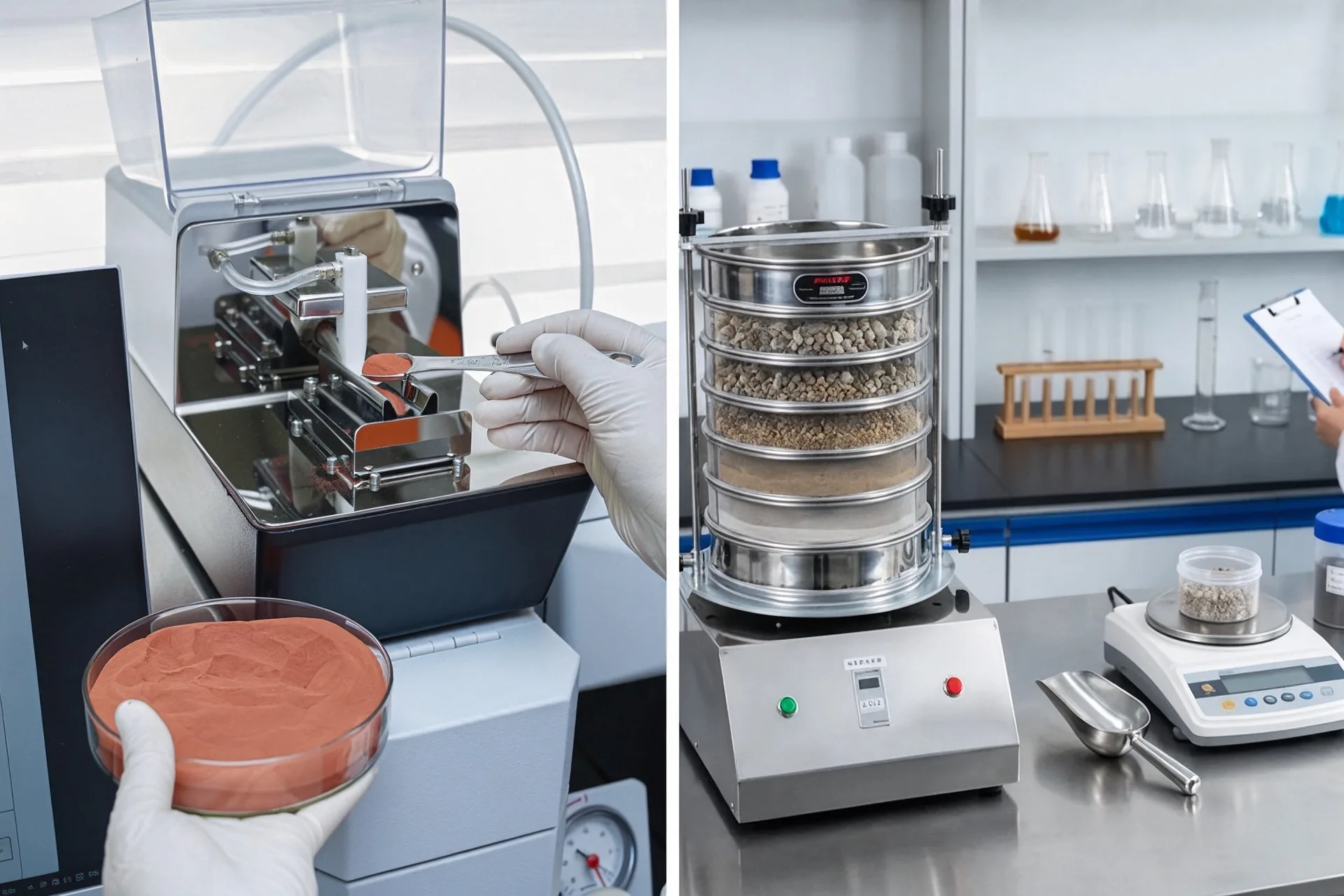
Set the required D50 and any necessary D90, D97, or sieve-residue limit, together with finished-product output. For a wet-ground product that will be sold as dry powder, assess the dried product as well as the slurry. This ensures the trial measures the powder grade that the customer or next process will actually receive.
Sample at Planned Grinding Intervals
Use representative feed and keep the media, loading, and operating settings consistent while taking samples at planned intervals. Measure them using the same preparation and dispersion procedure. If a result changes substantially after dispersion, investigate agglomeration before attributing the change to additional grinding. The trial should identify when the required distribution is reached and what limits further improvement.
Confirm Output at the Required Fineness
For batch production, include loading, grinding, discharge, and necessary cleaning in the cycle time. For continuous production, measure finished-product output during stable operation. Record particle size, operating time or feed rate, product temperature, and the grinding configuration together. Use the setting that meets both fineness and production demand, then confirm that the result is repeatable.
For guidance on matching the grinding duty with equipment and supporting systems, see How to Choose a Vibratory Grinding Mill for Industrial Powder Processing.
Conclusion
A vibration mill can produce micron-scale powders, with submicron grinding possible for suitable materials and configurations. The production question is how long the specified powder grade takes to make and how much finished product the process delivers. Clear size limits and timed trials connect vibration mill particle size specifications with an achievable operating point.
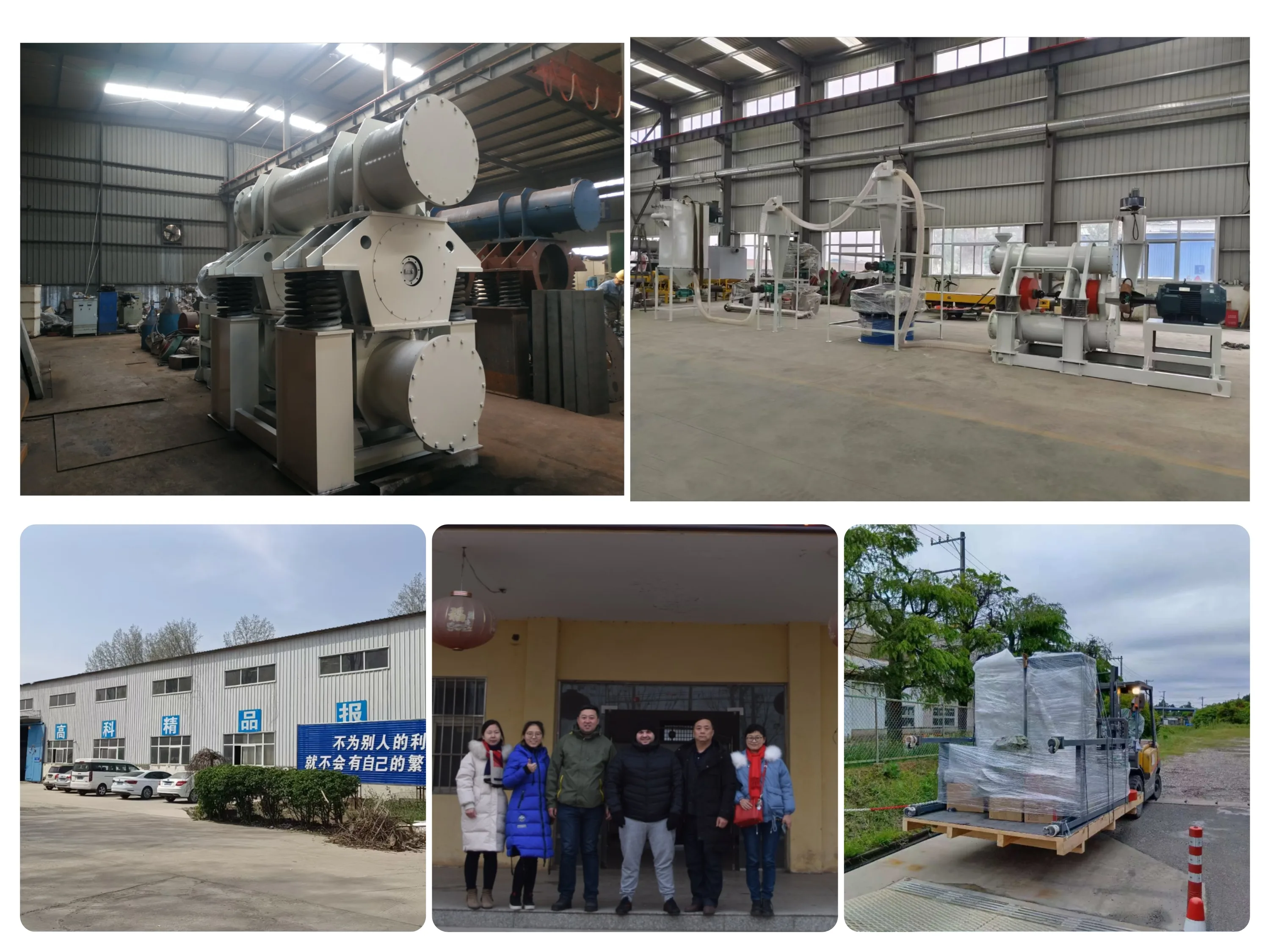
GUOFENG offers industrial vibration mills. Share your material, feed size, target particle-size specification, and required output to discuss a suitable grinding configuration.
FAQ
Can a vibration mill grind below 1 μm?
Yes, certain vibration mills can achieve submicron results with suitable materials and grinding conditions. Media selection, dispersion, liquid compatibility, and temperature control become important at this scale. Establish the particle-size distribution and output together in a material trial before specifying a production system.
Is 2,000 mesh the same as 2–3 μm?
No. “2,000 mesh” is not a direct equivalent of 2–3 μm under the standard sieve designations shown above. For ultrafine powder, request the particle-size distribution in microns, including the relevant median and coarse-end limits, instead of using a commercial mesh label as the acceptance criterion.
Does a D50 of 5 μm mean all particles are below 5 μm?
No. In a volume-based report, it means half the measured particle volume lies below 5 μm. The powder still contains a coarser fraction. Use D90, D97, or an appropriate coarse-residue limit when larger particles affect product quality or downstream processing.
Why does particle size stop decreasing during grinding?
The media may be poorly matched to the remaining particles, or fine powder may coat the media and form agglomerates. Check media size, material loading, powder flow, and temperature. Where compatible with the product, assess wet grinding or dispersion before adding more grinding time.
Will reducing the feed rate produce a finer powder?
It can, if the lower feed rate increases effective grinding time and the material continues to break. It also reduces hourly output. If the powder reaches specification only below the required production rate, evaluate additional grinding capacity or changes to the grinding and classification arrangement.
Why can particle size increase after drying?
Fine particles can form agglomerates as liquid is removed. These clusters may appear as larger particles during subsequent measurement or cause problems in downstream mixing. Check the drying conditions and how readily the powder disperses, and verify fineness in the final delivered product form.
Need help with a similar request?
Share your product requirements, timeline and cooperation goals. We can help clarify the next step.