




What Is a Horizontal Double Helix Mixer?
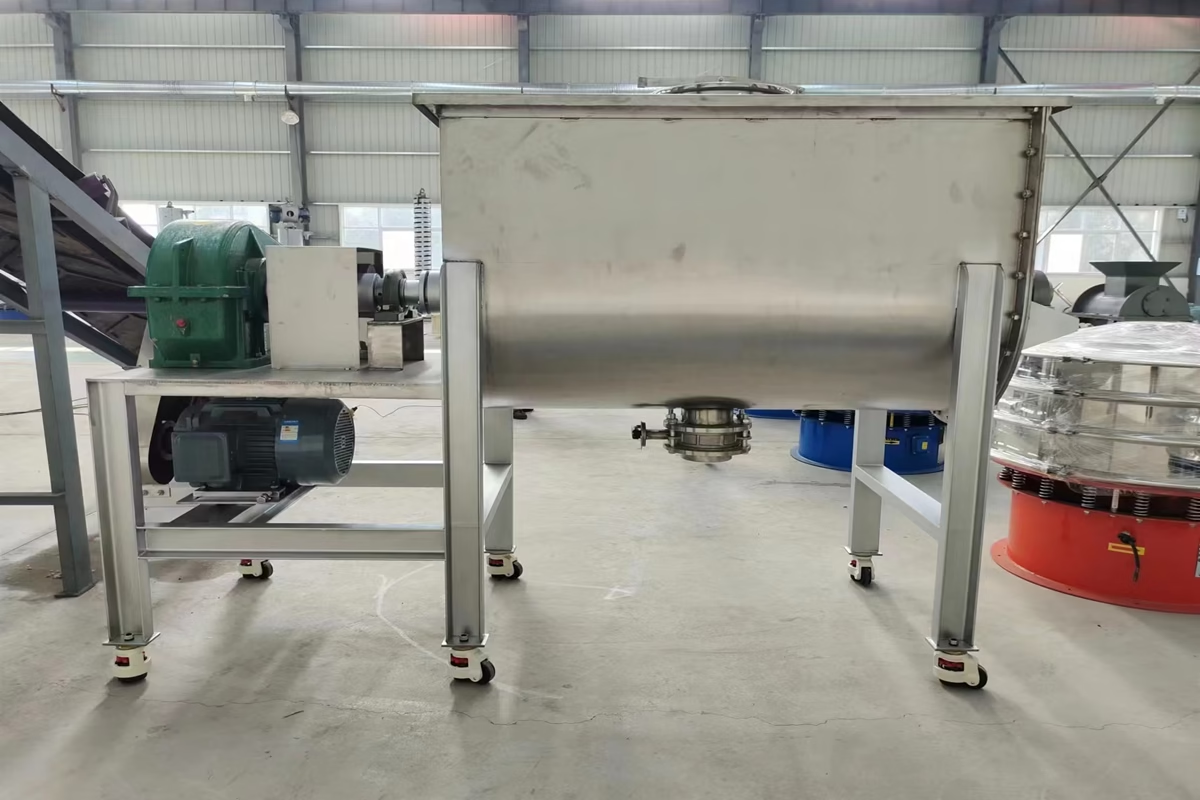
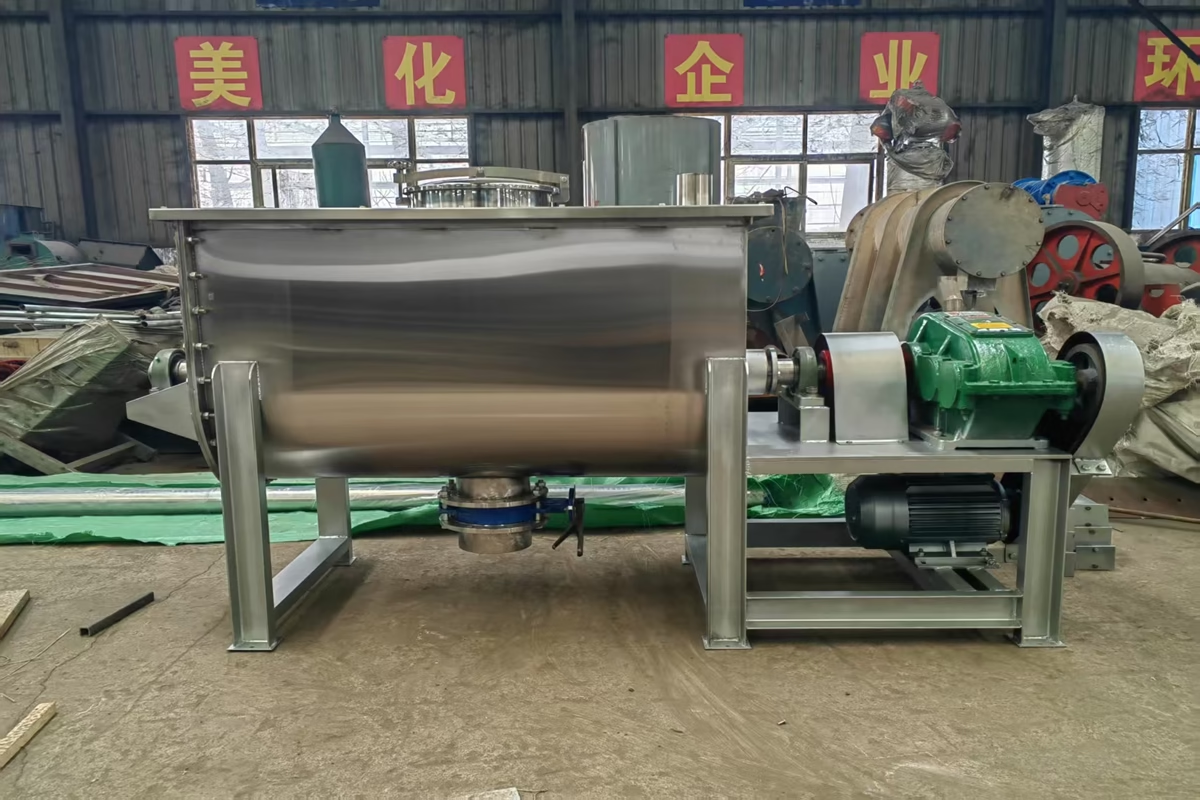
A Horizontal Double Helix Mixer is a ribbon blender designed for batch mixing of dry powders and granules. It features a U-shaped trough with a horizontal shaft fitted with inner and outer helical ribbons. During rotation, the two ribbons move materials in opposite directions, creating continuous circulation and mixing throughout the trough.
The standard series covers batch capacities of 150–2,000 kg, with motor power ranging from 3–30 kW.
Working Principle and Structure
Working Principle
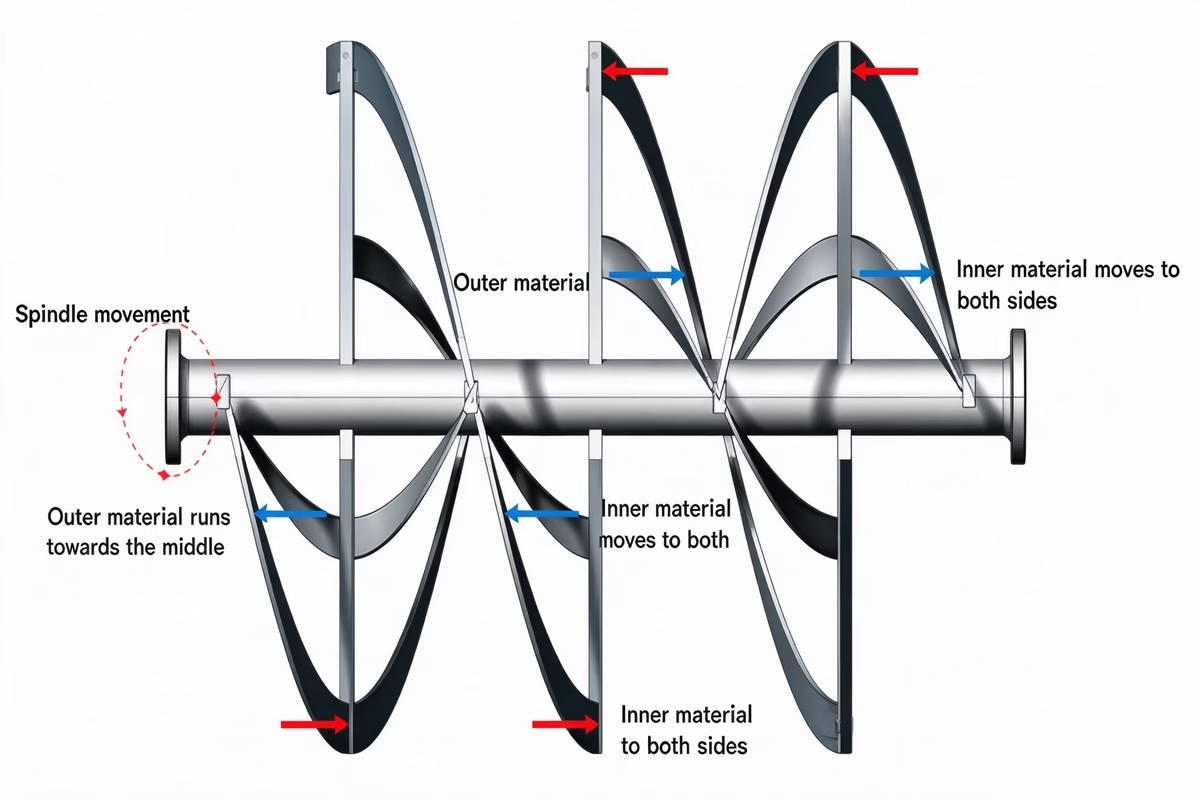
The ribbons move the batch through feeding, axial circulation, radial turnover, and discharge.
Material Feeding
Powder and granules enter through the specified top feed ports. Meter or weigh the charge to the approved batch weight and working volume.
Axial Circulation
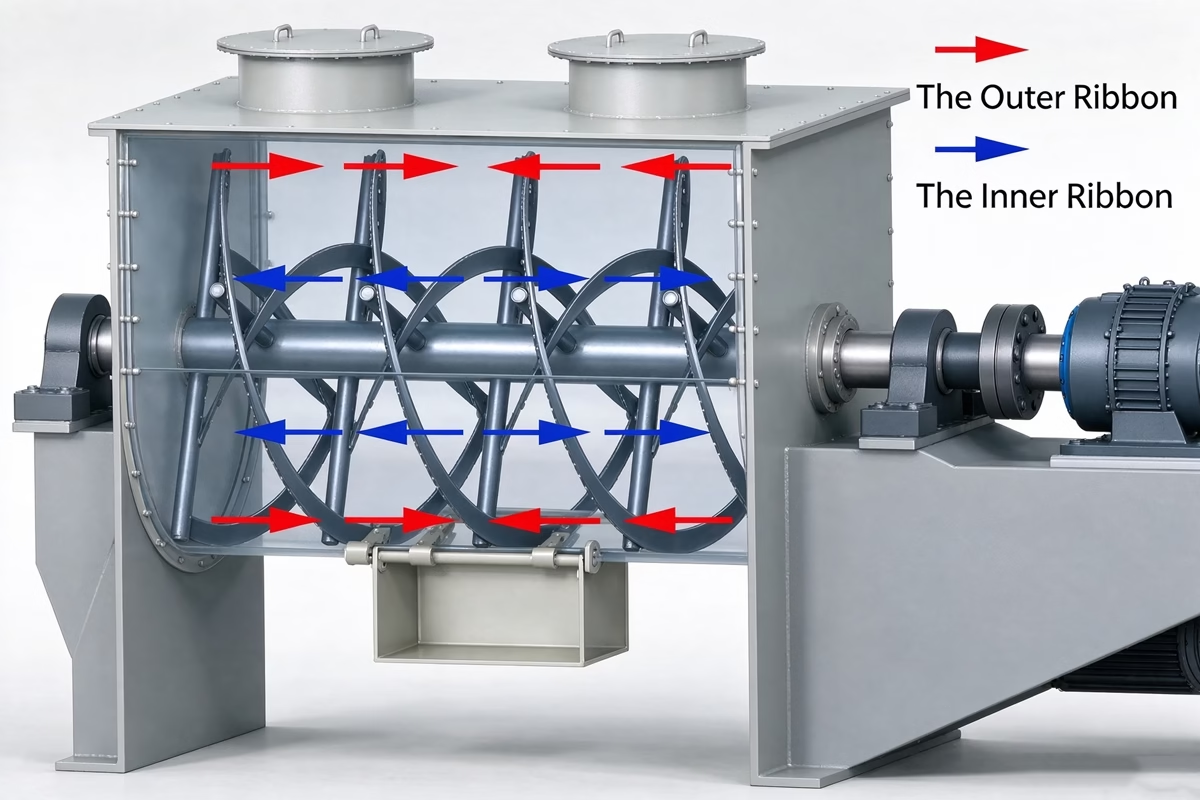
The outer ribbon moves product from both ends toward the center. The inner ribbon moves it back toward the ends and closes the loop.
Radial Turnover
The ribbon lifts the lower layer up the curved wall and lets it fall across the shaft. This fold exchanges material between the top and bottom of the bed.
Discharge
The bottom valve opens and the ribbons direct the batch toward the outlet.
Structure
The assembly combines a U-shaped trough, a horizontal ribbon shaft, external bearing supports, shaft seals, a drive, and a bottom discharge valve.

| Part | Function |
|---|---|
| U-shaped trough | Holds the batch within the approved working-volume and weight limits |
| Outer ribbon | Moves material from both ends to the center |
| Inner ribbon | Moves material from the center to both ends |
| Main shaft | Carries both ribbons on one axis |
| End bearing supports | Take radial load outside the product zone |
| Shaft seals | Limit powder migration at the shaft penetrations |
| Drive unit | Gearmotor and coupling turn the shaft |
| Discharge valve | Bottom outlet; valve type and opening size follow the selected design |
| Top cover and feed ports | Contain dust and direct the charge |
| Frame | Carries the trough and drive to the floor |
CONTACT US
Replacing a ribbon mixer on an existing frame?
Send the trough length, shaft height, drive position, mounting drawing, and batch duty. Confirm frame strength, alignment, and drive loads before reusing the existing mounting points.
Part Details
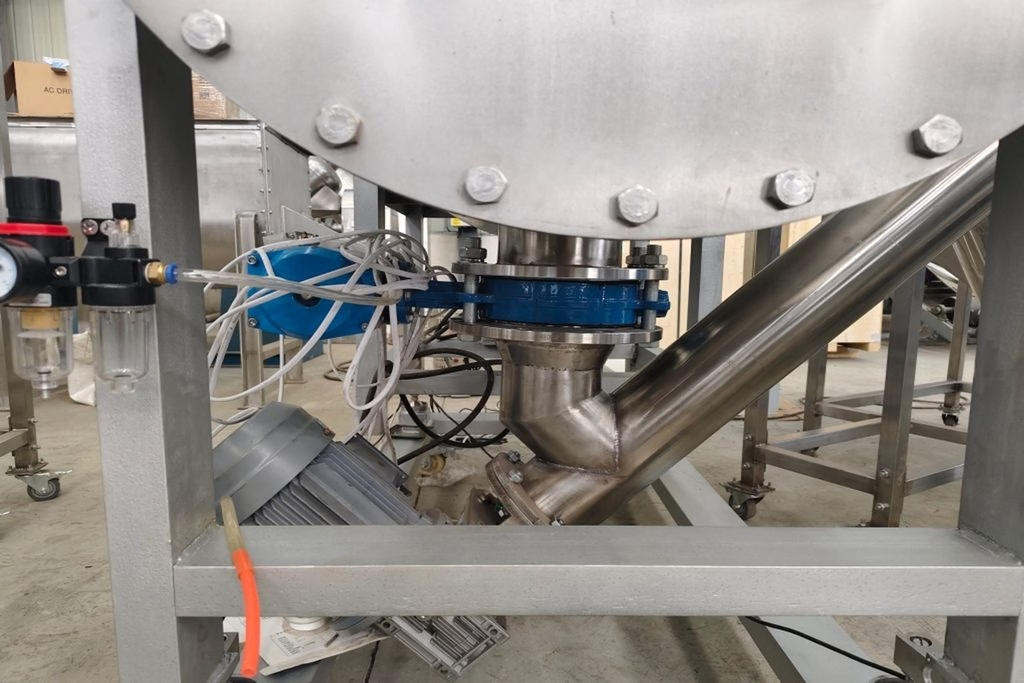

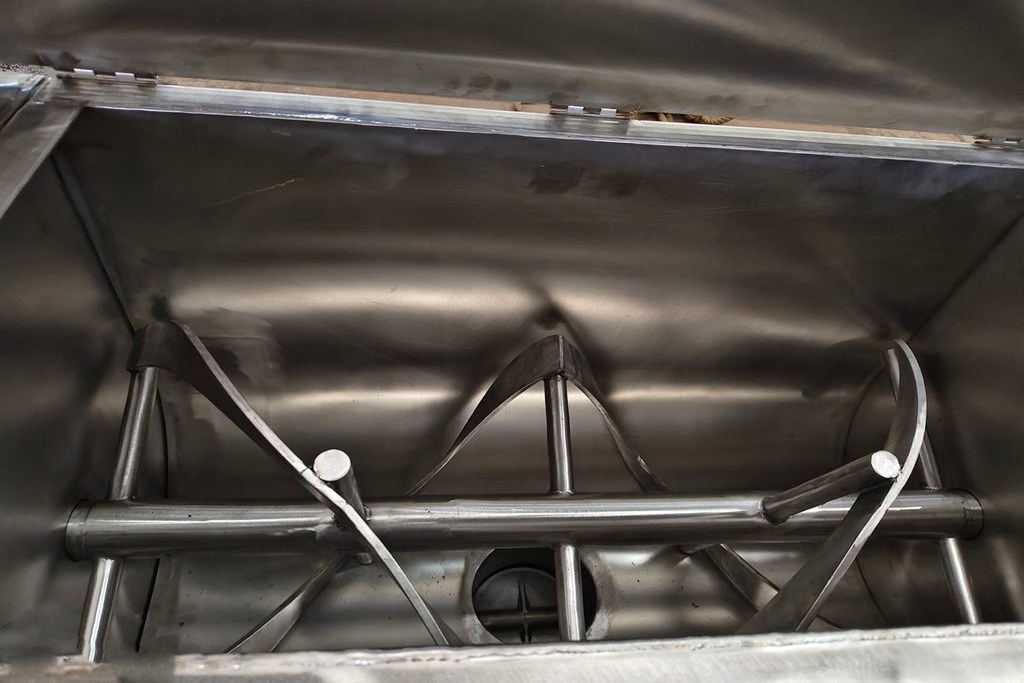


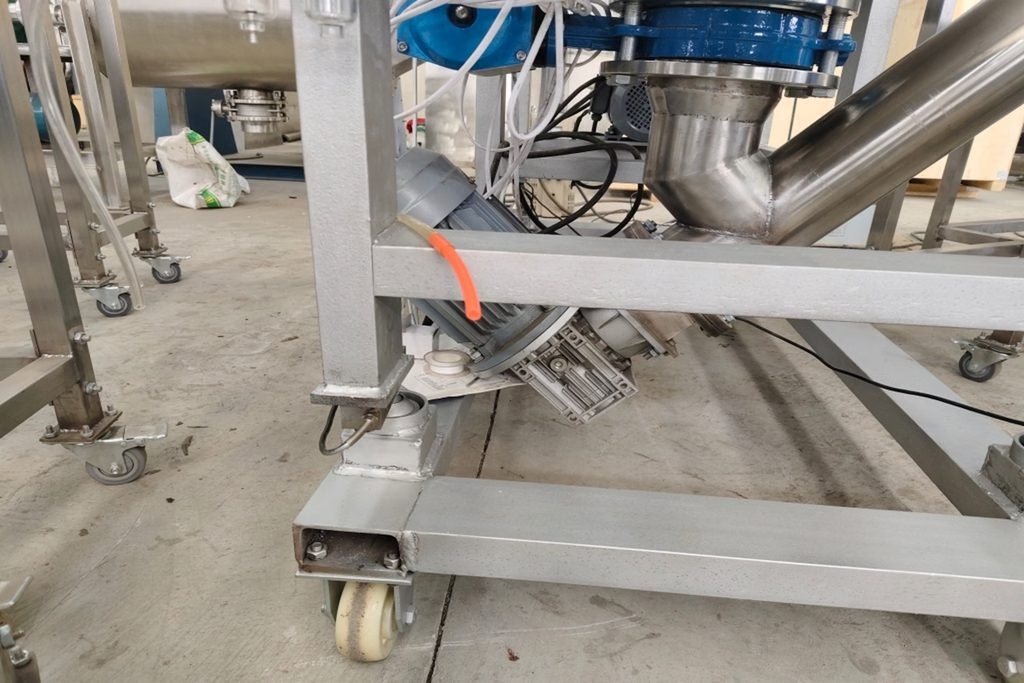
Advantages
The Horizontal Double Helix Mixer combines continuous material circulation with a practical horizontal design for efficient batch blending of dry powders and granules.
Efficient Batch Mixing
Opposing ribbon movements circulate materials along the trough, supporting efficient batch blending.
Uniform Mixing
Repeated folding and redistribution help spread minor ingredients throughout the batch. The specified CV target is below 5%.
Practical Horizontal Layout
The horizontal shaft and U-shaped trough provide a straightforward equipment layout and convenient access for inspection and cleaning.
Controlled Mixing Action
The ribbon-driven mixing process avoids high-speed agitation, helping reduce unnecessary mechanical impact on suitable materials.
Specifications
GUO FENG offers six standard models based on factors such as batch capacity, motor power, specified uniformity targets, and machine weight.
| Model | Capacity (kg/batch) | Motor power (kW) | Specified CV target | Machine weight (kg) |
|---|---|---|---|---|
| SH-150 | 150 | 3 | CV<5% | 350 |
| SH-250 | 250 | 5.5 | CV<5% | 500 |
| SH-500 | 500 | 11 | CV<5% | 900 |
| SH-1000 | 1000 | 18.5 | CV<5% | 1200 |
| SH-1500 | 1500 | 22 | CV<5% | 1600 |
| SH-2000 | 2000 | 30 | CV<5% | 2000 |
Customization
Each Horizontal Double Helix Mixer can be configured according to batch size, material properties, and production requirements. Options include contact materials, ribbon clearance, discharge design, process features, and control systems to match your mixing application.

| Option | Choices | Selection considerations |
|---|---|---|
| Batch size | 150 / 250 / 500 / 1,000 / 1,500 / 2,000 kg | Check weight and working volume for each batch |
| Contact material | Carbon steel / SUS304 / SUS316L | Corrosion and hygiene |
| Surface finish | 180 grit / 240 grit / specified polished finish | Specify roughness units, acceptance criteria, and cleaning requirements |
| Ribbon clearance | Proposed 3 / 5 / 6 mm; subject to approved drawing | Confirm clearance location, tolerances, particle size, thermal expansion, and shaft deflection |
| Discharge | Manual butterfly / pneumatic / slide gate | Emptying rate and dust |
| Liquid addition (optional) | Spray nozzle; proposed 1–10% by weight subject to trials | Check distribution, wall adhesion, and material flow |
| Chopper (optional) | Side-entry arrangement, subject to approved design | Confirm agglomerate breakup, shear, drive, sealing, and cleaning |
| Jacket (optional) | Half-pipe / dimple; proposed 0.3–0.6 MPa subject to design approval | Heating / cooling circuit only; product-chamber pressure and vacuum require separate confirmation |
| Drive | Listed motor ratings: 3–30 kW; supply and VFD configuration by order | Confirm voltage, frequency, phase, motor/VFD compatibility, and starting torque |
| Controls | Push-button / PLC recipe; hazardous-area configuration where specified | Confirm guards, interlocks, and site hazard classification; an Ex motor alone does not establish complete-machine suitability |
For enclosed powder charging, review the Vacuum Powder Feeder. Confirm the feeder connection and material compatibility for the selected mixer.
CONTACT US
Need a 3,000 kg batch or a jacketed trough?
Send the batch weight, density, temperature, and process requirements. A 3,000 kg batch is outside the listed standard range and requires a separately confirmed trough, shaft, bearings, and drive design.
Applications
The following applications use suitable powders and granules, with material-contact surfaces and optional equipment selected for the process.

Food and Beverage
Common materials include flour, sugar, salt, spices, milk powder, and dry premixes. The counter-current ribbons circulate and fold the powder bed to distribute seasonings, vitamins, and other minor ingredients, with SUS304 or SUS316L contact parts available for hygiene requirements.

Pharmaceutical and Nutraceutical
Typical materials include APIs, excipients, and nutraceutical powder blends. The opposing ribbons provide repeated axial circulation and bed turnover to distribute low-dose ingredients, while SUS316L contact parts and polished surfaces can meet product-contact requirements.

Chemical and Fine Chemical
Common materials include pigments, flame retardants, and powdered plastic additives. The mixer circulates these powders in batches and can use spray nozzles for small liquid additions or a jacketed trough when heating or cooling is required.

Feed and Premix
Typical materials include vitamin and mineral premixes blended with powdered feed carriers. The low-speed ribbons turn and circulate the batch to distribute minor additives while limiting unnecessary particle breakage.

Plastics and Rubber
Common materials include PVC resin, stabilizers, and carbon black for dry-compound preparation. The ribbons circulate the ingredients through the trough, while an optional side chopper can break agglomerates and a cooling jacket can help control temperature.
Building Materials
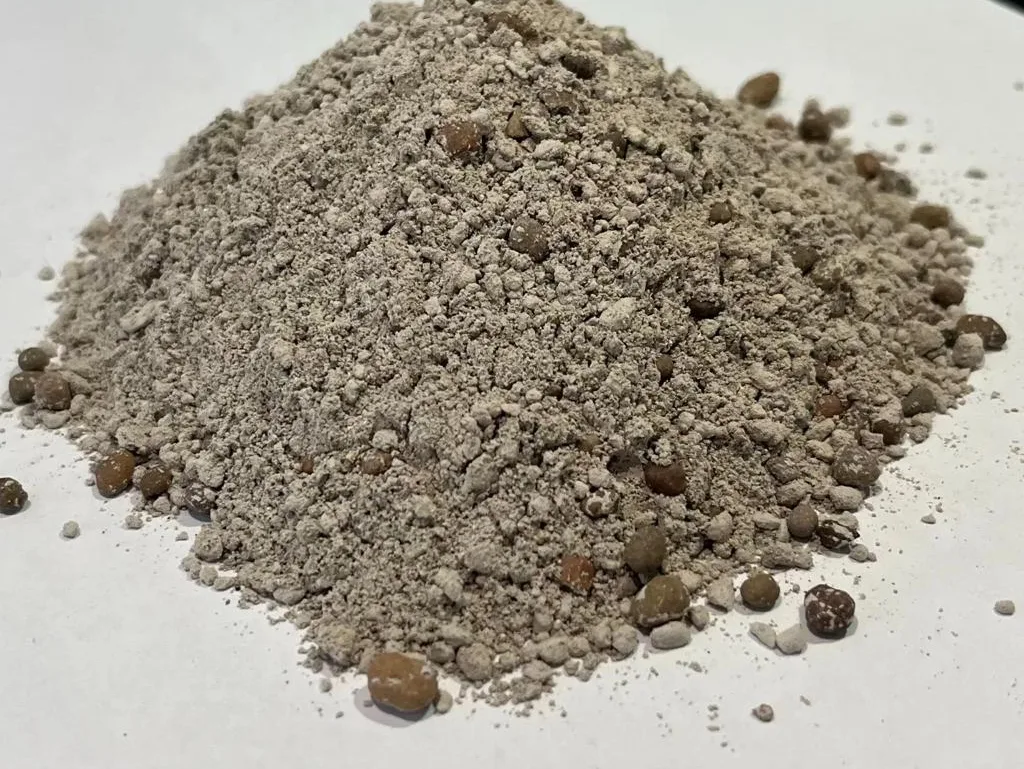
Typical materials include tile adhesive powder, dry mortar blends, and powdered pigments. The counter-current ribbons help distribute multiple dry additives through dense batches, with wear protection and a full-width discharge gate available according to operating conditions.
When planning access to rotating ribbons and the drive, review the OSHA machine guarding requirements.
CONTACT US
Not sure your powder will reach CV <5%?
Send the formulation, bulk density, and assay method first. Agree the test machine, working fill, sample quantity, sampling plan, and schedule before sending material. The trial should measure uniformity against the agreed acceptance criteria.
About GUO FENG
Founded in 1999, Xinxiang First Vibration Machinery Factory Co., Ltd. is a manufacturer of mixing and bulk material handling equipment based in Xinxiang, Henan, China. GUO FENG offers six models of Horizontal Double Helix Mixers, with batch capacities ranging from 150 to 2,000 kg. The company provides configuration options including SUS304 or SUS316L stainless steel contact parts, heating or cooling jackets, liquid spray systems, side choppers, and PLC controls. Equipment configuration, technical documentation, material testing, and pre-delivery inspection requirements can be discussed and confirmed according to each project’s needs.
FAQ
What is the largest batch?
The largest listed standard model is SH-2000: 2,000 kg per batch, a 30 kW motor, and a 2,000 kg machine weight. The supplied capacity basis is 1.0 t/m³. Confirm the permitted working volume and material duty before selection. Larger batches require a separately engineered and approved design.
Can it replace a vertical screw mixer?
It may suit the same dry-powder or granule duty, but replacement requires a process and installation comparison. Conical screw mixers have different designs; some use an orbiting screw along the vessel wall rather than a central screw. Compare blend quality, particle damage, minimum fill, discharge, cleaning, headroom, floor space, and handling access. Batch mass alone does not establish which design is smaller or suitable.
Which model for a 1,000 kg batch?
SH-1000 is listed at 1,000 kg per batch, with an 18.5 kW drive and a 1,200 kg machine weight, using the reference bulk density of 1.0 t/m³. At 0.6 t/m³, a 1,000 kg batch occupies approximately 1,667 L before allowing for working fill. Select a suitable trough by its confirmed volume and fill range; do not assume the next model is sufficient from its kg rating alone.
What does CV below 5% mean?
CV (%) = sample standard deviation ÷ sample mean × 100. CV below 5% describes the relative spread of the measured concentrations; it does not mean every sample is within ±5% of target, and it does not by itself confirm the correct average dosage. Agree a representative sampling plan, assay method, target concentration, and acceptance criteria for the production material.
Can it handle wet, sticky, or hot material?
Suitability depends on moisture, cohesion, wall adhesion, and temperature, so no single moisture limit applies to every powder. Hot duty requires confirmation of the product, seals, bearings, clearances, and thermal design. Any optional jacket pressure rating applies to its heating or cooling circuit; it does not establish a pressure or vacuum rating for the product chamber. Confirm both circuits separately in the approved design.
What is the price and quote scope?
Price depends on batch size, contact material, finish, discharge arrangement, jacket, spray system, chopper, and controls. Request an itemized quotation defining the mixer, drive, controls, documentation, delivery terms, and any installation or commissioning services. Confirm quotation timing and manufacturing lead time separately with GUO FENG, including the effect of drawing approval and the selected options.
How long do ribbons and seals last?
Ribbon and seal life depends on abrasiveness, speed, batch loading, operating hours, temperature, and seal design. Inspect for wear, leakage, contact marks, vibration, and loss of performance. Use the manufacturer-approved dimensional limits and maintenance procedure for repair or replacement. Plan inspection frequency from the actual duty, and confirm the expected service life for the selected materials and configuration.
How is it installed and maintained?
Install on supports designed for the loaded machine and dynamic loads, and check level, alignment, guards, and utilities against the installation drawing. Isolate and lock out hazardous energy before access or maintenance. Use the supplied manuals for lubrication, inspection intervals, seal adjustment, and the commissioning test sequence. Agree the installation schedule and unloaded-run procedure for the supplied unit and site conditions.