
Vibrating screen design requires careful consideration of screen opening size, screening area, vibration amplitude, frequency, and material characteristics. Different combinations of these parameters directly affect throughput, screening performance, and operating stability. This article explains the key design parameters, the factors that influence actual capacity, and how to select a suitable configuration for your material and production requirements.
What Should You Consider When Designing a Vibrating Screen?
A practical vibrating screen design must balance more than machine dimensions and vibration settings. Three priorities are especially important:
Capacity
Meet the production line’s throughput requirements while avoiding material buildup or equipment overload.
Screening performance
Allow particles below the target cut size to pass through the screen effectively, minimizing fines remaining in the oversize product.
Operating stability
Match the vibration system to the machine structure to reduce abnormal wear and unplanned downtime.
Six Key Vibrating Screen Design Parameters
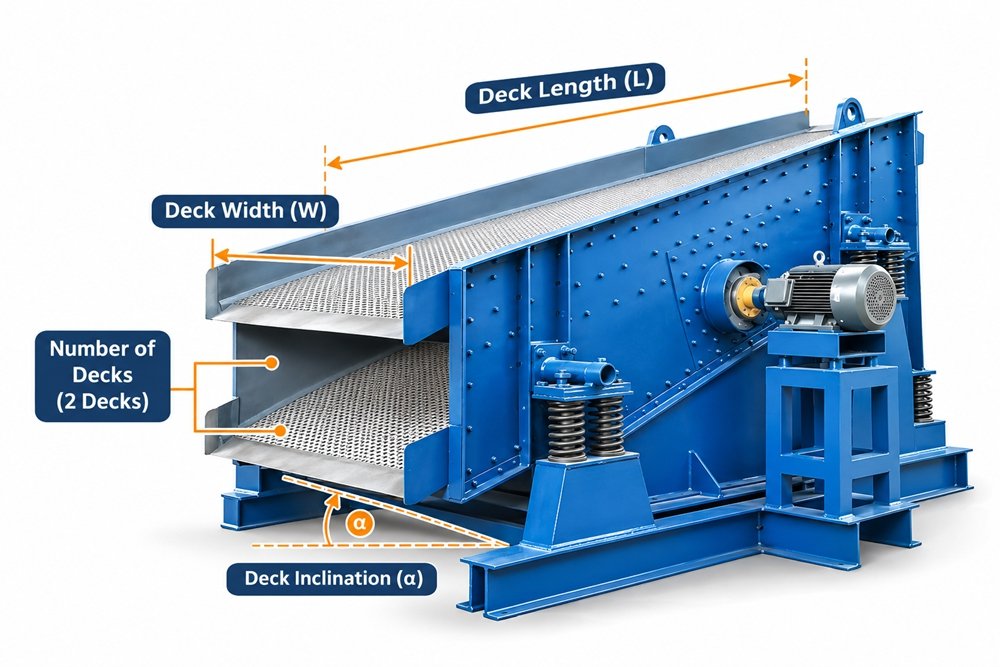
The main vibrating screen design parameters are screen opening size and open area, deck length and width, amplitude and frequency, deck inclination and vibration direction, motion pattern, and number of decks. Screen openings determine the separation size, while deck dimensions affect capacity. Vibration settings and motion patterns influence material movement and passage through the openings, and the number of decks determines how the material is separated into size fractions. These parameters must work together to suit the material characteristics and screening requirements.
Screen Opening Size and Open Area
Screen opening size determines the particle size at which material is separated, while the percentage of open area affects the opportunities for particles to pass through the screen. Smaller openings generally make screening more difficult. A higher percentage of open area generally promotes passage, but screen strength and wear resistance must also be considered.
When selecting screen media, choose the opening size based on the target particle size, while also considering particle shape, the risk of blocked openings, and screen service life.
Screen Deck Length and Width
A wider screen deck generally accommodates a higher feed rate, while a longer deck usually gives particles more opportunities to pass through the openings.
If the feed rate is high and the material bed is too deep, increasing the deck width may help. If excessive fines remain in the oversize product, check the deck length and material residence time. Final dimensions must also account for the required throughput and screening performance.
Vibration Amplitude and Frequency
Vibration amplitude is the maximum displacement of the screen body from its equilibrium position. Frequency is the number of vibration cycles per unit of time. Together, they affect how the material loosens, stratifies, and moves across the deck.
Coarse screening typically uses a relatively larger amplitude and lower frequency, while fine screening often uses a smaller amplitude and higher frequency. These are general design tendencies; the actual settings also depend on the screen type and material characteristics. When comparing specifications, distinguish between single amplitude and peak-to-peak displacement, also called double amplitude.
Screen Deck Inclination and Vibration Direction
Deck inclination and vibration direction jointly influence material travel speed and residence time. On an inclined vibrating screen, increasing the angle generally accelerates material movement but may reduce the opportunities for particles to pass through the openings. A horizontal linear vibrating screen can convey material through directional vibration.
A steeper angle is not always better. The setting must balance capacity and screening performance.
Vibration Motion Pattern
Common motion patterns include linear, circular, and elliptical motion. Linear motion helps control the direction of material travel. Circular motion is commonly used to classify granular materials such as sand, aggregates, and ore. Depending on the specific design, elliptical motion can balance material transport and stratification.
Each motion pattern suits different operating conditions. Selection should reflect the material characteristics and screening requirements.
Number of Screen Decks
The number of decks determines how many particle size fractions the machine can produce. A single-deck screen typically separates material into two size fractions, while a double-deck screen can produce three. Additional decks allow further classification.
For example, under ideal screening conditions, two decks with 10 mm and 5 mm openings can separate material into three fractions: above 10 mm, 5–10 mm, and below 5 mm.
Adding more decks is not always beneficial. The material load on each deck, discharge clearance, and maintenance access must also be considered.
What Factors Affect Actual Vibrating Screen Capacity?
Actual capacity depends on material properties, feeding conditions, and vibrating screen design. The same screen will generally handle more dry, free-flowing material than damp, sticky material.
| Factor | Effect on actual capacity | What to check |
|---|---|---|
| Particle size distribution | A high proportion of near-size particles—particles close to the opening size—makes passage more difficult and may reduce effective throughput. | Check the proportion of near-size particles, rather than considering only the maximum particle size. |
| Moisture content and stickiness | Damp, sticky material can form clumps or block screen openings, reducing screening capacity. | Determine whether the material tends to adhere or agglomerate. |
| Bulk density | Bulk density affects the mass of a given volume of material and the load on the machine. | Higher density does not mean the material is easier to screen. |
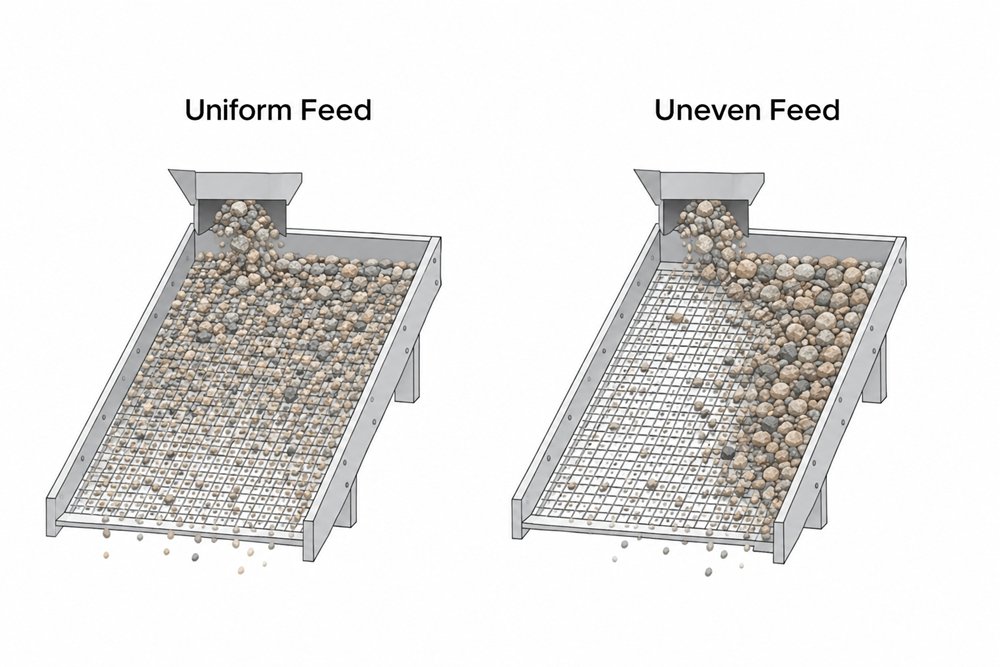
| Feed rate and bed depth | Excessive feeding creates a deeper material bed, making it harder for fine particles to reach the screening surface. | Avoid overloading and monitor bed depth. |
| Feed distribution | Material concentrated in one area can cause localized overloading and reduce utilization of the screening surface. | Check the feed position and material distribution. |
| Screen media condition | Blocked openings reduce the effective open area, while damaged screen media can affect product quality. | Regularly check for blocked openings, wear, and damage. |
For example, a screen may operate normally with dry sand and aggregates but lose capacity when processing damp material containing clay. Clumping and blocked openings can reduce throughput. Even if the feed rate remains unchanged, more fines may remain in the oversize product.
When assessing whether a vibrating screen meets production requirements, consider both its hourly tonnage and the quality of the separation.
How Do You Estimate Vibrating Screen Capacity and Screening Area?
Screening area is an important part of vibrating screen design. Higher throughput generally requires more screening area, but the required size also depends on screen openings, particle size distribution, and separation requirements.
1. How Is Screening Area Calculated?
Screen opening size is another important factor in screen sizing. For industrial woven wire screens, ISO 9044:2016 provides technical requirements and aperture tolerances. The following formula provides an initial vibrating screen area calculation:
Screening area (m²) = Design throughput (t/h) ÷ Effective capacity per unit area [t/(h·m²)]
Design throughput is the mass of material that needs to be screened each hour. Effective capacity per unit area is the mass that each square meter of screening surface can process per hour under the specified material and screening conditions.
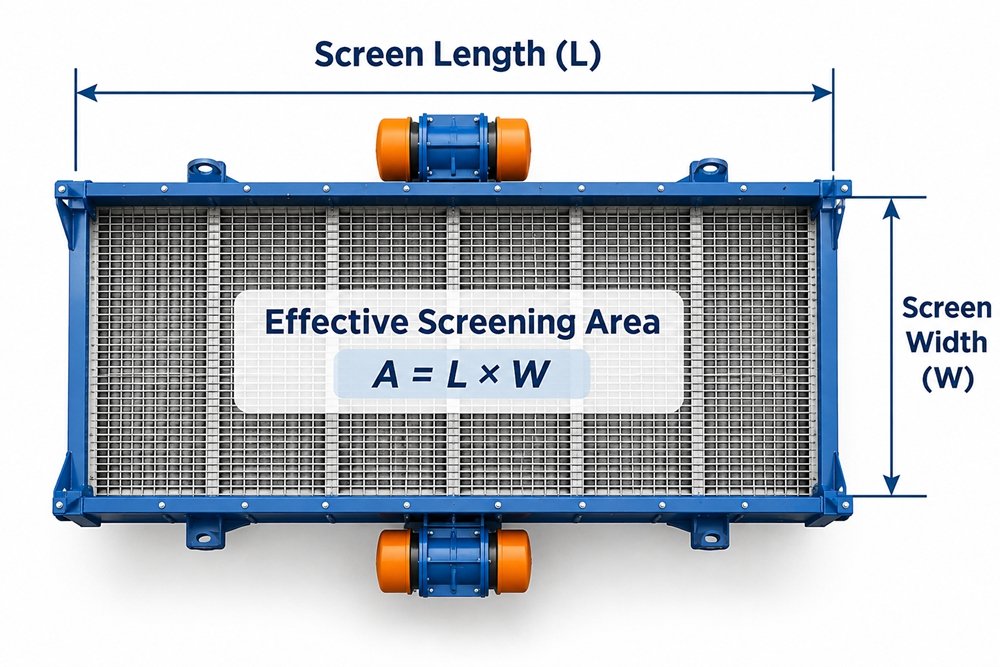
Capacity can vary with the material and opening size, so data from another machine should not be applied directly. For a multi-deck screen, the screening load and required area must be evaluated separately for each deck.
2. Calculation Example: Screening 30 Tonnes of Sand and Aggregates per Hour
Assume an aggregate production line needs to screen 30 tonnes of material per hour through 5 mm openings. Opening size affects screening difficulty and is therefore an important input when determining the required screening area.
For this example only, assume that each square meter of screen can process 4 tonnes of this material per hour:
Required screening area = 30 ÷ 4 = 7.5 m²
Under these assumptions, the required area is approximately 7.5 m². The value of 4 t/(h·m²) is used only to demonstrate the calculation. For actual equipment selection, capacity per unit area must be established through calculations or testing that account for opening size, particle size distribution, and screening requirements. The calculated 7.5 m² should not be treated as the final screen size.
3. What Should You Check After the Calculation?
After estimating the screening area, check three aspects:
- Throughput: Can the screen handle both normal and maximum feed rates?
- Screening performance: Can the oversize and undersize products meet the target particle size specifications?
- Operating conditions: Is the material likely to form an excessively deep bed, blind the screen, or feed unevenly?
If you are unsure what size vibrating screen you need, contact us with the material name, hourly throughput, and target separation size. Our technical team can help assess the required screening area and recommend a suitable equipment configuration.
How Do You Choose a Vibrating Screen Design for Your Application?
Vibrating screen selection should be based on material particle size, throughput, and screening requirements. The table below outlines suitable starting points and the key items to check for different applications.
| Screening requirement | Selection priorities | Recommended equipment | Key checks |
|---|---|---|---|
| Classification of coarse materials such as sand, aggregates, and ore | Continuous throughput and wear resistance | YA/YK circular vibrating screen | Deck dimensions and feed impact |
| Screening fine powders such as flour and chemical powders | Separation accuracy, screen cleaning method, and sealing requirements | XZS rotary vibrating screen; CXZS ultrasonic vibrating screen | Screen specifications and risk of blinding |
| Separating material into several size fractions in one pass | Multiple decks with different opening sizes | Multi-deck rotary vibrating screen; DZSF linear vibrating screen | Load on each deck and discharge clearance |
| Wet screening of fine material or slurry filtration | Wet screening capability and screen media structure | XZS rotary vibrating screen | Slurry properties and risk of blocked openings |
| Handling fragile materials or preserving particle integrity | Gentler screening motion | YBS tumbler screen | Particle damage and screening performance |
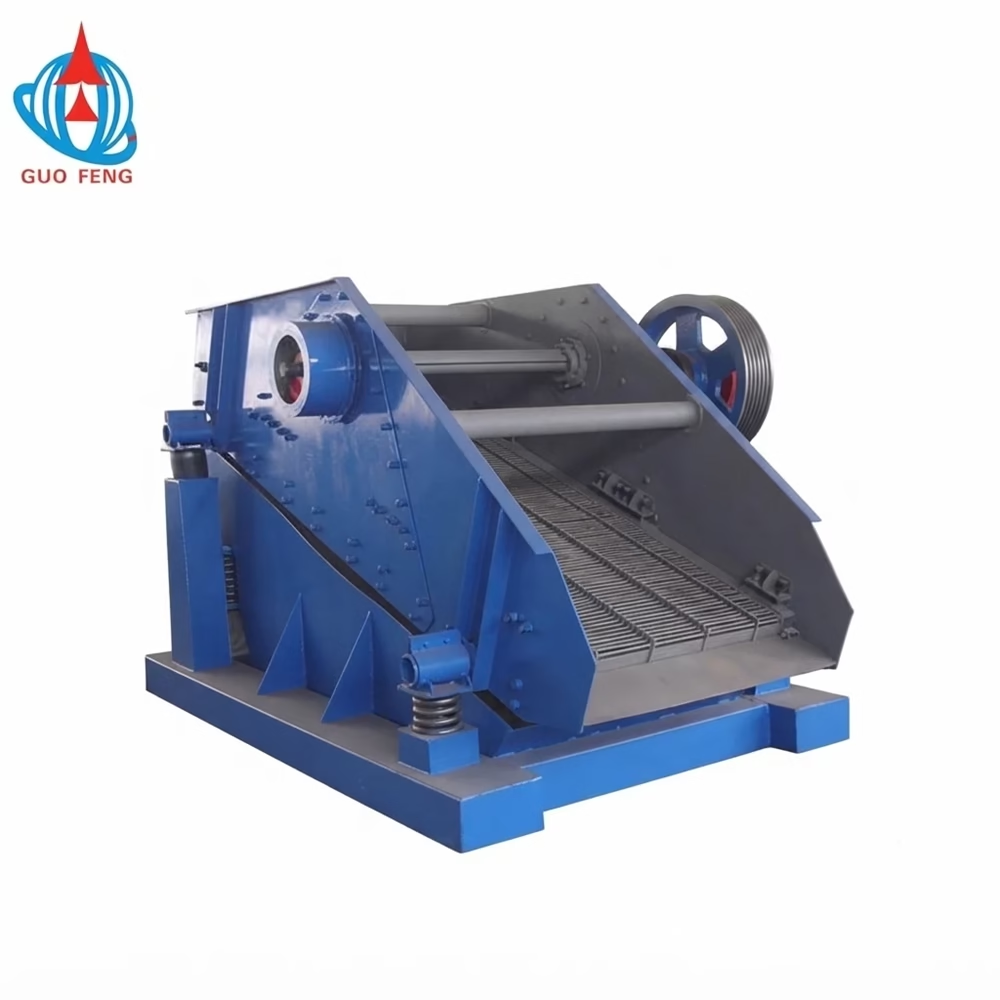

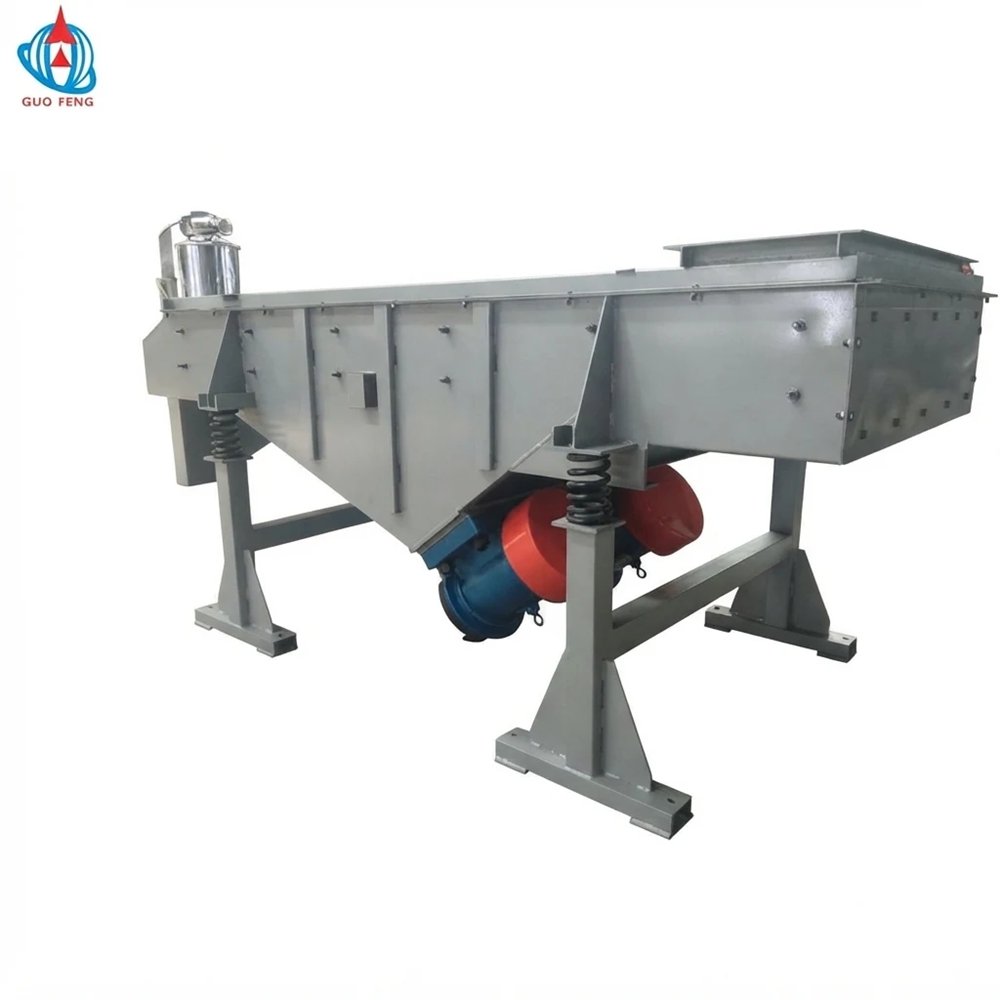

These machines provide an initial reference for selection. Actual capacity must be determined for the specific model and material conditions. If several screen types can meet the requirements, compare separation performance, installation space, screen replacement procedures, and maintenance costs. For materials prone to blinding or breakage, sample testing is advisable before finalizing the configuration.
Common Vibrating Screen Design Problems and How to Address Them
Insufficient capacity, incomplete separation, or frequent screen blinding does not always mean the machine needs to be replaced. First inspect the feed conditions, screen media, and operating parameters, then make adjustments based on the identified cause.
| Common problem | Possible causes | Checks and corrective actions |
|---|---|---|
| Throughput falls below requirements | Excessive feed rate, blocked openings, or insufficient screening capacity for the available area | Check the feed rate and screen condition; recalculate the required screening area if necessary. |
| Excessive fines remain in the oversize product | Insufficient residence time, an overly deep material bed, or a high proportion of near-size particles | Check material travel speed, bed depth, and effective screening length. |
| Frequent screen blockage | Material adhesion, clumping, or particles lodged in the openings | Distinguish between blinding caused by adhering material and pegging caused by lodged particles, then select suitable screen media or a screen cleaning system. |
| Uneven material distribution | Off-center feeding or poor feed distribution | Adjust the feed position or distribution arrangement to spread material evenly across the deck. |
| Screen media wears too quickly | Excessive feed impact, abrasive material, or unsuitable screen media material | Check where material lands; add wear protection or change the screen media material if necessary. |
| Abnormal vibration or noise | Loose fasteners, damaged springs, or a fault in the vibration system | Stop the machine and inspect the fasteners, springs, and vibration exciter. Resolve the fault before restarting. |
If the screen still fails to meet throughput or separation requirements after the feed has been adjusted, the screen media cleaned, and equipment faults resolved, reassess the deck dimensions and machine configuration. The original design may no longer be suitable after an increase in production, a change in material, or a change in the required opening size.
What Information Should You Confirm Before Buying a Vibrating Screen?
Before finalizing a vibrating screen design, confirm your material properties, required throughput, and separation requirements. Accurate information helps us recommend suitable equipment and avoid unnecessary changes later.
| Information to provide | Details |
|---|---|
| Material characteristics | Material name, bulk density, moisture content, and whether it tends to adhere or form clumps |
| Particle size | Maximum feed particle size, particle size distribution, and target screen opening size |
| Throughput | Normal and maximum hourly throughput in tonnes per hour (t/h) |
| Screening requirements | Number of required size fractions, target particle size for each fraction, and finished product requirements |
| Installation conditions | Available space, inlet and outlet positions, power supply, and connections to upstream and downstream equipment |
| Special requirements | Whether stainless steel construction, sealing, dust containment, or a screen cleaning system is required |
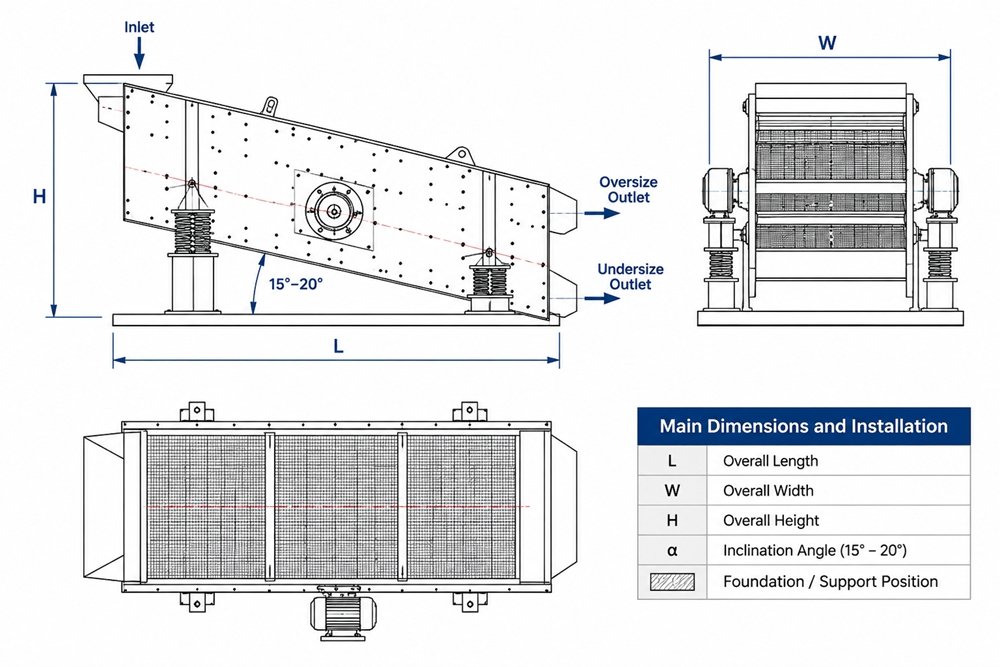
After receiving a quotation and equipment proposal, ask for further details about actual throughput, screening performance, screen replacement, and spare parts availability. For unusual materials or applications requiring high separation accuracy, we can also arrange sample testing to help confirm screening performance before purchase.
Frequently Asked Questions
1. How Much Capacity Margin Should a Vibrating Screen Have?
The required capacity margin depends on the normal feed rate, peak flow, and variations in the material. There is no fixed percentage suitable for every machine. If the upstream feed is unstable, equipment selection should account for short periods of high loading and confirm whether the screen can maintain separation performance under those conditions.
2. What Screening Efficiency Can a Vibrating Screen Achieve?
Screening efficiency depends on particle size distribution, opening size, feed rate, and equipment configuration, and can vary considerably between operating conditions. During selection, agree on how efficiency will be calculated, or directly specify the particle size requirements for the oversize and undersize products.
3. Will the Screen Maintain the Same Throughput After Finer Screen Media Is Installed?
Not necessarily. Smaller openings generally make it harder for material to pass through the screen, so actual throughput may decrease. If you plan to change opening sizes later, confirm the machine’s supported opening size range and the corresponding capacity before purchase.
4. Can a Vibrating Screen Be Connected to an Existing Production Line?
Inlet and outlet dimensions, positions, and mounting arrangements can be adapted to site conditions. However, the connection dimensions of upstream and downstream equipment, feed height, and available space must be confirmed first. Vibration isolation must also be considered to avoid transmitting unnecessary vibration to other equipment.
5. How Can You Verify the Screening Performance Promised by a Manufacturer?
Before purchase, define the test material, throughput, target particle sizes, and acceptance criteria. For projects with demanding screening requirements, sample testing or an agreed acceptance test can verify actual throughput and whether the oversize and undersize products meet the specified particle size requirements.
6. Can GUOFENG Customize a Vibrating Screen for Specific Materials and Site Requirements?
Yes. GUOFENG can adjust deck dimensions, the number of decks, screen media materials, and inlet and outlet configurations to suit the material characteristics, throughput, target particle sizes, and installation conditions. Contact us with your specific requirements, and our technical team will help confirm the parameters and propose suitable equipment.
Need help with a similar request?
Share your product requirements, timeline and cooperation goals. We can help clarify the next step.