
Over time, the belt, idler rollers, pulleys, and other parts of a belt conveyor wear down. Problems such as belt mistracking, slippage, unusual noise, and material spillage can also develop. If these issues are not identified and addressed promptly, minor faults can become more serious and eventually lead to equipment downtime.
This guide covers the main belt conveyor parts, their maintenance requirements, and practical inspection checklists. It also explains common faults, repair and replacement decisions, and which spare parts to keep in stock to reduce downtime.
What Are the Main Belt Conveyor Parts?
A belt conveyor consists primarily of a conveyor belt, idler rollers, pulleys, a drive unit, a take-up system, and cleaning and safety devices. Understanding how these belt conveyor parts work and what can go wrong helps you identify problems more quickly during routine inspections. For an example of this conveyor type, see the TD75 Belt Conveyor.
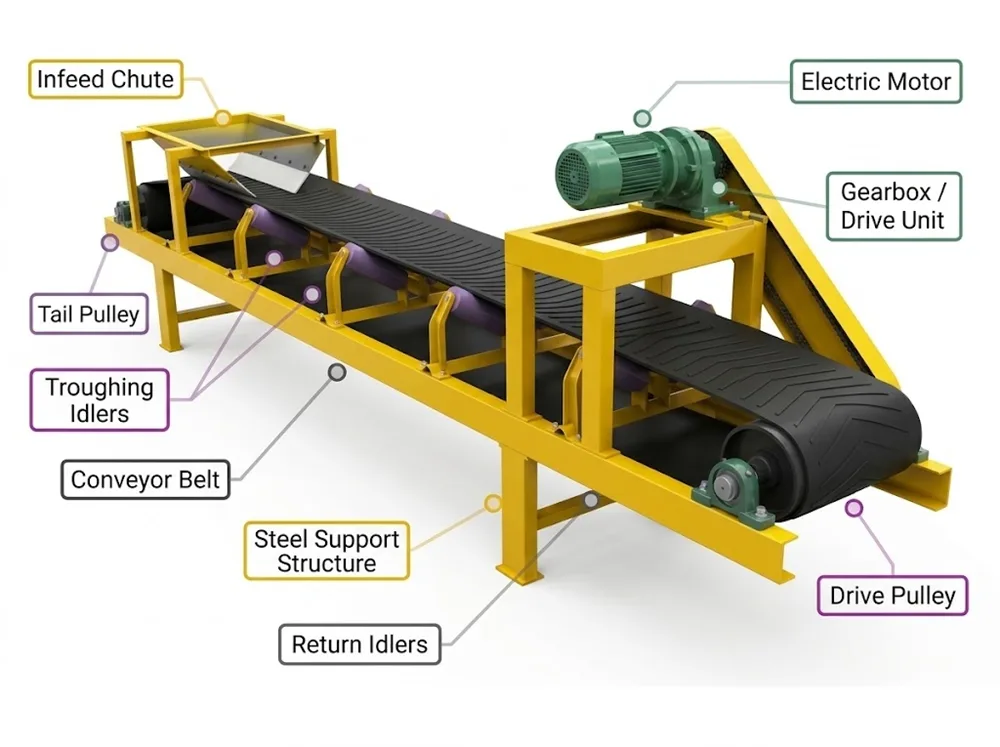
| Main component | Function | Common problems and maintenance priorities |
|---|---|---|
| Conveyor belt | Carries and transports material | Surface cuts, cracks, edge wear, and splice separation or damage. |
| Idler rollers and frames | Support the belt and conveyed material; include carrying idlers, return idlers, and impact idlers | Unusual noise, seized rollers, worn roller surfaces, and loose or deformed idler frames. |
| Drive unit and pulleys | The motor and gearbox supply power; pulleys drive the belt or change its direction | Motor or gearbox overheating, unusual noise, worn pulley lagging, material buildup, and bearing problems. |
| Take-up system | Maintains appropriate belt tension to reduce slippage | Insufficient or excessive tension, insufficient take-up travel, and a sticking or seized mechanism. |
| Belt cleaning and loading components | Remove residual material and control material loading and spillage | Worn cleaner blades, poor chute sealing, off-center loading, and material buildup. |
| Safety devices | Detect abnormal conditions and provide shutdown protection | Faulty emergency stops, pull-cord switches, and any installed belt misalignment or slip protection devices. |
What Should You Pay Particular Attention to During Maintenance?
Belt wear does not always originate in the belt itself. A seized idler can continuously rub against the belt surface, material buildup on a pulley can cause mistracking, and an off-center loading point can lead to wear on one side. When you find a problem, inspect the related components and identify the cause before making adjustments, carrying out repairs, or replacing parts. This helps prevent the same fault from recurring.
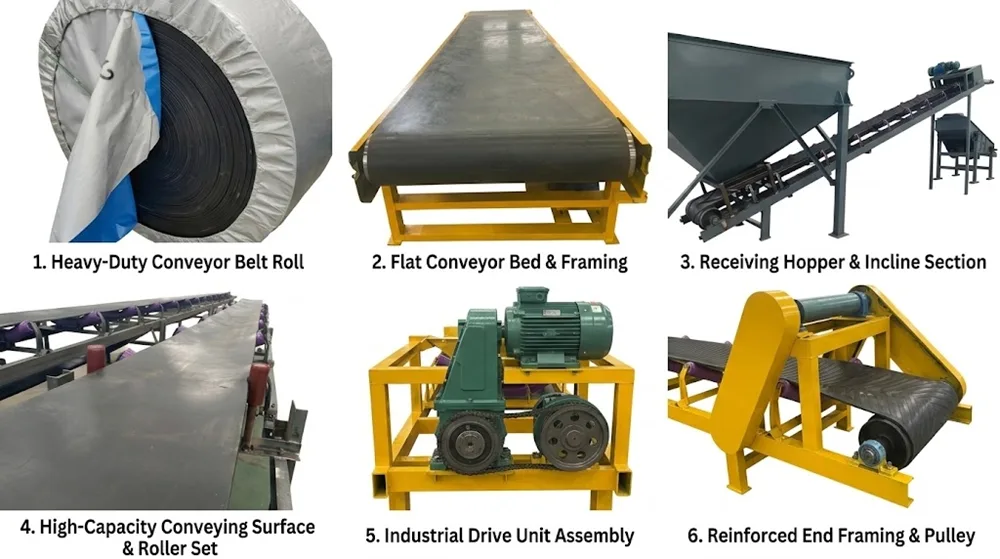
Belt Conveyor Maintenance Checklist
Belt conveyor maintenance can be organized into daily, weekly, and monthly inspections, along with scheduled overhauls. Daily checks focus on operating conditions. Weekly inspections cover components prone to wear, while monthly checks address the drive, take-up system, and mechanical connections. Scheduled overhauls provide an opportunity to address accumulated wear and recurring faults.
The following checklist covers routine inspections of belt conveyor parts used in common industrial conveyors. Adjust inspection intervals based on operating hours, material characteristics, and site conditions.
1. Daily or Per-Shift Inspections
| Inspection area | What to check | Action if a problem is found |
|---|---|---|
| Conveyor belt | Mistracking, slippage, abnormal belt movement, and visible damage to the belt surface or splice | Check the idlers, pulleys, take-up system, and loading position. Stop the conveyor to address severe damage. |
| Idler rollers and pulleys | Unusual noise, excessive vibration, irregular rotation, or significant material buildup | Stop the conveyor and inspect for buildup, bearing problems, and roller or pulley damage. Address damaged components promptly. |
| Loading and cleaning areas | Material spillage, blockages, or heavy buildup | Stop the conveyor, remove accumulated material, and inspect the loading chute and belt cleaners. |
| Drive unit | Unusual motor or gearbox noise, excessive vibration, or oil leaks | Stop the conveyor and check the operating load, lubrication, and drive connections. |
| Safety devices | Damaged guards or signs of damage or malfunction in emergency stops, pull-cord switches, and other protective devices | Stop the conveyor if a device is damaged or fails. Resume operation only after its protective function has been restored and verified. |
Before each startup, make sure no tools, foreign objects, or obvious material blockages remain on or around the belt. If severe mistracking, slippage, or unusual noise develops during operation, stop the conveyor promptly and investigate. Do not continue operating with a known fault.
2. Weekly Inspections
| Inspection area | Inspection and maintenance priorities |
|---|---|
| Conveyor belt and splice | Check for surface cuts, cracks, edge wear, and splice separation. Assess any damage promptly to determine whether repairs are needed. |
| Idler rollers and frames | With the conveyor stopped, check for sticking or seized rollers, worn roller surfaces, and loose or deformed frames. Replace damaged idlers promptly. |
| Pulleys and lagging | Check for material buildup and cracked, worn, or detached lagging. Clean or repair as needed. |
| Belt cleaners and seals | Check blade wear and cleaning performance. Inspect loading chute seals for deterioration or damage. |
| Drive connections | Check couplings, mounting bases, and connecting hardware for looseness or abnormal wear. Tighten or repair as required. |
If idlers repeatedly fail in the same location, also check their installation, material impact, and buildup in that area. Replacing the idler alone will not resolve a problem caused by these conditions.
3. Monthly Maintenance Inspections
| Inspection area | Inspection and maintenance priorities |
|---|---|
| Take-up system | Check that sufficient take-up travel remains, the mechanism moves freely, and belt tension is appropriate. Insufficient tension can cause slippage, while excessive tension increases stress on bearings and the belt. |
| Pulleys and bearings | Inspect lagging, bearings, and seals for abnormal wear, looseness, or damage. Repair or replace as needed. |
| Motor and gearbox | Check the oil level, oil leaks, lubrication condition, and drive connections. Service according to the equipment manual. |
| Conveyor frame and fasteners | Check anchor bolts, idler supports, and frame connections for looseness, deformation, or corrosion. Tighten or repair promptly. |
| Electrical components and safety devices | Inspect cables, terminals, sensors, and protective switches. Have qualified personnel correct any faults and verify that protective functions operate properly. |
4. Scheduled Overhauls and Major Maintenance
Repairs that require equipment disassembly or an extended shutdown can be grouped into a scheduled overhaul.
Belt and wear parts
Thoroughly inspect the belt, splices, idlers, and pulleys for wear. Arrange replacement of components that are severely damaged or cannot be reliably repaired.
Drive and take-up systems
Service the motor, gearbox, couplings, pulley bearings, and take-up mechanism as required by their operating condition.
Recurring faults
Address persistent mistracking, off-center loading, pulley buildup, and frame deformation to prevent repeated failures.
Safety and structural checks
Inspect the frame, critical connections, and safety devices. Repair any problems and verify that protective functions operate correctly.
Increase inspection frequency as needed for conveyors that operate continuously under heavy loads, run in dusty environments, or handle abrasive materials. Follow the equipment and component manuals for specific service intervals, including bearing lubrication and gearbox oil changes.
Maintenance Safety Precautions
Observe the conveyor from a safe position while it is running. Before removing buildup, adjusting idlers, removing guards, or replacing parts, stop the equipment and isolate and lock out the relevant energy sources according to the required procedure. Confirm that the conveyor cannot start or move unexpectedly before beginning work. Never use your hands or tools to remove buildup near pulleys or idlers while the belt is running.
For U.S. workplace guidance, see OSHA’s Control of Hazardous Energy (Lockout/Tagout) overview.
Common Belt Conveyor Problems and How to Resolve Them
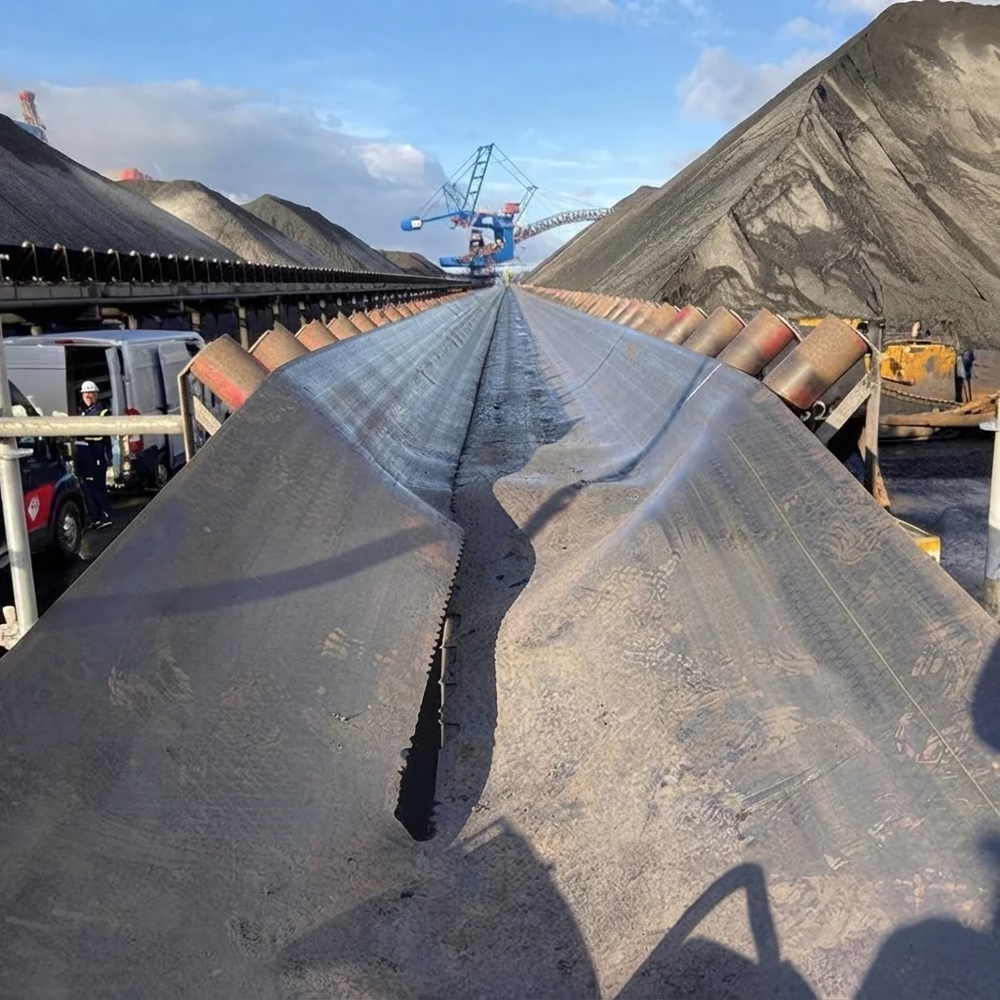
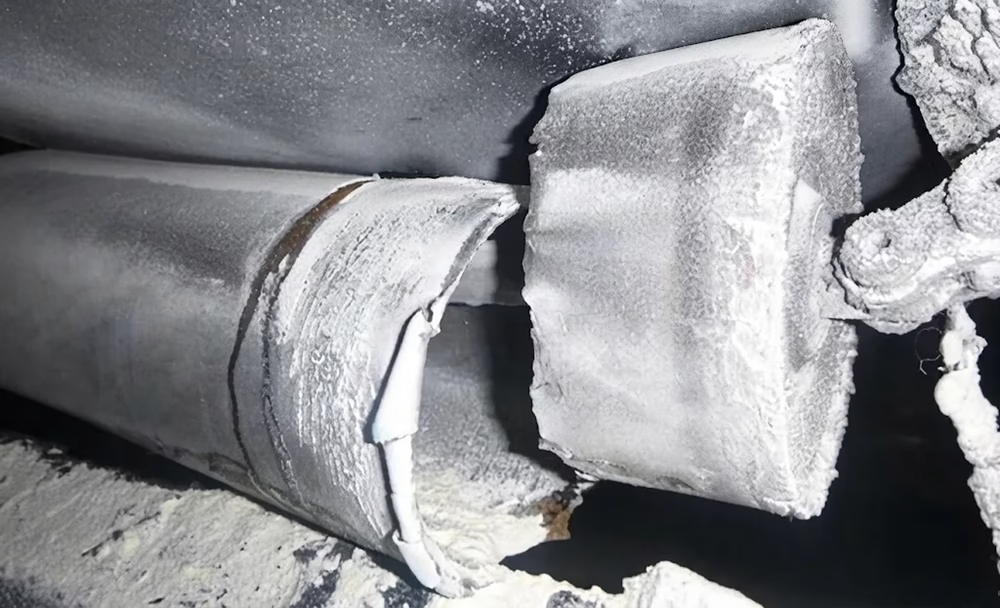
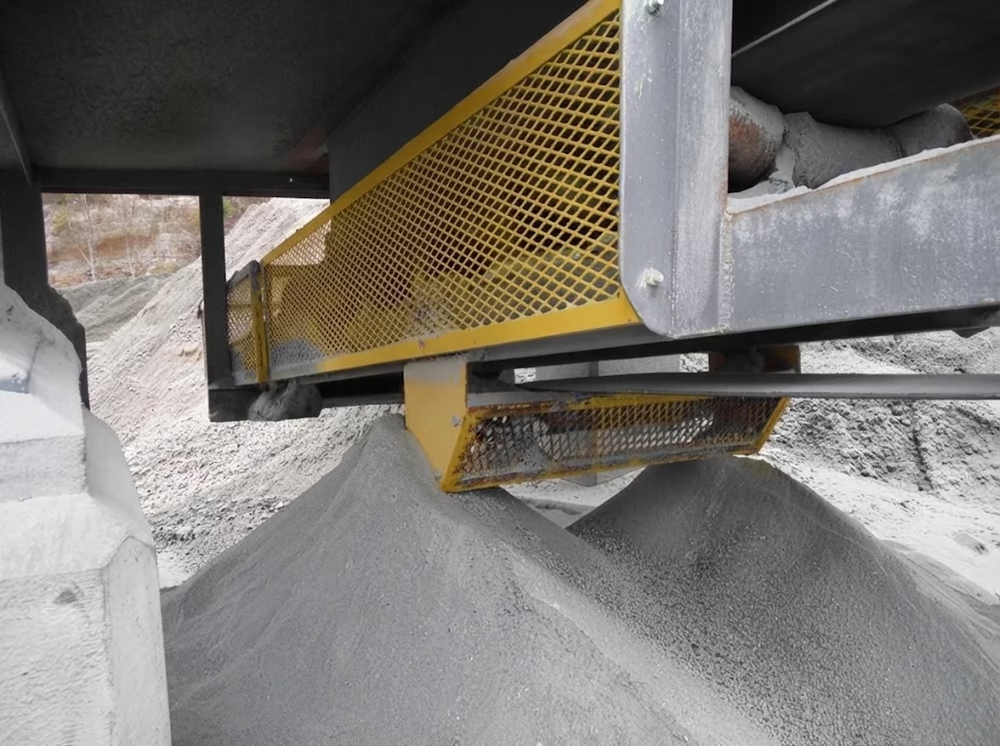
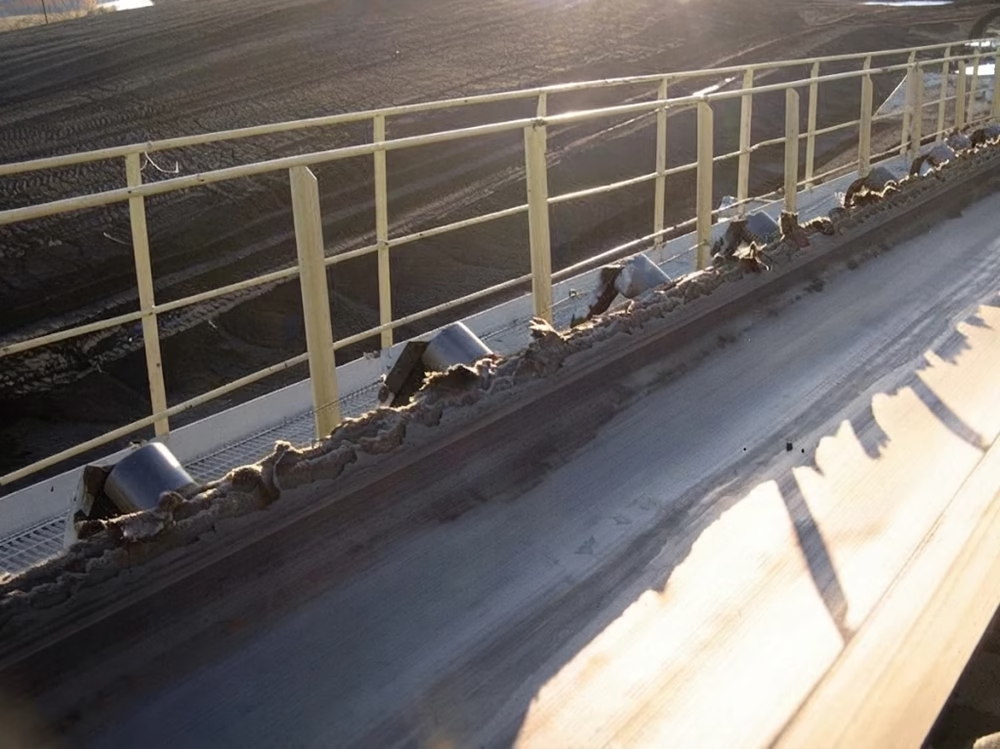
When a conveyor develops mistracking, slippage, noisy idlers, or abnormal wear, use these symptoms to identify which belt conveyor parts need inspection. Identify the cause before making adjustments or repairs. The table below outlines common belt conveyor troubleshooting checks.
| Symptom | Common causes | Inspection and corrective action |
|---|---|---|
| Belt mistracking | Misaligned idlers or pulleys, material buildup, or uneven feeding | Check the loading position and idler and pulley alignment. Remove buildup and adjust component positions if necessary. |
| Belt slippage | Insufficient tension, worn pulley lagging, or excessive load | Check the take-up system, pulley lagging, and operating load. Identify the cause before making adjustments. |
| Noisy or seized idlers | Bearing damage, material buildup, or roller wear | Stop the conveyor and inspect the bearings and roller body. Remove buildup and replace damaged idlers. |
| Material spillage | Off-center loading, poor loading chute sealing, or belt mistracking | Check the feed position, skirtboards and seals, and the belt’s running path. Adjust or replace damaged components. |
| Abnormal belt wear | Seized idlers, belt edges rubbing against nearby structures, or material impact | Use the location of the wear to guide checks of the idlers, frame, and loading area. Eliminate the cause of the abnormal wear. |
Where Should You Check First if the Belt Is Mistracking?
If the belt tracks normally when empty but moves off-center under load, check first whether the loading point is offset to one side. If the belt consistently tracks toward the same side, inspect pulley and idler alignment, material buildup, and frame alignment.
Do not simply tighten the belt as soon as mistracking occurs. Excessive tension may fail to correct the problem and can increase stress on the bearings and belt.
Does Belt Slippage Always Mean Insufficient Tension?
No. Worn drive pulley lagging, a wet pulley surface, or an excessive conveying load can also cause slippage.
If the take-up system is working correctly, focus on the pulley surface and operating load. Relying only on increased tension can accelerate bearing and belt wear.
When Should Belt Conveyor Parts Be Repaired or Replaced?
Worn belt conveyor parts do not always need immediate replacement. First check whether the damage affects normal operation and whether the component can be reliably repaired. Replace parts that present a safety risk or cannot be restored to proper working condition.
| Component | Conditions that may require repair or replacement | Recommended action |
|---|---|---|
| Conveyor belt and splice | Deep cuts, damage to the belt carcass, splice separation, or delamination | Assess localized damage for repair. Consider replacement when the carcass or splice is severely damaged. |
| Idler rollers | Seized bearings, a deformed roller body, severe wear, or failure to rotate normally | Damaged idlers are generally replaced as complete units. |
| Pulleys and lagging | Extensive lagging separation, pulley surface damage, or bearing failure | Repair the lagging or service the bearings according to the damage. Replace the pulley if necessary. |
| Belt cleaner blades | Severe wear, damage, or inability to remove residual material effectively | Check the installation and blade contact first. Replace the blade if effective cleaning cannot be restored. |
| Impact bars and seals | Severely worn or detached impact bars, or damaged loading chute seals causing persistent leakage | Replace damaged components and check their installation. |
| Drive and take-up components | A damaged, seized, or malfunctioning gearbox, coupling, or take-up mechanism | Stop the conveyor and inspect the affected components. Repair them if reliable restoration is possible; otherwise, replace them. |
What Should You Check Before Replacing Parts?
Before ordering replacement conveyor parts, confirm that their specifications and mounting dimensions match the existing equipment. For nonstandard components, provide photos of the old part, key dimensions, or drawings so the supplier can help verify compatibility. This reduces the risk of receiving parts that cannot be installed.
Which Belt Conveyor Wear Parts Should You Keep in Stock?
For continuously operating conveyors, keeping commonly used belt conveyor parts in stock can help reduce downtime. Idler rollers, belt cleaner blades, and impact bars deserve particular attention: if a suitable replacement is unavailable when one fails, repairs may be delayed. Select the types and quantities of conveyor spare parts according to replacement frequency and procurement lead time.
| Common spare part | Why keep it in stock? | What to confirm when ordering |
|---|---|---|
| Idler rollers | Seized or damaged idlers need prompt replacement to prevent belt damage | Idler type, diameter, length, shaft-end dimensions, and mounting arrangement |
| Belt cleaner blades | Worn blades reduce cleaning effectiveness and can lead to buildup along the return run | Blade material, length, cross-sectional dimensions, and mounting interface |
| Impact bars | Repeated loading impacts cause wear that can reduce cushioning and support | Length, width, height, and fastening method |
| Bearings and seals | Allow prompt servicing of repairable pulleys and other bearing assemblies | Bearing designation, seal type, and mounting dimensions |
| Belt repair and splice materials | Used for belt surface damage and splice problems that are suitable for repair | Belt type, belt width, rubber cover specifications, and splicing method |
| Safety switches | Failed belt misalignment switches, pull-cord switches, and similar devices can affect safe operation | Switch model, electrical ratings, and mounting dimensions |
How Many Belt Conveyor Parts Should You Keep in Stock?
Stock levels depend mainly on three factors: replacement frequency, procurement lead time, and the impact of downtime. For frequently replaced items such as idlers and cleaner blades, keep additional stock based on actual usage. Plan purchases in advance for critical parts with long lead times or parts whose failure could stop the entire production line. Expensive items such as a complete conveyor belt or pulley do not always need to be held in stock. Decide based on equipment criticality, supply lead time, and downtime costs.
If you need replacement parts for an existing conveyor, contact Guofeng. Send the equipment model, photos of the old parts, or key dimensions, and we can help check part specifications and installation requirements to identify suitable replacements.
FAQs
1. How Often Should a Belt Conveyor Be Inspected?
Check operating conditions daily or during each shift. Inspect components prone to wear, including the belt, idlers, and belt cleaners, weekly, and arrange a more comprehensive mechanical and electrical inspection every month. Increase inspection frequency as needed for conveyors operating continuously under heavy loads or in dusty environments.
2. Do Belt Conveyors Need Frequent Lubrication?
Not every component requires regular lubrication. Many idlers use sealed bearings that generally do not need greasing on site. Lubricate pulley bearings, gearboxes, and other serviceable components using the methods and intervals specified in the equipment manual. Avoid both insufficient lubrication and over-lubrication.
3. How Long Does a Conveyor Belt Usually Last?
A conveyor belt has no fixed service life. Its lifespan depends mainly on material abrasiveness, operating load, environmental conditions, and maintenance. When deciding whether replacement is necessary, focus on surface wear, carcass damage, and splice condition rather than age alone.
4. Should a Belt Conveyor Be Started Without a Load?
In general, start the conveyor before gradually introducing material. Where possible, clear material from the belt before shutdown to reduce the load at the next startup. Some conveyors are designed to start under load, so follow the requirements of the equipment design and operating procedures.
5. What Should Be Checked Before Restarting a Conveyor After a Long Shutdown?
Before restarting, inspect the belt and splices for damage, check for seized idlers or pulleys, and confirm that the take-up system is working correctly. Remove accumulated material and foreign objects. Also check drive system lubrication and safety devices. Restart only after confirming that the equipment is safe to operate.
6. Can Replacement Parts Be Custom-Made to Fit Existing Equipment?
Some idlers, pulleys, and other mechanical parts can be made to match the dimensions and mounting requirements of existing equipment. When requesting a quotation, provide the equipment model, photos of the old parts, key dimensions, or drawings to help verify specifications and mounting arrangements. Whether a part can be customized depends on its type and technical requirements.
Need help with a similar request?
Share your product requirements, timeline and cooperation goals. We can help clarify the next step.