
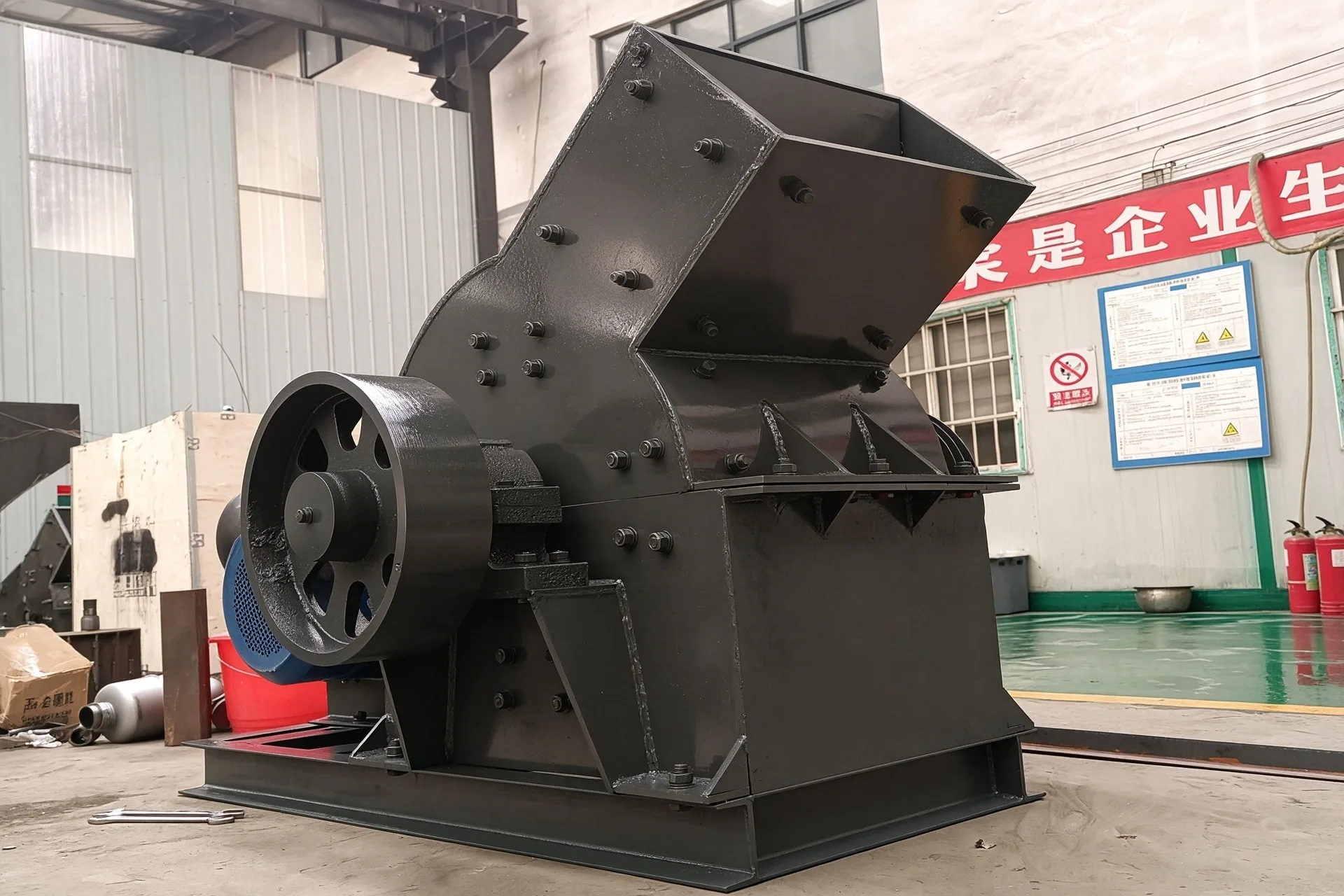
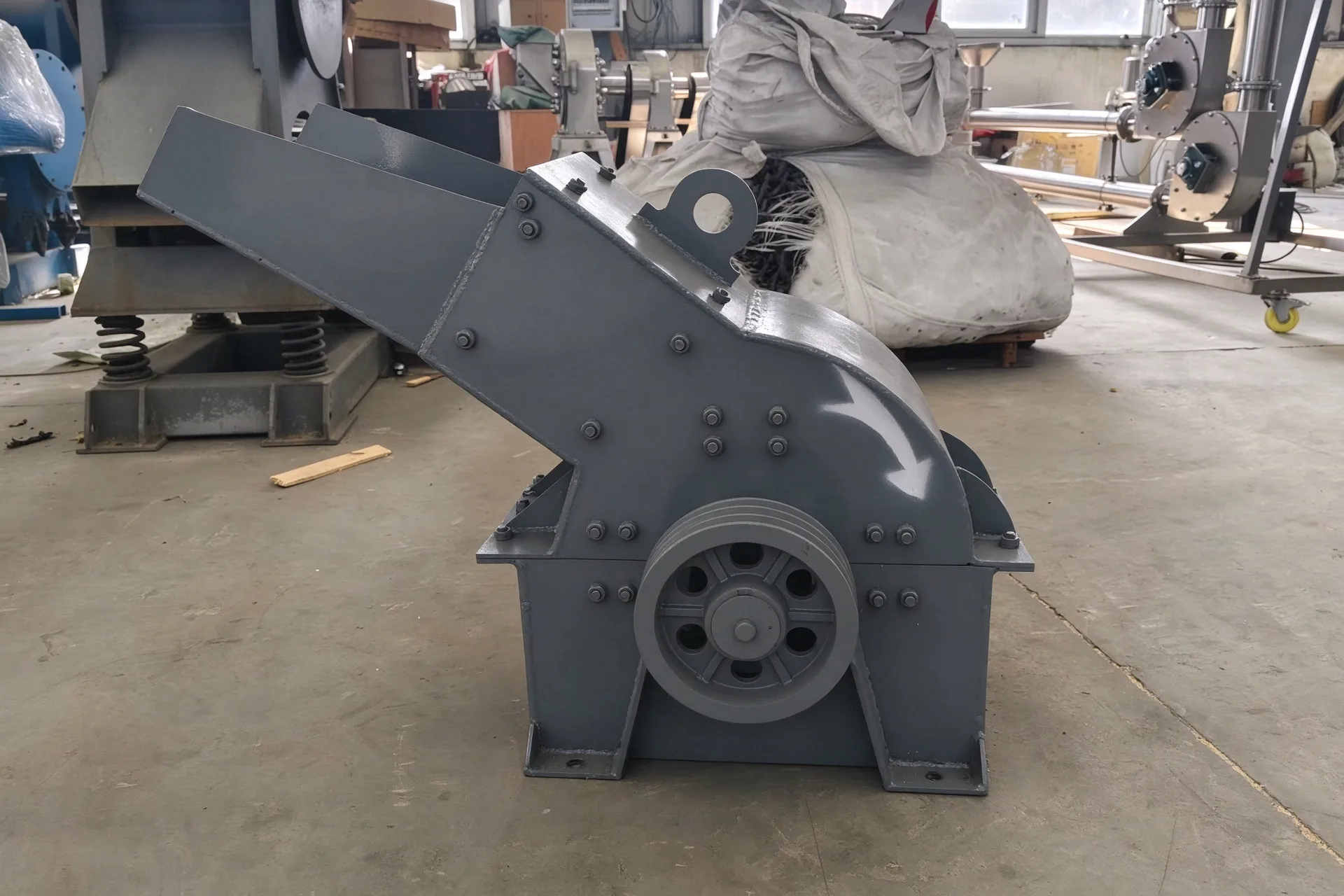
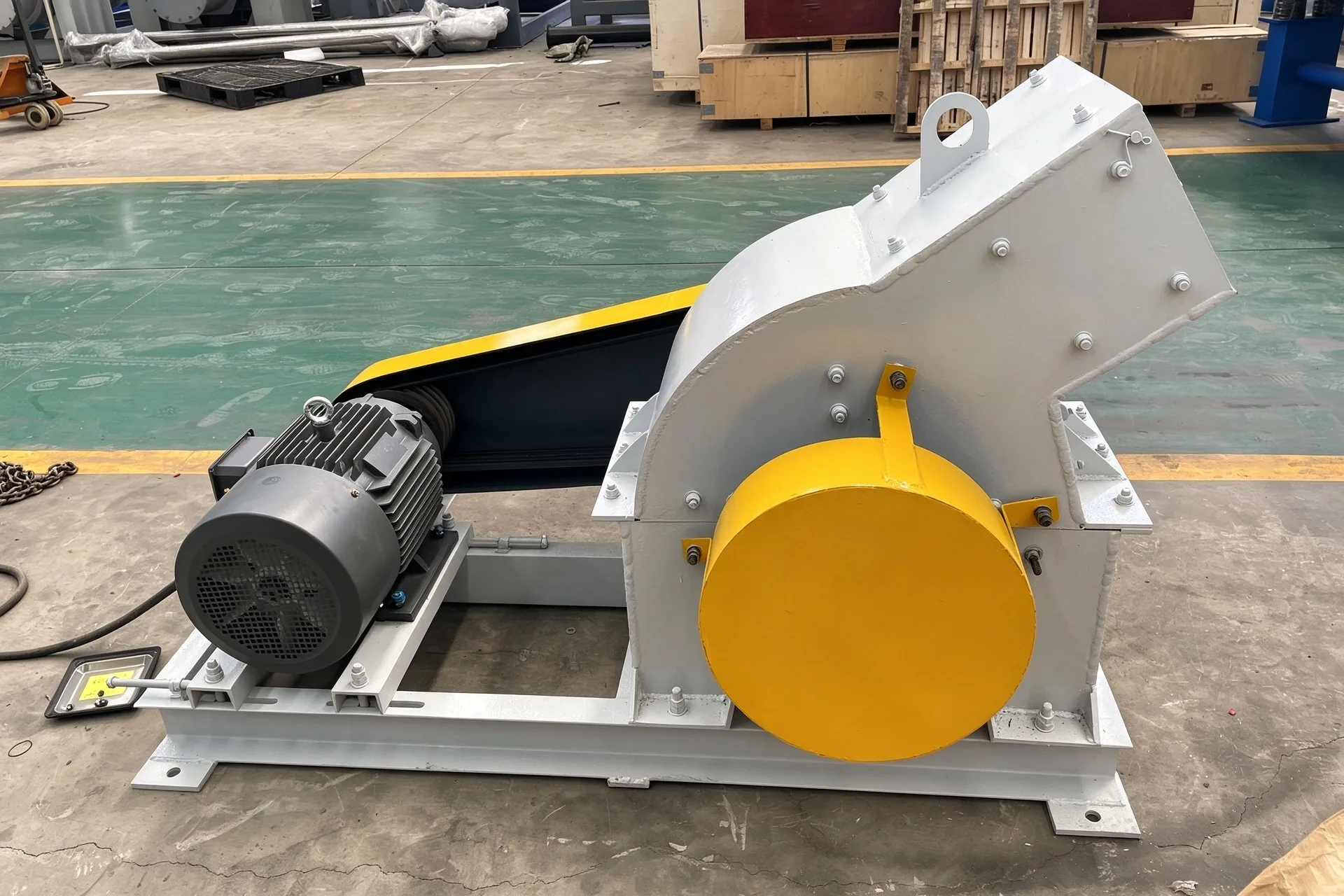
What Is a Hammer Crusher?
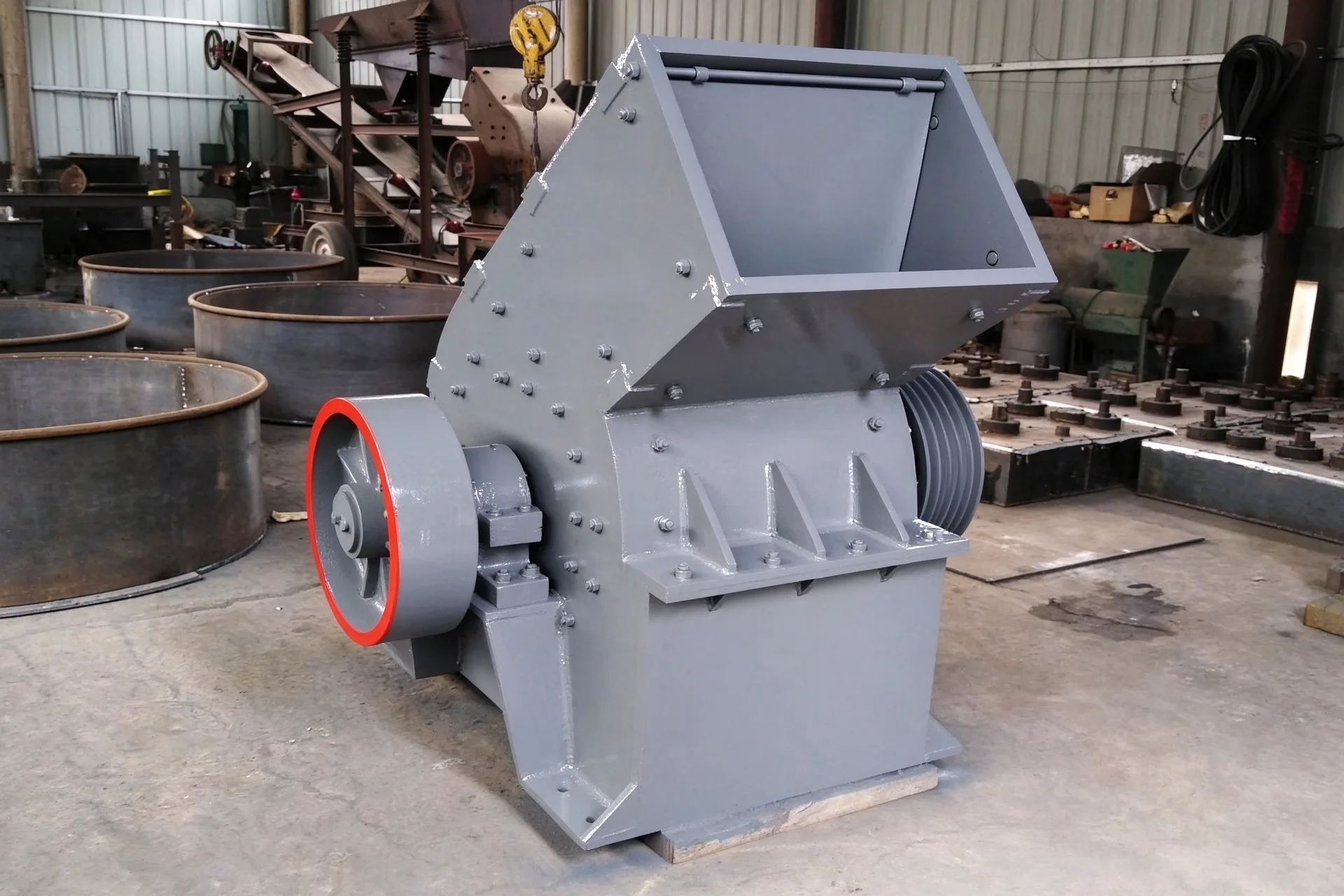
A hammer crusher breaks brittle material by impact. Hammers hang on pins between rotor discs, and the rotor turns inside a steel chamber. Feed drops into the hammer path, is struck, and flies against the breaker plates on the chamber wall. A grate under the rotor holds oversize inside until it is small enough to pass. The same machine is often called a hammer mill crusher when it runs a finer grate.
The PC hammer crusher is intended for suitable brittle materials such as limestone, coal, gypsum, shale and brick waste. Check feed size against the selected model and review hardness, abrasiveness and moisture before selection. Sticky or highly abrasive feed may require another crushing process.
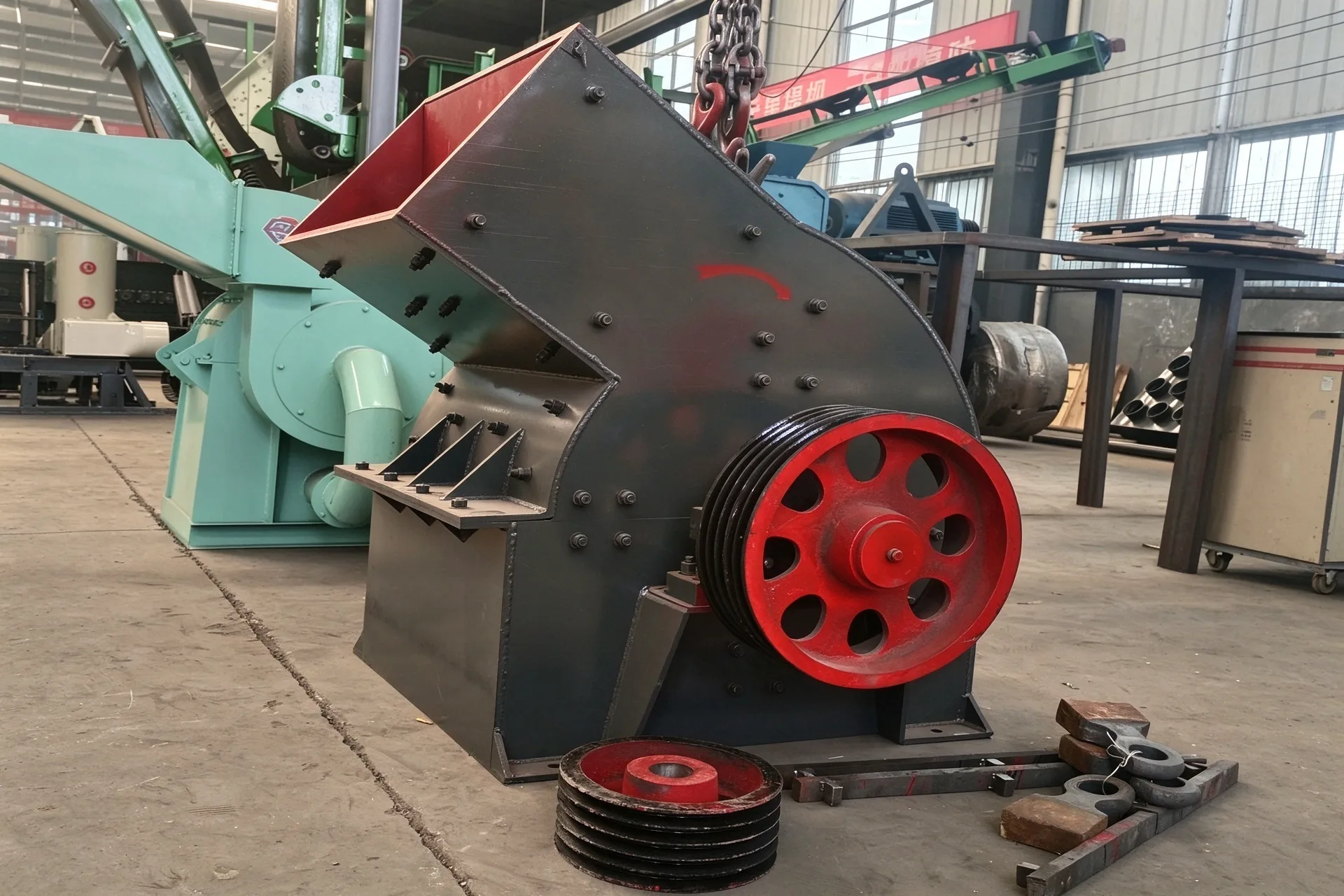
Working Principle and Structure
The crushing cycle follows feed entry, hammer impact, repeated impact, and discharge through the grate.

Feed Enters the Hammer Path
Material drops through the feed chute into the upper chamber, where the rotor is already at full speed.
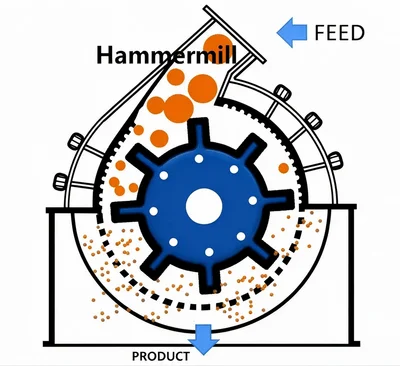
Hammers Strike and Throw
The rotating hammers strike the feed and direct it toward the chamber liners. The crushing result depends on rotor configuration, speed, material properties and grate arrangement.
Breaker Plates Break the Rebound
Rebounding lumps meet the next hammer pass, so one piece is hit several times before it reaches the bottom of the chamber.
The Grate Sets the Exit
Particles below the grate gap fall out. Oversize sits on the bars and is struck and ground until it fits through.
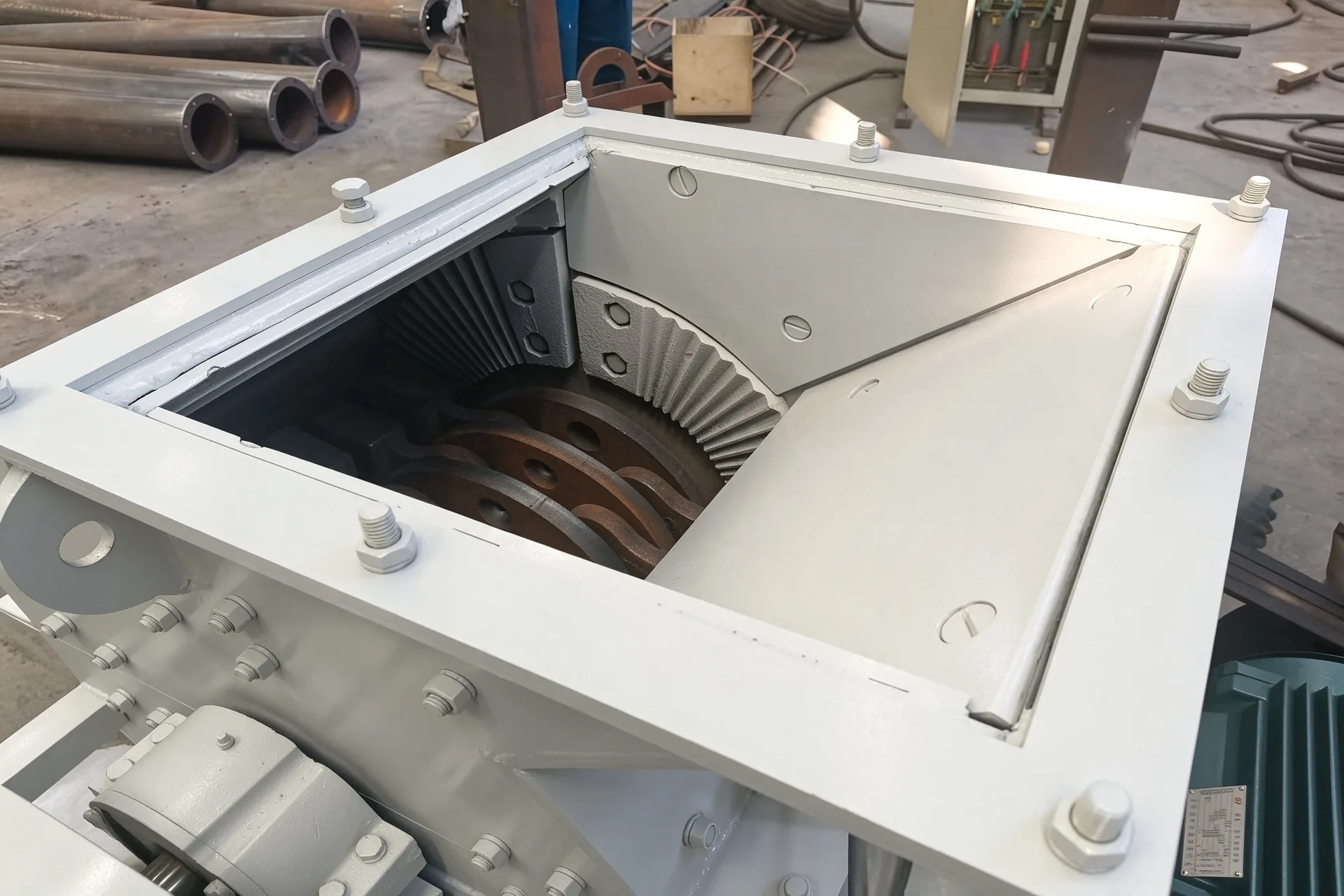
The rotor, hammers, chamber liners, and grate form the crushing assembly.
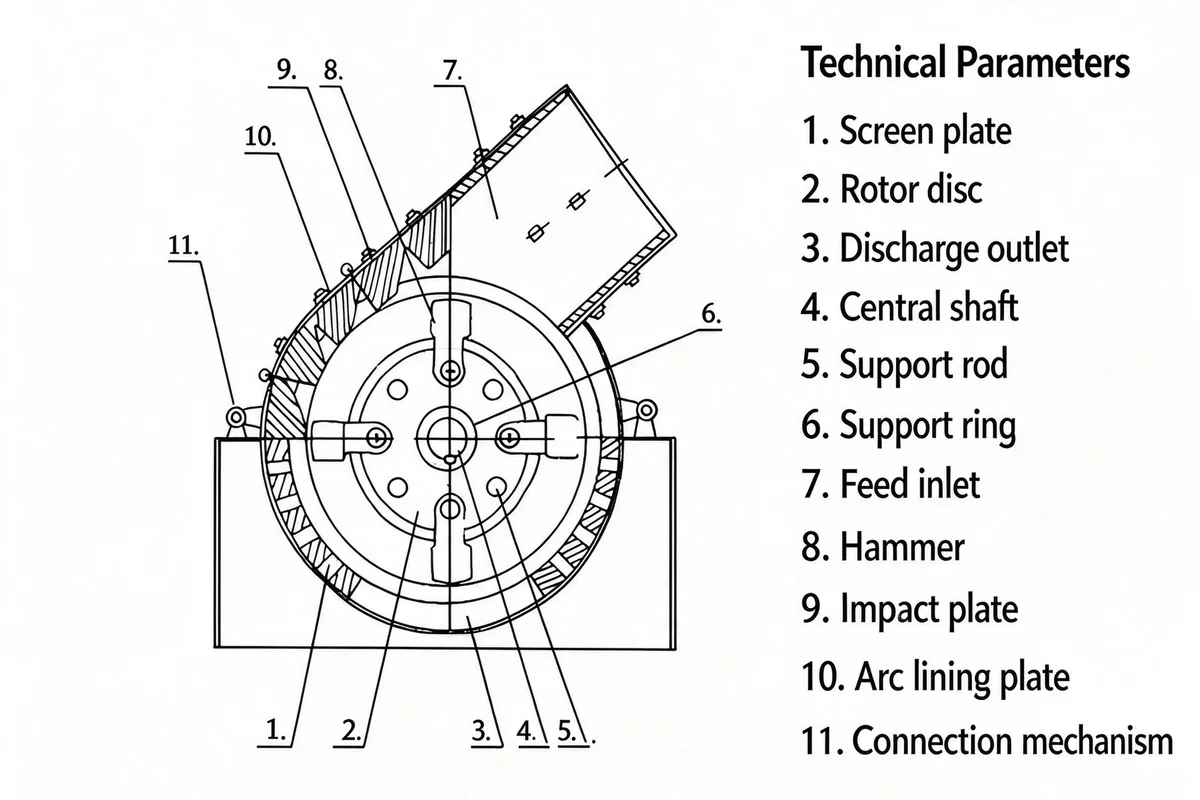
| Part | Function |
|---|---|
| Feed chute | Directs material into the hammer path and stops free fall |
| Crushing chamber | Encloses the rotor and carries the breaker plates |
| Rotor shaft | Transmits motor torque and carries the disc stack |
| Hammer discs | Space the hammers and fix their axial position |
| Pin shafts | Hang the hammers so they swing back on tramp metal |
| Hammers | Deliver the impact energy; the main wear part |
| Breaker plates | Break material on rebound; clearance is adjustable |
| Grate bars | Set the product top size and hold oversize |
| Frame and liners | Carry the load and protect the shell from wear |
| Drive | Motor and coupling bring the rotor to speed |
Types of Hammer Crusher
Hammer crushers are named by rotor layout and by what the chamber is built to take.
| Type | Build | Feed it takes | Where it is used |
|---|---|---|---|
| Single-rotor | One rotor, swinging hammers, grate | Brittle feed up to 350 mm | Secondary and fine crushing |
| Double-rotor | Two rotors in one chamber | Larger feed, higher ratio | High-capacity fine crushing |
| Reversible | Symmetric chamber, turns both ways | Small, clean feed | Even hammer wear |
| Heavy-duty | Oversized opening, heavy hammers | Run-of-mine limestone | Primary crushing in one pass |
| Ring hammer | Rings on pins instead of hammers | Coal, high moisture | Power plants and coal yards |
| Mobile | Crusher on a chassis with feeder | Demolition and site waste | Temporary or moving sites |
GUO FENG’s PC series is the single-rotor type. It covers most secondary duties; the other five cover feed the standard chamber cannot take.
Part Details
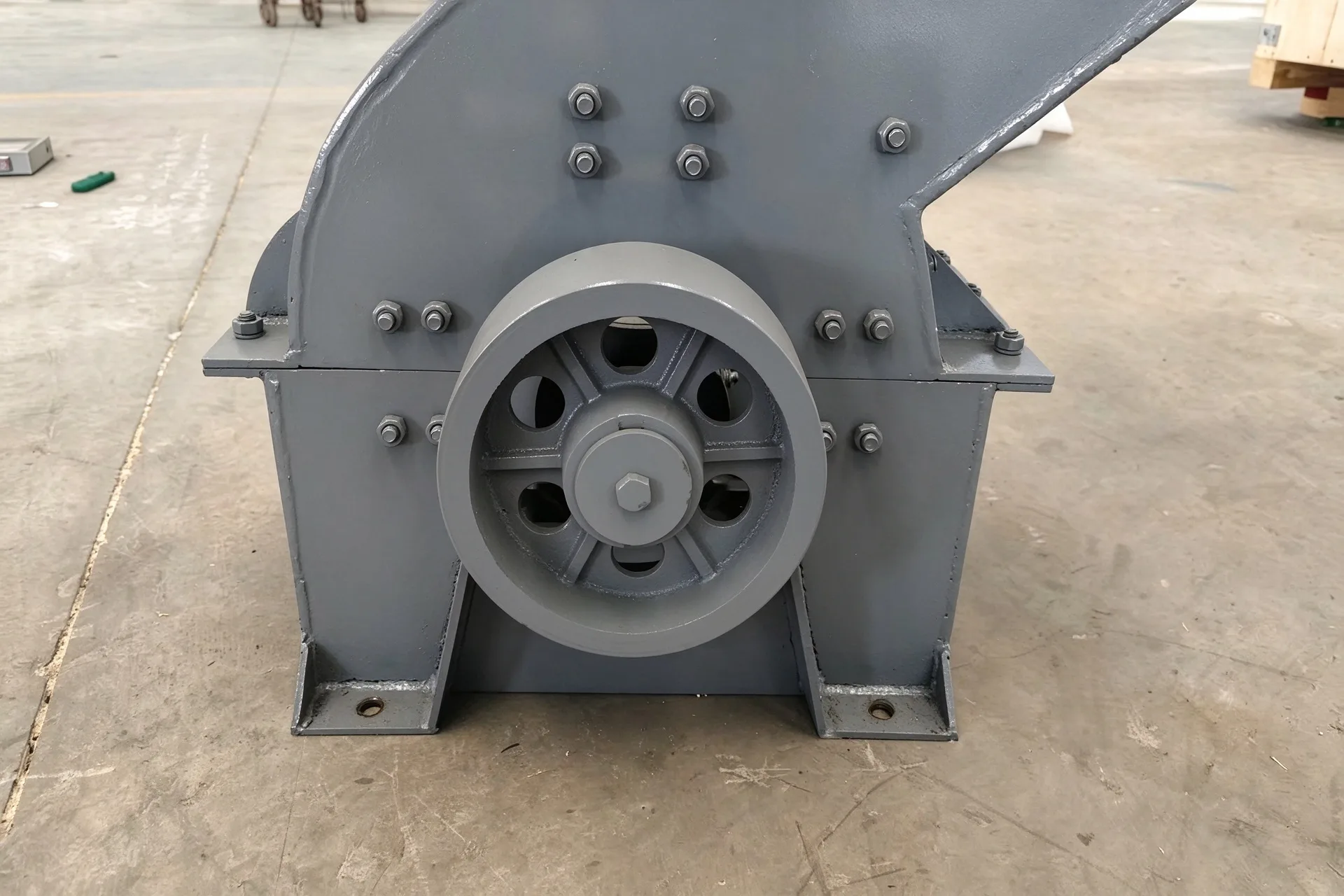
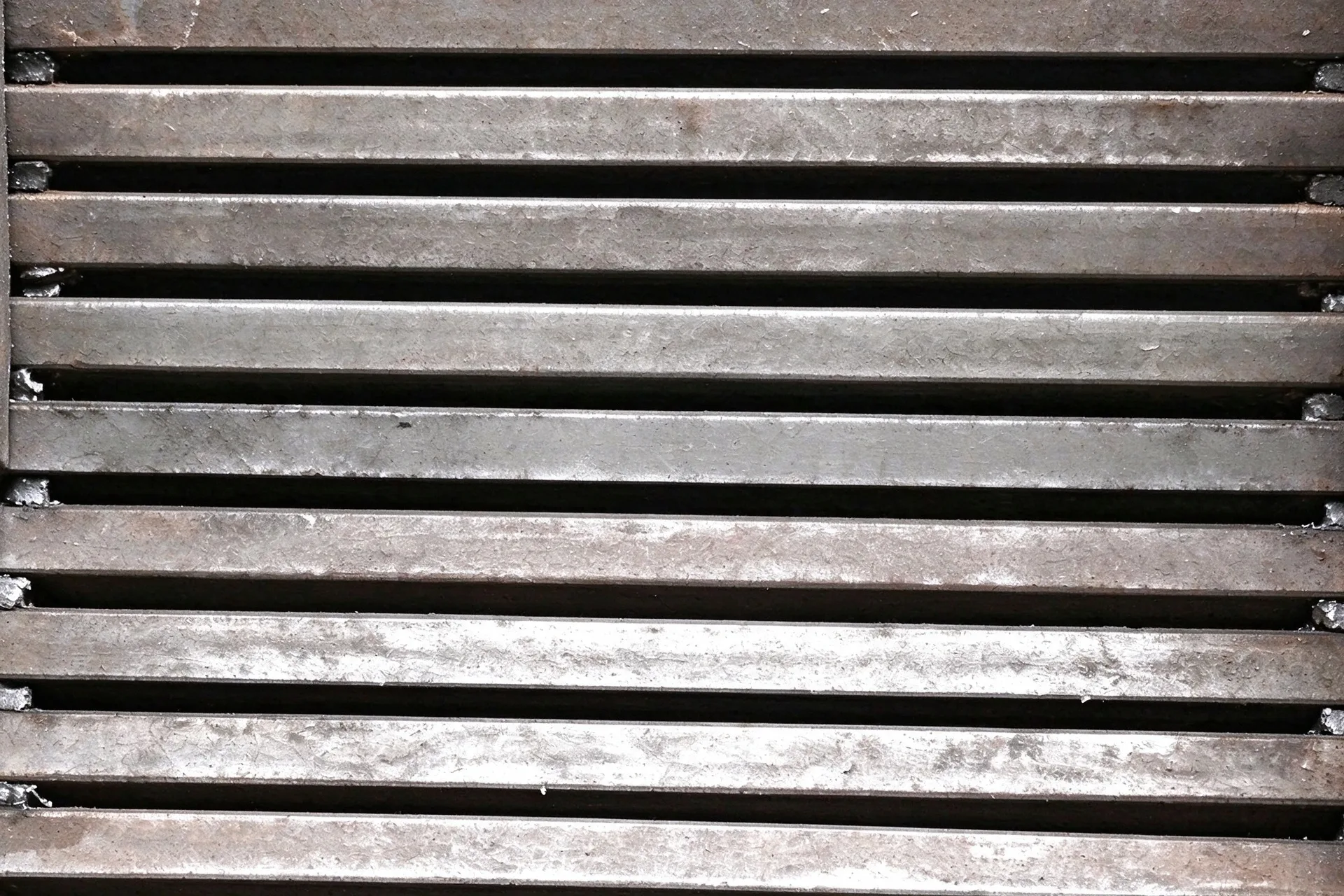
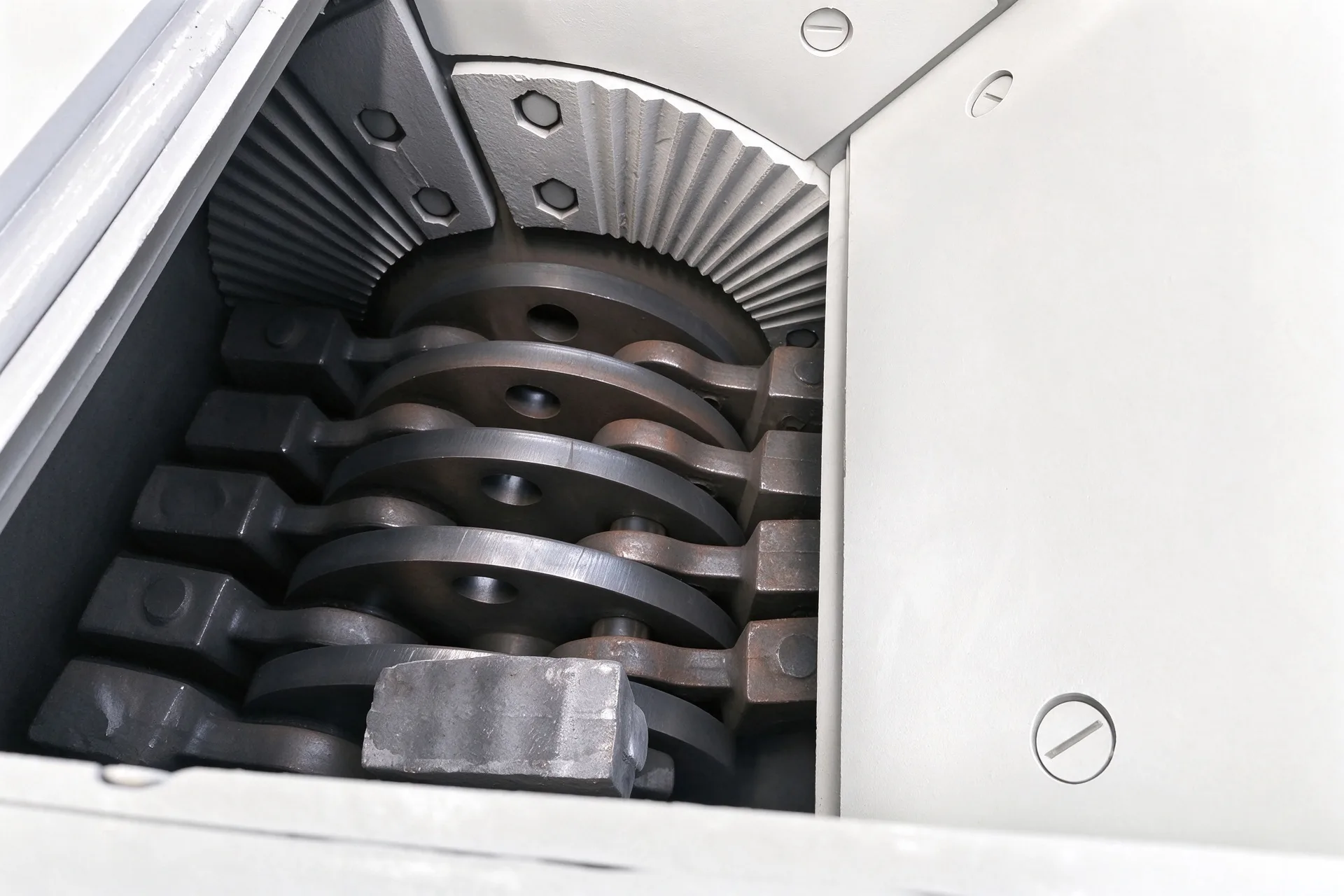
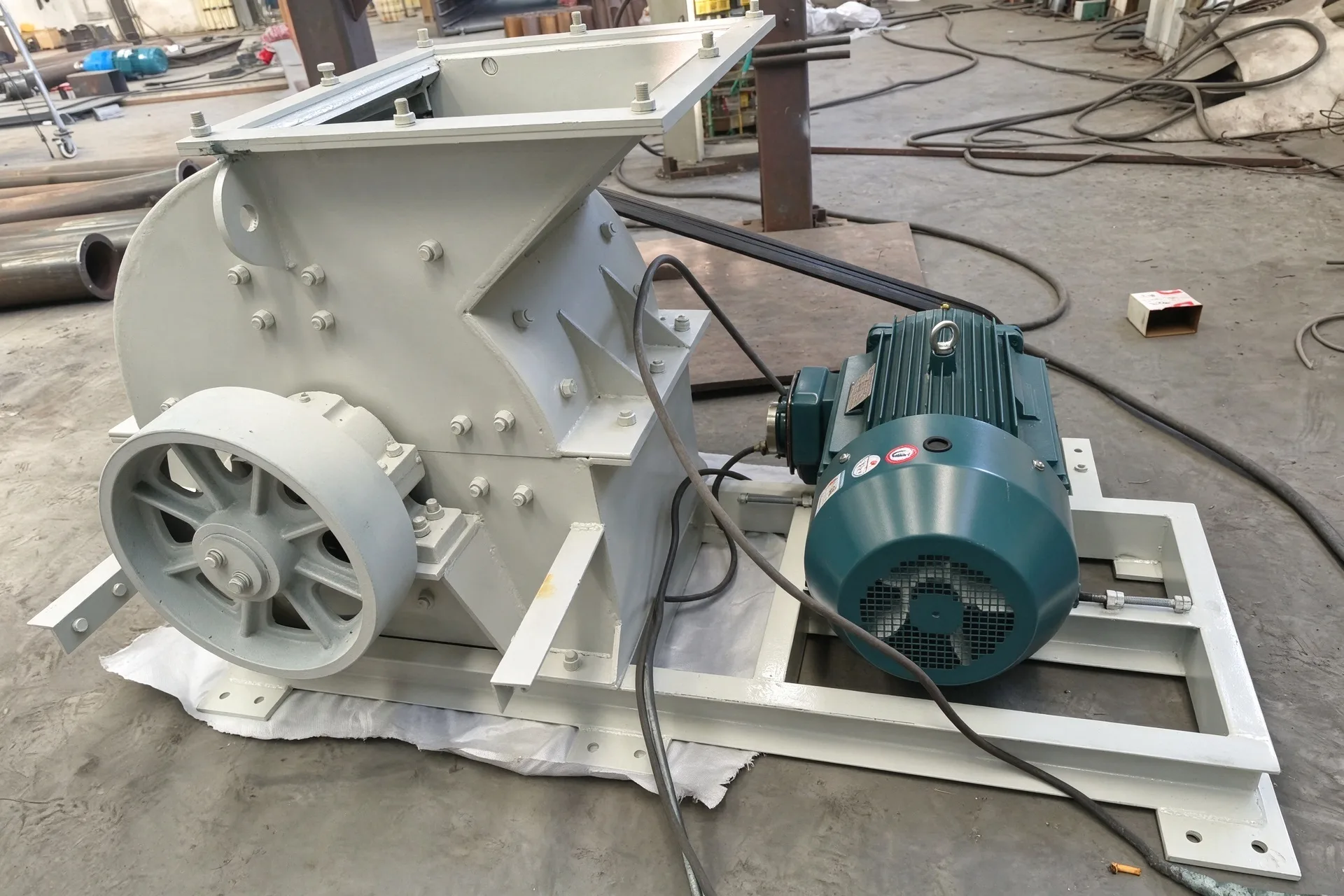
Advantages
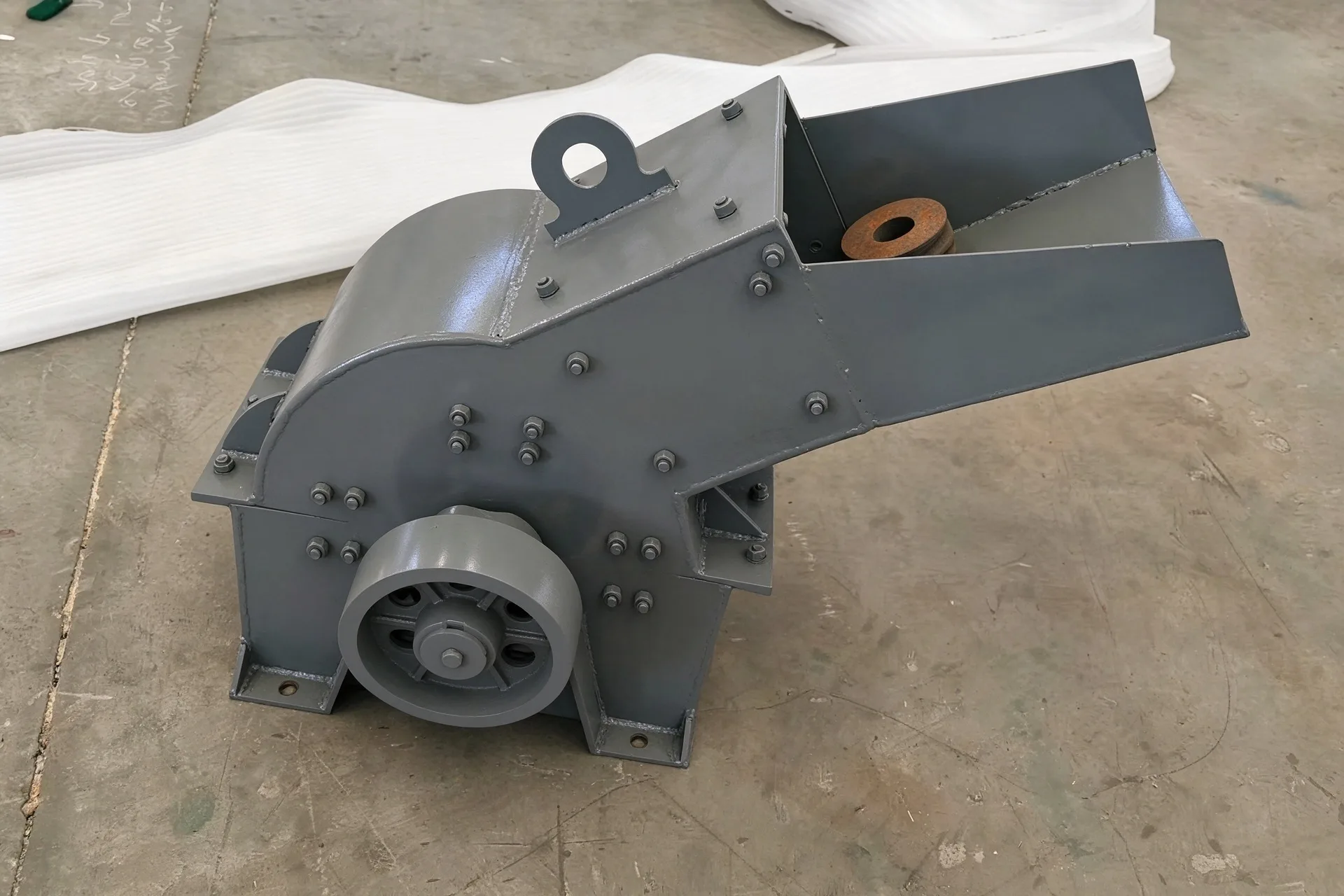
The PC series combines a single rotor, swinging hammers, and grate-controlled discharge.
Big Reduction in One Pass
The single-rotor hammer crusher reduces suitable brittle feed through repeated impact. The achievable reduction and product distribution must be assessed for the selected model and material.
Output Size You Can Set
Grate opening helps control product size, together with rotor speed, hammer condition, feed distribution and material properties. Confirm the required product curve during selection.
Simple Build, Few Stops
Rotor, hammers, grate, frame. Few moving parts means less to align, less to lubricate and fewer things to replace.
Low Headroom
The rotor lies flat and the product falls straight down. The unit fits under an existing silo or conveyor without a tall transfer tower.
Hammer Crusher vs Jaw Crusher vs Impact Crusher vs Roll Crusher
The four crusher designs use different crushing actions and suit different feed and product requirements.
Hammer Crusher
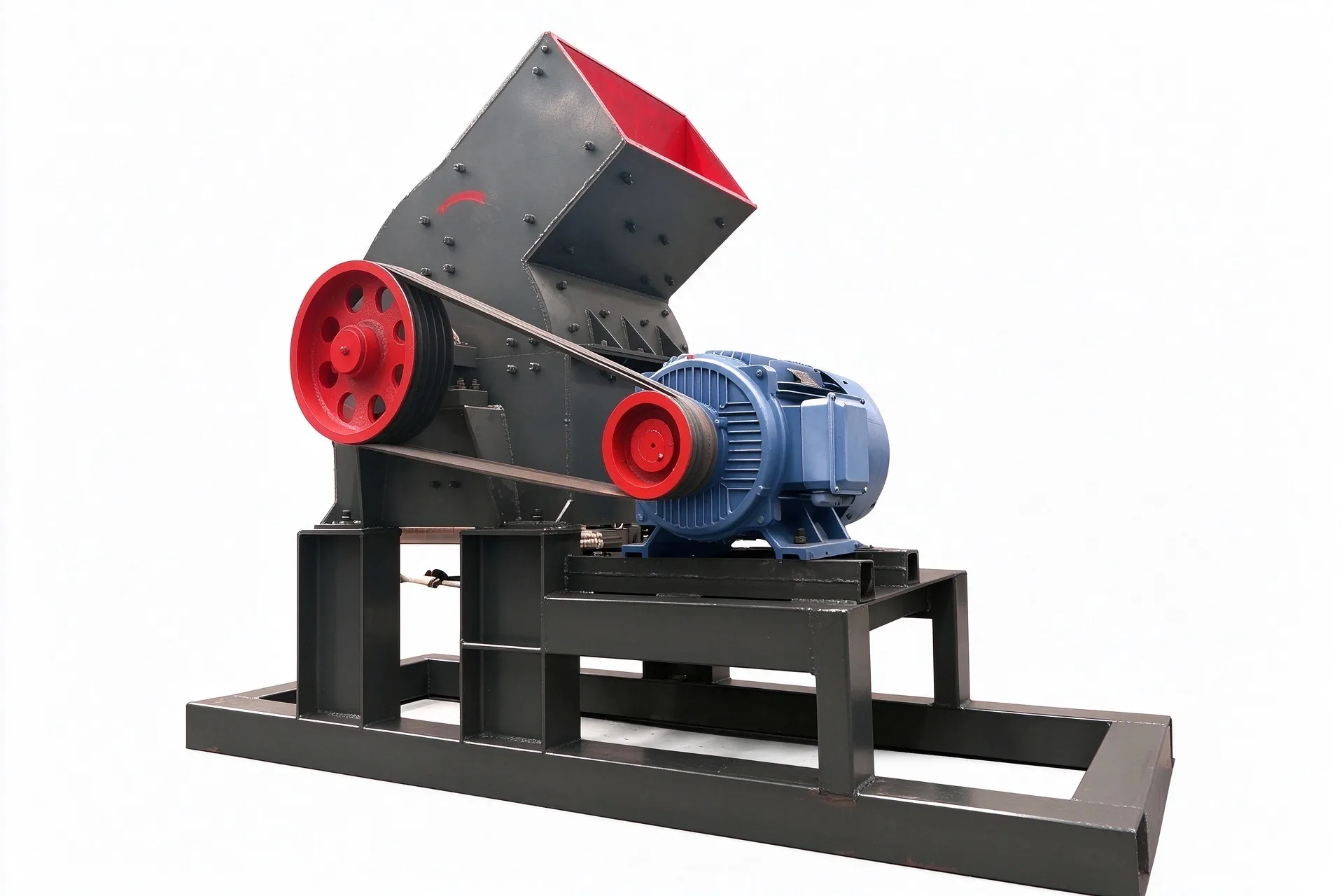
A hammer crusher uses high-speed rotating hammers to crush materials through impact. It offers a high crushing ratio and can reduce feed materials to smaller sizes in a single stage. Compared with jaw and roll crushers, it produces finer output, making it suitable for applications that require direct size reduction. However, it generates more fines and is less suitable for highly abrasive materials.
Jaw Crusher
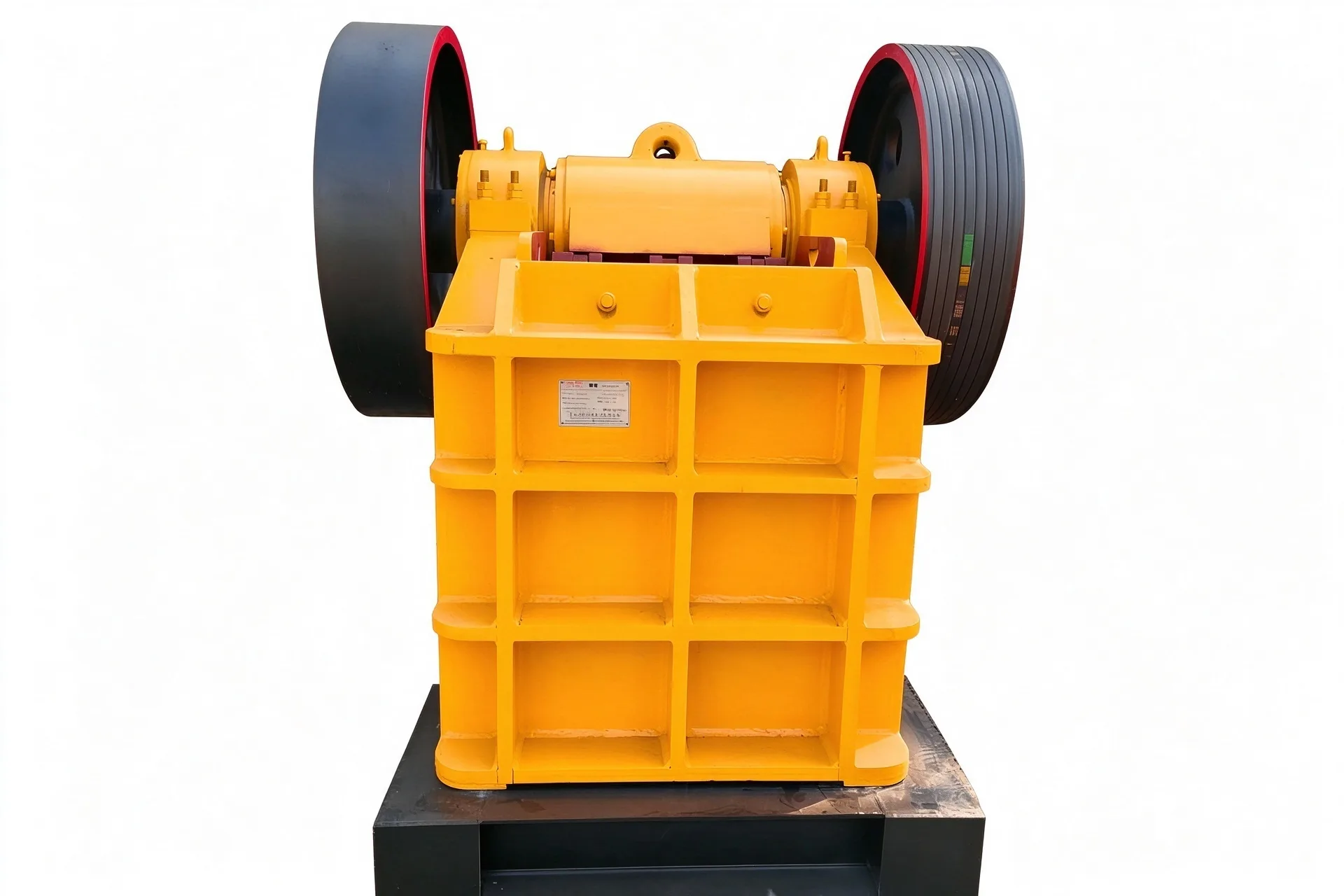
A jaw crusher uses compression between two jaws and is mainly designed for primary crushing of large rocks. It handles larger feed sizes and harder materials than a typical hammer crusher, but usually requires secondary crushing equipment to achieve finer output.
Impact Crusher
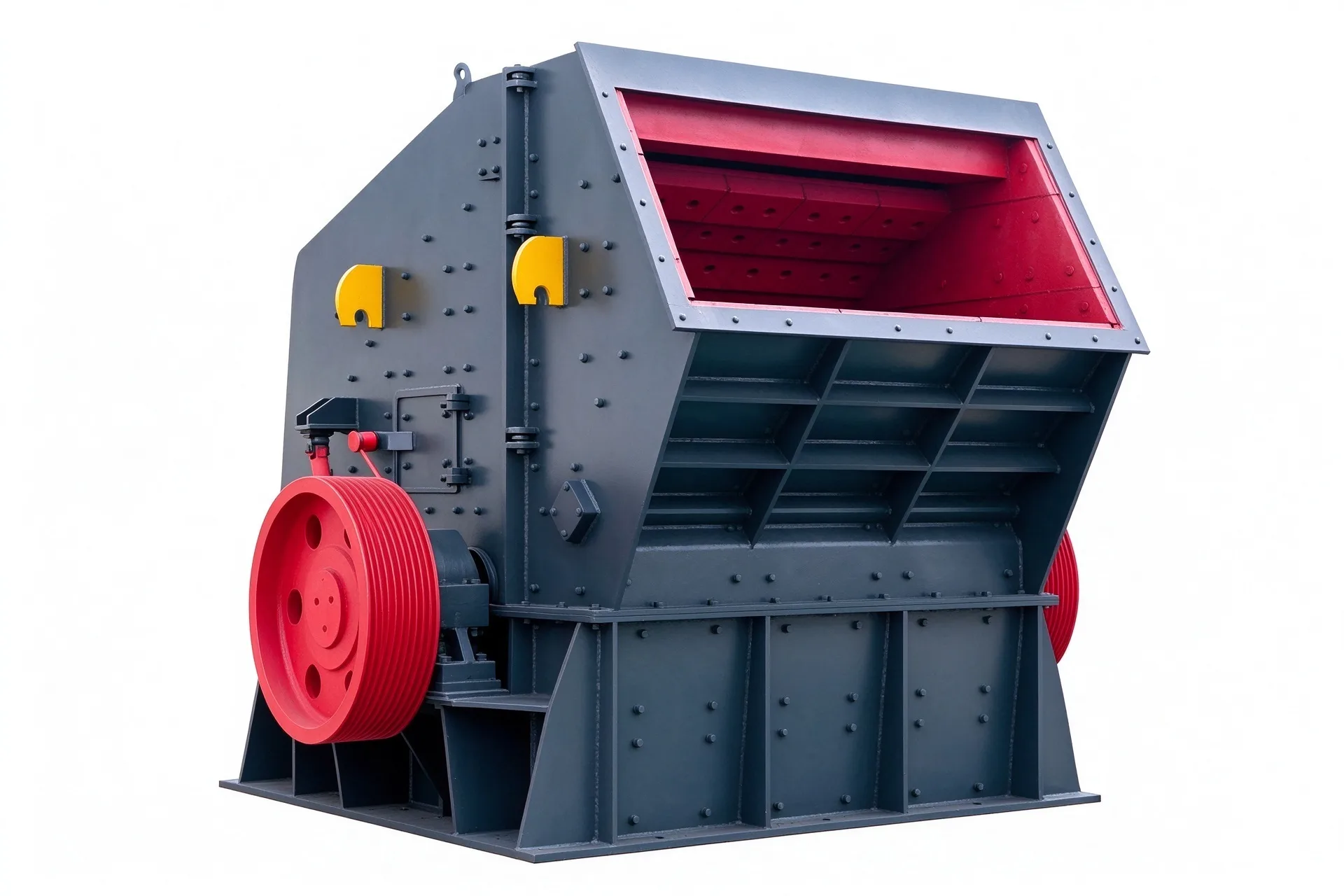
An impact crusher also relies on impact but uses a rotor and impact plates rather than swinging hammers. It is often selected when particle shape is important, especially in aggregate production. Compared with a hammer crusher, it generally offers better particle shape, but wear on the blow bars and impact plates can be higher when processing abrasive materials.
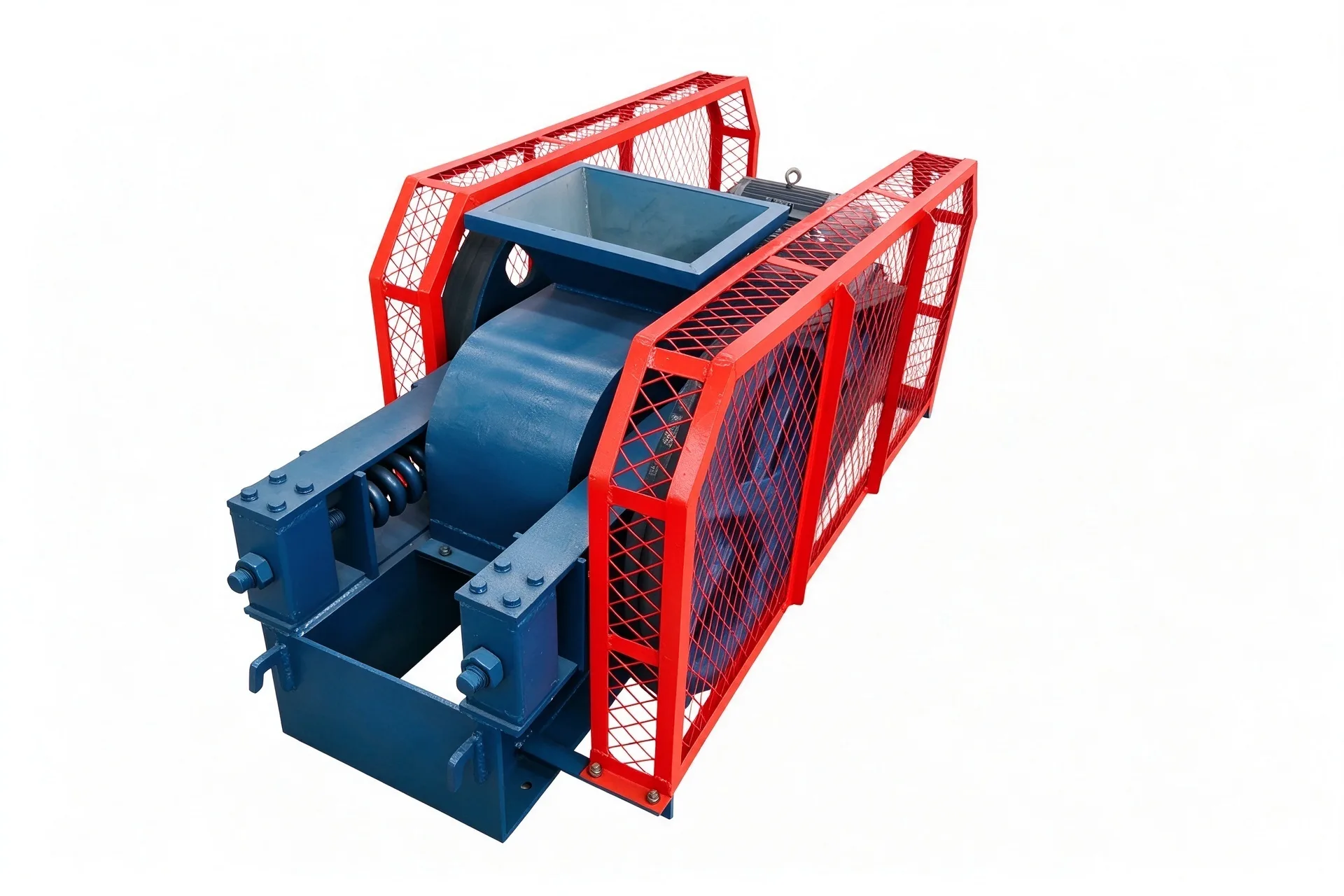
Roll Crusher
A roll crusher reduces materials through compression between two rotating rollers. It produces fewer fines and allows discharge size adjustment through the roller gap. Compared with a hammer crusher, it is more suitable for controlled secondary or fine crushing, but has a smaller feed capacity for large blocks.
Compare crusher types using feed size, abrasiveness, hardness, moisture, product-size requirements and required throughput. A hammer crusher is one option for suitable brittle feed; no fixed silica or moisture percentage establishes suitability for every material.
CONTACT US
Hammer crusher or impact crusher?
Send the feed curve. Impact gives the better particle shape, hammer gives the higher ratio at lower cost on low-silica feed.
Hammer Crusher Specifications
Six PC models are listed below, with model-specific feed limits, output size, capacity, and drive power.
| Model | PC530×300 | PC600×400 | PC800×600 | PC1000×800 | PC1300×1200 | PC1600×1600 |
|---|---|---|---|---|---|---|
| Rotor diameter (mm) | Φ530 | Φ600 | Φ800 | Φ1000 | Φ1300 | Φ1600 |
| Rotor working length (mm) | 300 | 400 | 600 | 800 | 1200 | 1600 |
| Rotor speed (r/min) | 1000 | 1000 | 1000 | 960 | 740 | 585 |
| Max feed size (mm) | 80 | 100 | 120 | 200 | 250 | 350 |
| Output size (mm) | <10 | <10 | <12 | <18 | <29 | <30 |
| Capacity (t/h) | 8–12 | 10–25 | 20–40 | 25–60 | 60–150 | 200–280 |
| Power (kW) | 15 | 18.5 | 55 | 115 | 240 | 480 |
| Weight (kg) | 950 | 1500 | 3100 | 7900 | 13600 | 19600 |
The listed capacity values use a reference material density of 1.4–1.6 t/m³ with graded, continuous feed. Actual output and drive duty depend on moisture, feed distribution and the selected product size. Confirm the motor, frame, chute and other included items in the quotation.
Customization
The following options adapt the rotor, wear parts, drive, and connections to the material and installation.
| Option | Choices | What it solves |
|---|---|---|
| Rotor size | Φ530×300 to Φ1600×1600 | Matches feed opening and tonnage |
| Hammer material | High-manganese, high-chromium, composite | Balances wear life and impact toughness |
| Hammer weight | 8–80 kg per hammer | Sets impact energy against rotor load |
| Grate gap | 3–30 mm | Sets the product top size |
| Grate pattern | Bar, screen plate, comb | Handles moisture and product shape |
| Feed chute | Bolt-on, linered, angled | Fits the feeding conveyor |
| Drive type | Direct coupling or V-belt | Fits the available motor and speed |
| Motor and voltage | 380 / 400 / 415 / 440 / 460 V, 50 or 60 Hz | Matches site power |
| Frame and discharge | Welded frame, manganese liners, chute or hopper | Fits the foundation and the next stage |
| Instrumentation | Local panel, overload relay, vibration switch | Protects the rotor on tramp metal |
For controlled feeding from a hopper, review the GZ Series Electromagnetic Vibrating Feeder. Confirm its feed-size and capacity limits against the selected crusher duty.
When planning access around the rotor and drive, review the OSHA machine guarding requirements.
CONTACT US
Don’t see your option in the table?
Tell us the material and the tonnage. We build the rotor and grate around them.
Applications
Cement, coal and power, gypsum and building materials, metallurgy and mining, chemical and fertilizer, glass and recycling — six industries use hammer crushers for one reason: the feed breaks easily and the plant wants one pass instead of two.
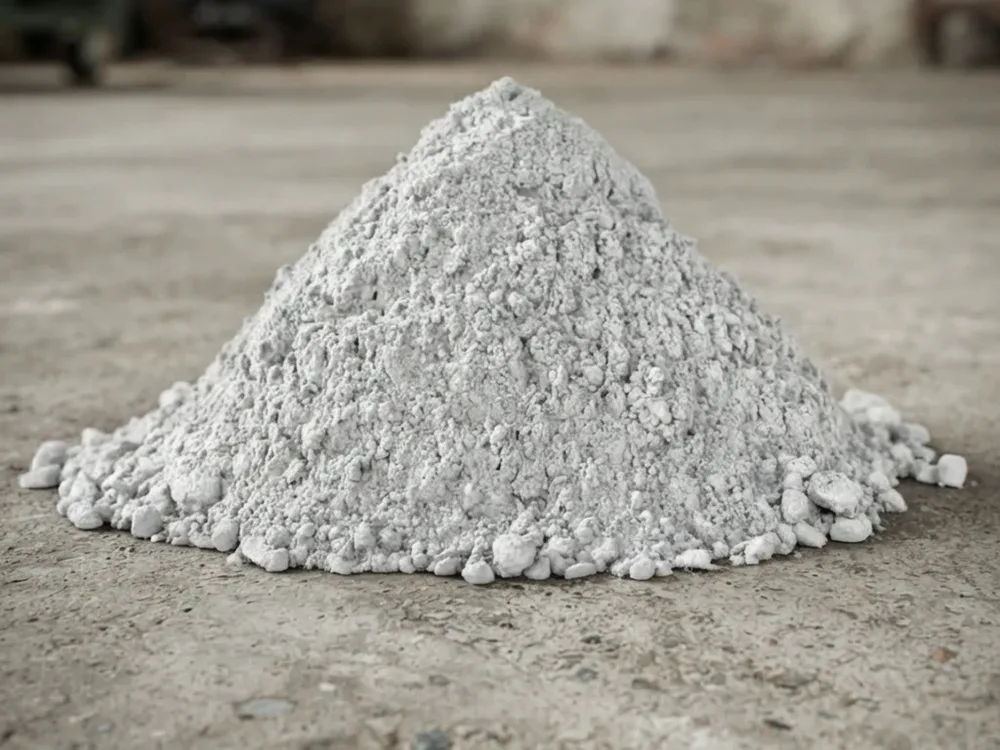
Cement Industry
Limestone, shale and gypsum can be evaluated for brittle-material reduction before downstream grinding. Determine the required product size and whether single-stage crushing is suitable using the actual feed and plant layout.
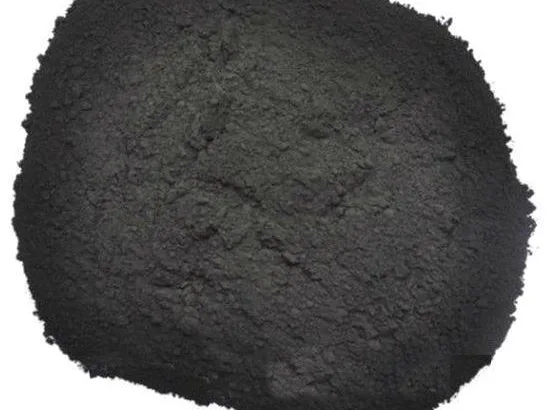
Coal and Power
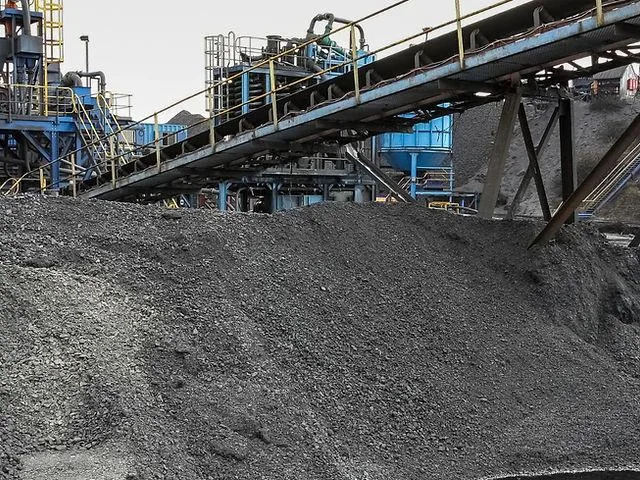
Coal and lignite crushing requires a review of feed moisture, fines, required boiler or process size and dust conditions. Select the crushing arrangement for the actual duty rather than assuming one chamber handles every wet feed.
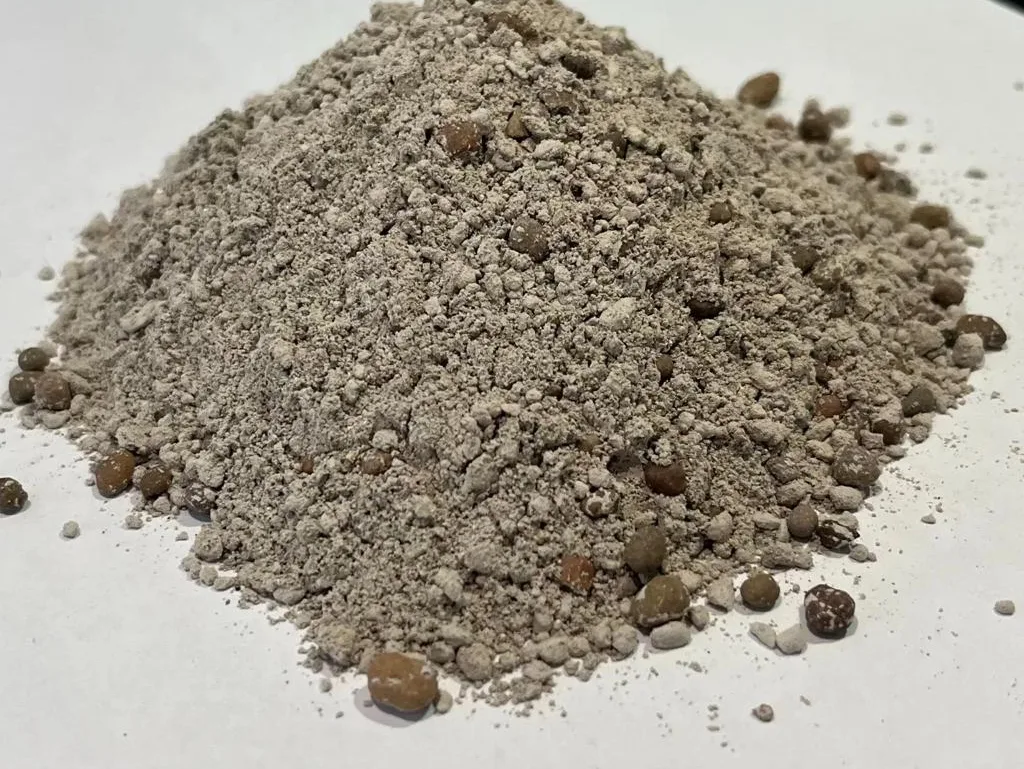
Gypsum and Building Materials
Gypsum, chalk and suitable brick waste can be considered for impact crushing. Review moisture, adhesion, wear and required size distribution before confirming the reduction process.
Metallurgy and Mining
Flux stone, coke and slag are pre-crushed before sintering or smelting. The silica content decides the hammer grade and how often the chamber is opened. Coke is the easiest of the three and slag is the hardest on wear parts.

Chemical and Fertilizer
Salt, phosphate and fertilizer lumps need a tight top size and few fines. The grate sets both without a screen. A linered chute keeps the product clean on its way to packing.

Glass and Recycling
Glass recycling duties require a review of wear, contamination, fines and the required product size. Confirm guarding, containment and any downstream screening requirement for the complete process.
CONTACT US
Not sure your material will pass the grate?
Provide the feed properties and required product size. Agree the sample quantity, test method and reporting scope before sending material for a crushing assessment.
About GUO FENG
GUO FENG was founded in 1999 and has extensive experience in crushing and screening equipment manufacturing. The company has its own production base with CNC machining equipment and a professional production team, covering equipment design, parts manufacturing, welding, assembly, and quality inspection. The PC line covers six rotor sizes with cast or composite hammers, bar or plate grates, and direct or belt drive. With a complete quality management system and related certifications, GUO FENG provides customized equipment solutions, material testing, technical guidance, and pre-delivery inspection to help customers meet their specific crushing needs.

PC Hammer Crusher Material Tests and Wear Assessment
Hammer crusher selection depends on brittleness, abrasiveness, moisture, feed distribution and required product size. The listed PC model values are starting points for a material and duty review; they do not establish wear life for every feed.
For a trial, agree the representative sample, feed and product-size measurements, throughput and acceptable fines. Confirm hammer and grate materials, supply scope, installation plan and maintenance limits for the selected machine. Use its operating manual for inspection and temperature criteria.
FAQ
What is the largest feed a hammer crusher takes?
The table lists maximum feed sizes from 80 mm for PC530×300 to 350 mm for PC1600×1600. Check the selected model against the full feed distribution and operating conditions; a rotor diameter alone does not establish an acceptable feed size.
Can a hammer crusher replace a jaw crusher?
A PC hammer crusher may suit a brittle-material duty after the required feed and product sizes, throughput and wear conditions are reviewed. It is not a universal replacement for a jaw crusher, especially on hard or abrasive feed.
How do I choose rotor diameter and width?
Use the model feed-size limits and capacity ranges to shortlist a rotor size, then review material properties, required product distribution, grate configuration and drive duty.
What can a PC1000×800 produce?
The table lists PC1000×800 at 25–60 t/h, with a 200 mm maximum feed, output below 18 mm and 115 kW power. These are reference values; moisture, feed distribution, wear and product-size requirements affect actual output. Confirm the duty rather than applying a fixed reduction percentage.
Can it crush wet or sticky material?
Wet or sticky feed can adhere to the chamber or blind the grate. Provide the actual moisture, clay content and flow behaviour so that suitability and any pretreatment can be assessed. There is no single moisture limit for every material.
What is in a crusher quote?
Request an itemized quotation identifying the crusher, drive, guards, controls, wear parts, drawings and manuals. Confirm freight, foundation work, installation responsibilities and any exclusions for the agreed order.
How long do hammers and grate bars last?
Hammer and grate life depends on abrasiveness, impact loading, operating hours, material selection and maintenance. Inspect wear and product quality according to the supplied manual. Apply model-specific turning and replacement criteria rather than a fixed service-life promise.
How is it installed and maintained?
Install on the foundation and supports specified in the approved drawing. Confirm the commissioning sequence, lubrication, inspection intervals and temperature limits in the supplied manual. Stop and isolate the machine before internal inspection or maintenance; installation timing depends on the actual scope and site.