What Is a V-Type Mixing Machine?
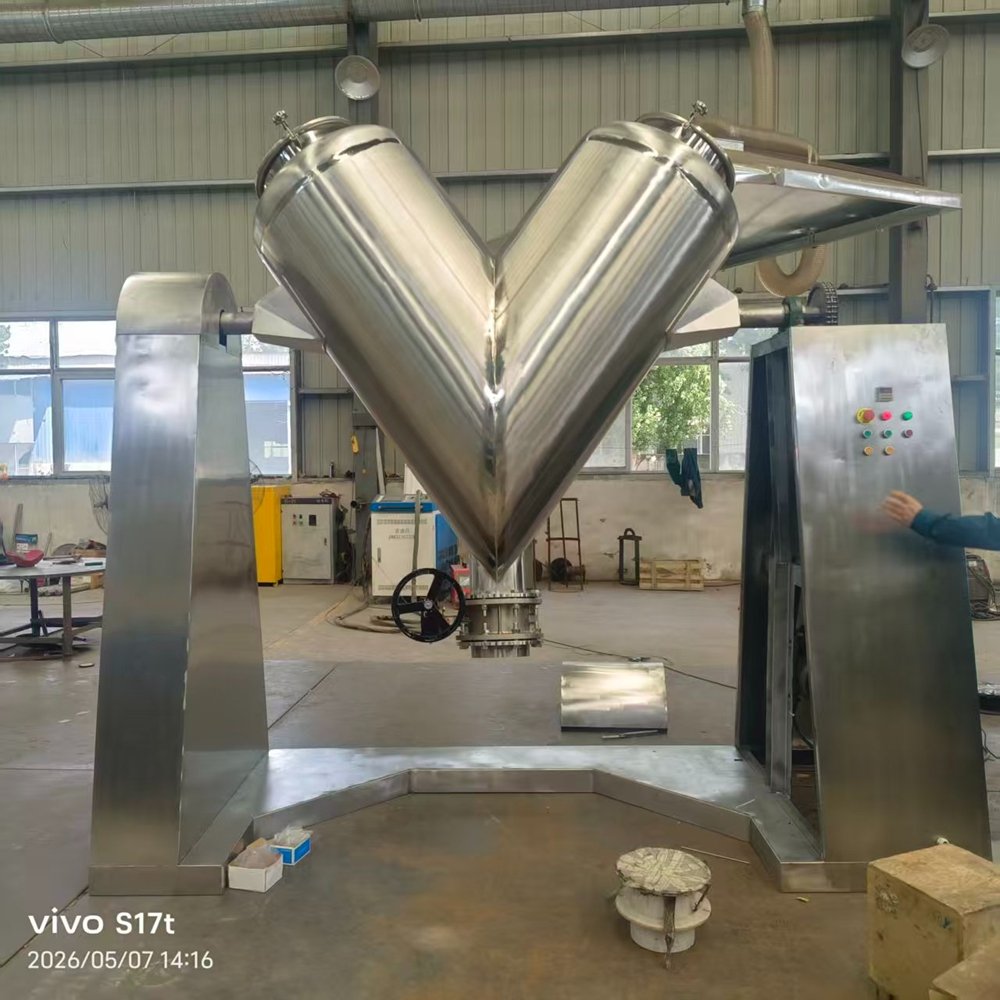
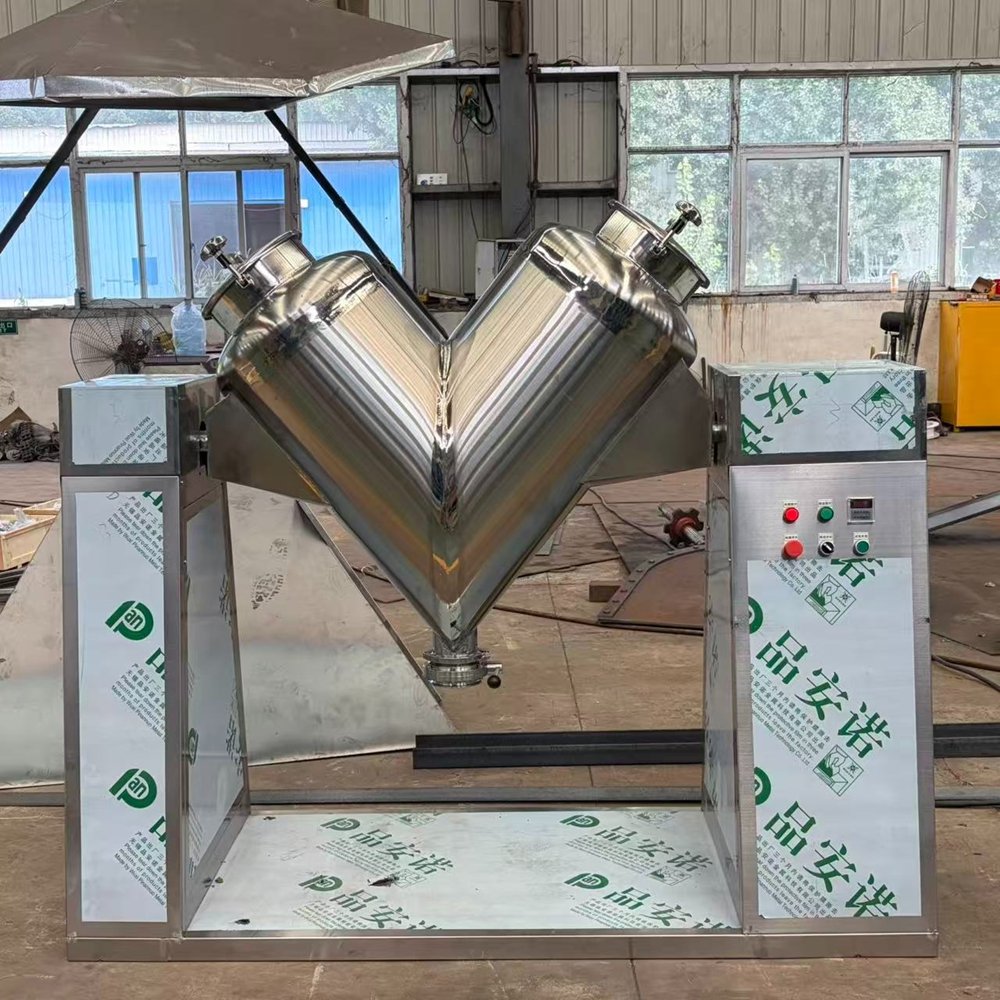
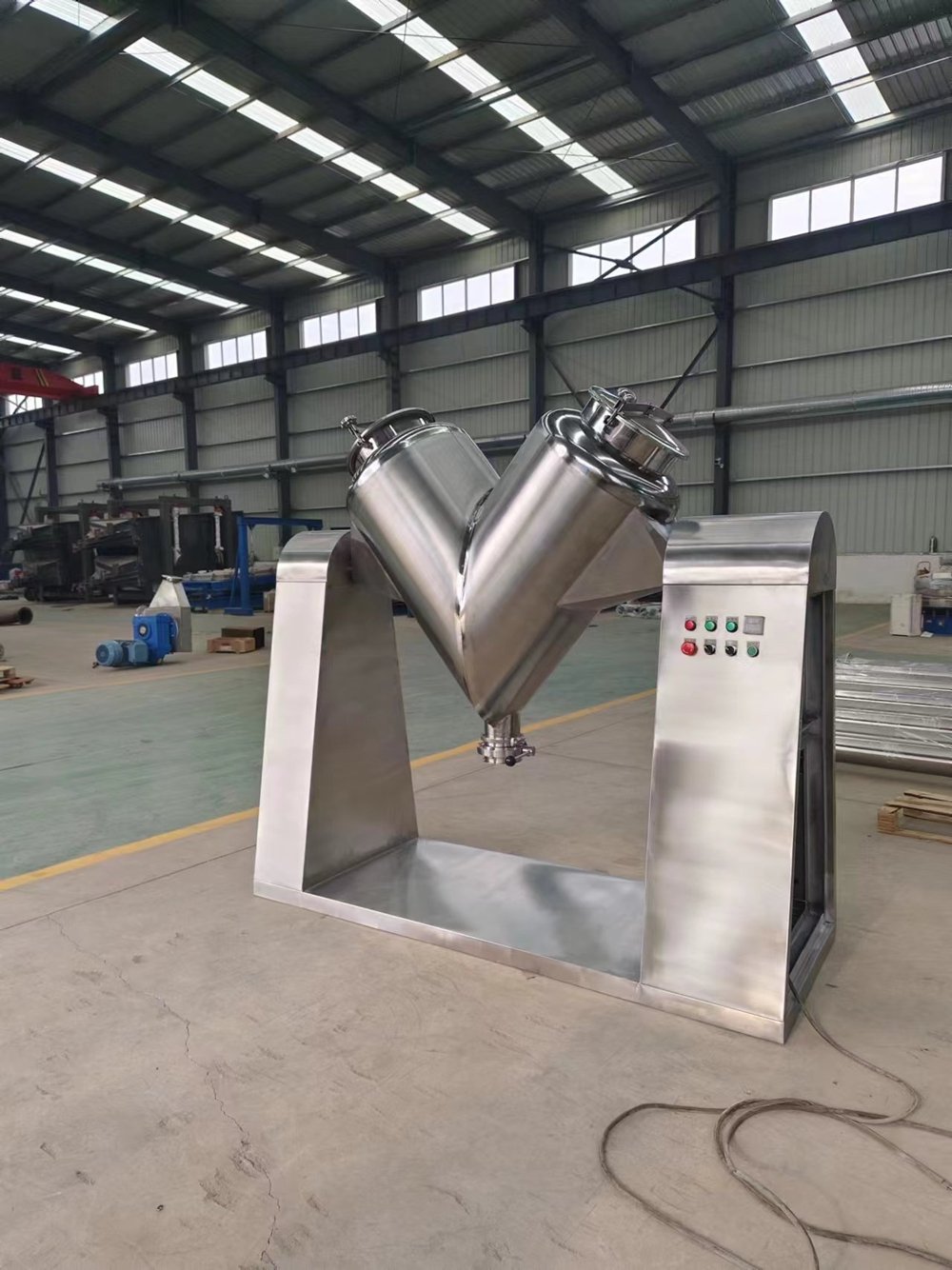
A V-type mixing machine, also known as a V blender or V-type powder mixer, is a batch powder blending machine. Its mixing vessel consists of two inclined cylindrical sections joined in a V shape. Materials are blended through vessel rotation and gravity, without internal agitator blades. GUOFENG V-type mixers operate at vessel speeds of 8–25 rpm, depending on the model, to accommodate different batch production scales.
Compared with mixers that use agitator blades, a V blender subjects materials to less shear. It is suitable for free-flowing dry powders, granules, and certain fragile materials. With working volumes ranging from 20 to 2,300 L, the relatively simple vessel interior makes cleaning and material changeovers easier.
V-Type Mixing Machine Working Principle and Main Components
Working Principle
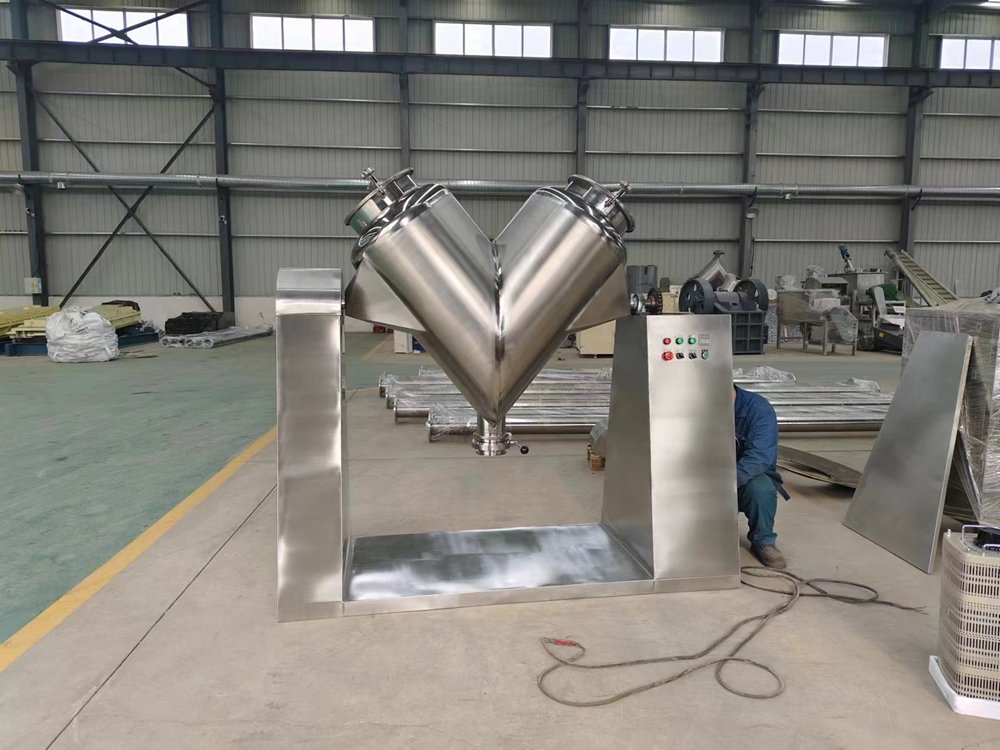
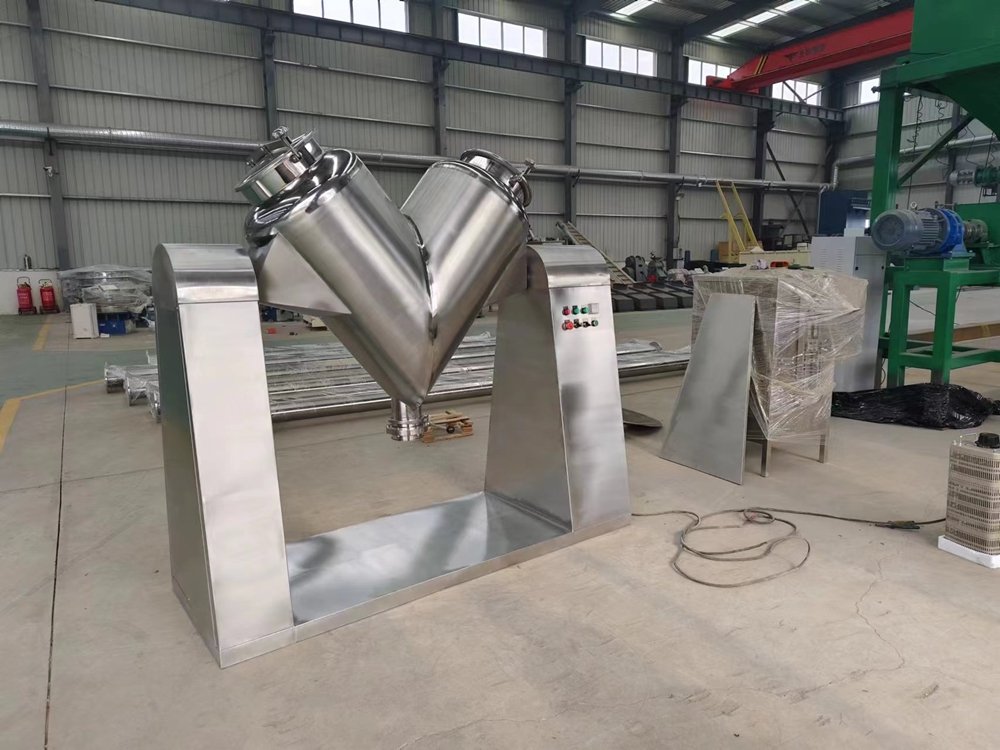
The V-Type Mixing Machine uses vessel rotation and gravity to blend dry powders and granules. As the V-shaped vessel rotates, the contents repeatedly divide, recombine, and tumble between its two arms, gradually distributing the different components throughout the batch. This process requires no internal agitator blades and provides gentle mixing with relatively low mechanical shear on the particles.
V-shaped vessel and material flow
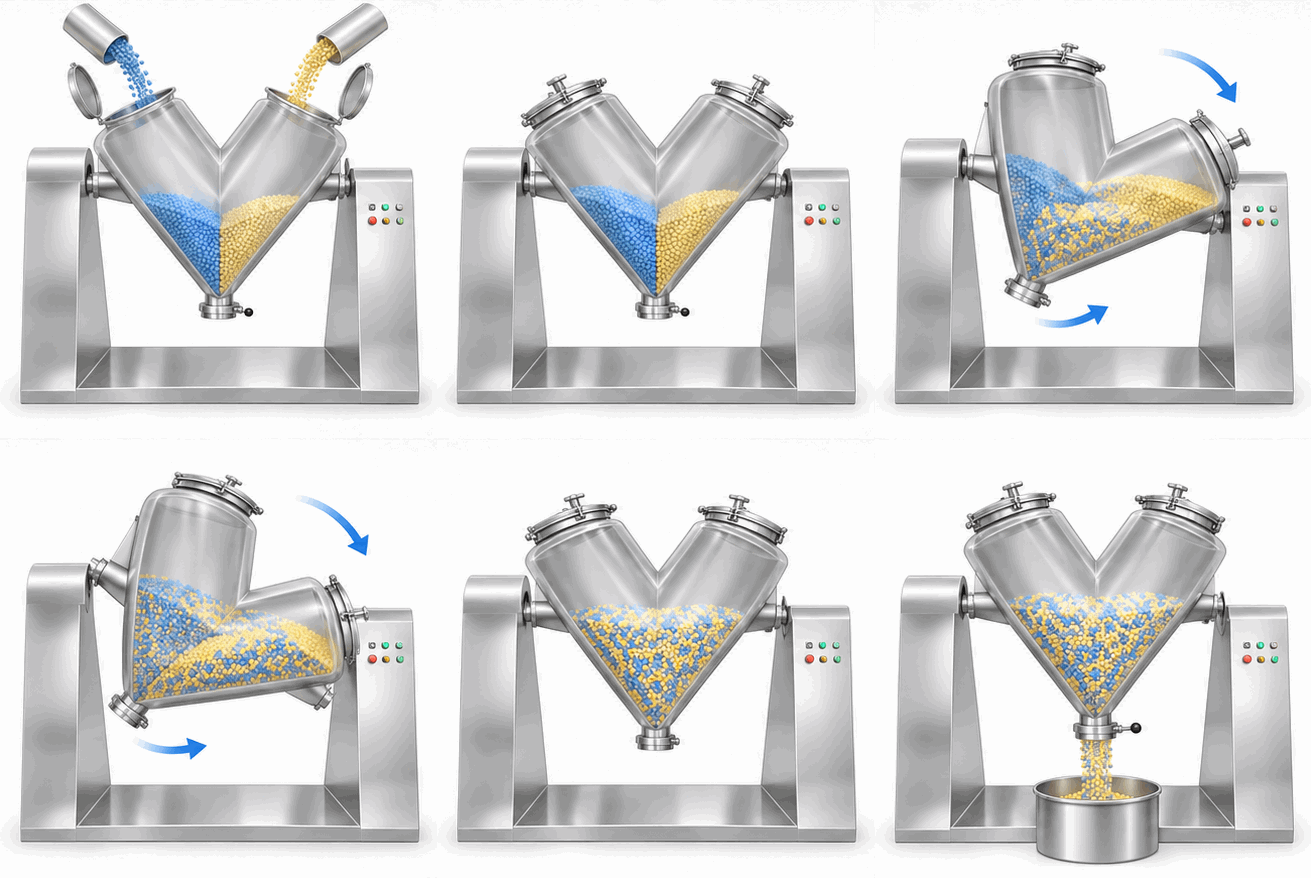
The mixing process consists of four steps.
1. Loading and sealing
Load the dry powders or granules into the V-shaped vessel through the charging openings. Keep the batch within the appropriate loading volume, then close the sealing covers.
2. Vessel rotation
Once the machine starts, the motor drives the V-shaped vessel through a gear reducer, rotating it around a horizontal axis. The materials continuously slide and tumble under gravity.
3. Material blending
As the vessel rotates, the materials continually change position, dividing and recombining between the two vessel arms. This action gradually blends the different components. Mixing performance depends on factors such as material flowability, loading volume, rotational speed, and mixing time.
4. Stopping and discharge
When the preset mixing time is reached, stop the machine, position the outlet for discharge, and open the bottom discharge valve to release the blended material. The appropriate mixing time should be determined according to the material characteristics and required blend uniformity.
Main Components
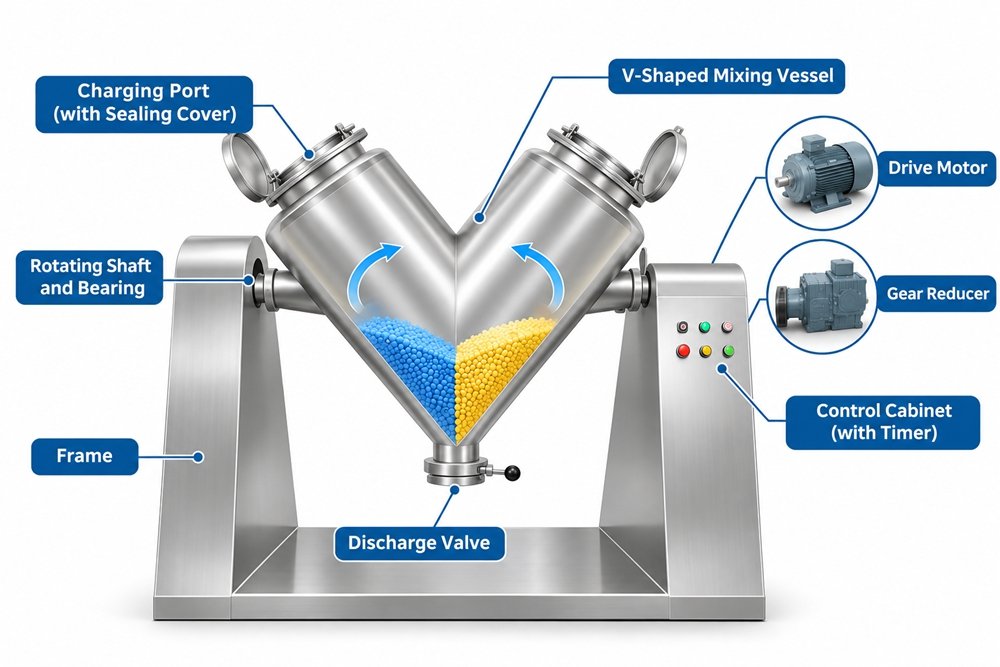
The V-type mixer consists mainly of a V-shaped mixing vessel, loading and discharge assemblies, a drive system, a support frame, and an electrical control system. These components work together to complete loading, blending, and discharge.
| Main component | Function and features |
|---|---|
| V-shaped mixing vessel | Two inclined cylindrical sections form the vessel. Its polished inner surfaces provide space for materials to tumble, divide, and recombine while making cleaning easier. |
| Charging openings and sealing covers | Allow materials to be loaded into the vessel. The sealing covers help reduce dust leakage during mixing. |
| Discharge valve | Located at the bottom of the V-shaped vessel, the valve controls the release of blended material for batch discharge. |
| Motor and gear reducer | Drive the vessel at the design speed specified for the selected model. |
| Support frame | Supports the vessel, bearings, and drive assembly, carries the weight of the machine and materials, and allows the rotating components to operate properly. |
| Electrical control system | Controls machine start, stop, and mixing time. A timer allows operators to manage each batch mixing cycle. |
Key Features of the V-Type Mixing Machine
The GUOFENG V-type mixer has a simple structure that supports convenient cleaning and batch operation. Its four main features are outlined below.
V-Type Mixing Machine Technical Specifications
GUOFENG offers 10 V-type mixer models, from V-50 to V-5000, with total vessel volumes ranging from 50 to 5,000 L. The appropriate model can be selected according to the material characteristics and required batch size.
| Model | Total volume (L) | Working volume (L) | Rotational speed (rpm) | Motor power (kW) | Machine weight (kg) |
|---|---|---|---|---|---|
| V-50 | 50 | 20 | 25 | 0.4 | 260 |
| V-100 | 100 | 45 | 22 | 0.55 | 350 |
| V-300 | 300 | 145 | 20 | 0.75 | 600 |
| V-500 | 500 | 210 | 18 | 1.5 | 700 |
| V-1000 | 1,000 | 425 | 15 | 3 | 1,800 |
| V-1500 | 1,500 | 700 | 15 | 4 | 2,300 |
| V-2000 | 2,000 | 800 | 14 | 5.5 | 3,400 |
| V-3000 | 3,000 | 1,250 | 13 | 5.5 | 4,250 |
| V-4000 | 4,000 | 1,850 | 11 | 7.5 | 5,500 |
| V-5000 | 5,000 | 2,300 | 8 | 7.5 | 6,000 |
Note: Total vessel volume is not the actual loading volume. The material weight that can be mixed per batch must be determined using the working volume, material bulk density, and mixing requirements.
Suitable Materials and Industry Applications
A V-type mixing machine is suitable for free-flowing dry powders and granules. Common applications include the following industries.
Food Processing
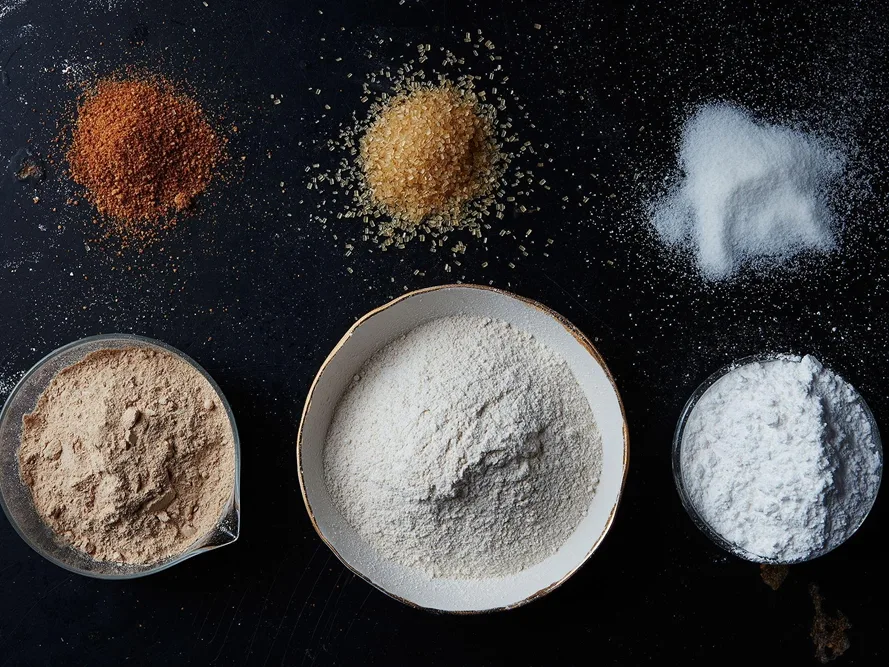
Blending seasoning powders, starch, milk powder, and other dry food ingredients for formulation premixing and batch production.

Chemical Processing
Blending dry pigments, powdered additives, and granular chemical raw materials, particularly materials with good flowability.

Plastics Processing
Premixing resin granules, color masterbatch, and plastic additives while reducing mechanical damage to the granules during blending.

Pharmaceutical Production
Mixing pharmaceutical excipients, dry powders, and pharmaceutical granules. The simple vessel interior makes cleaning and material changeovers easier between batches.
Ceramics and Mineral Processing
Mixing ceramic powders, mineral powders, and dry granular raw materials in preparation for subsequent forming or processing.
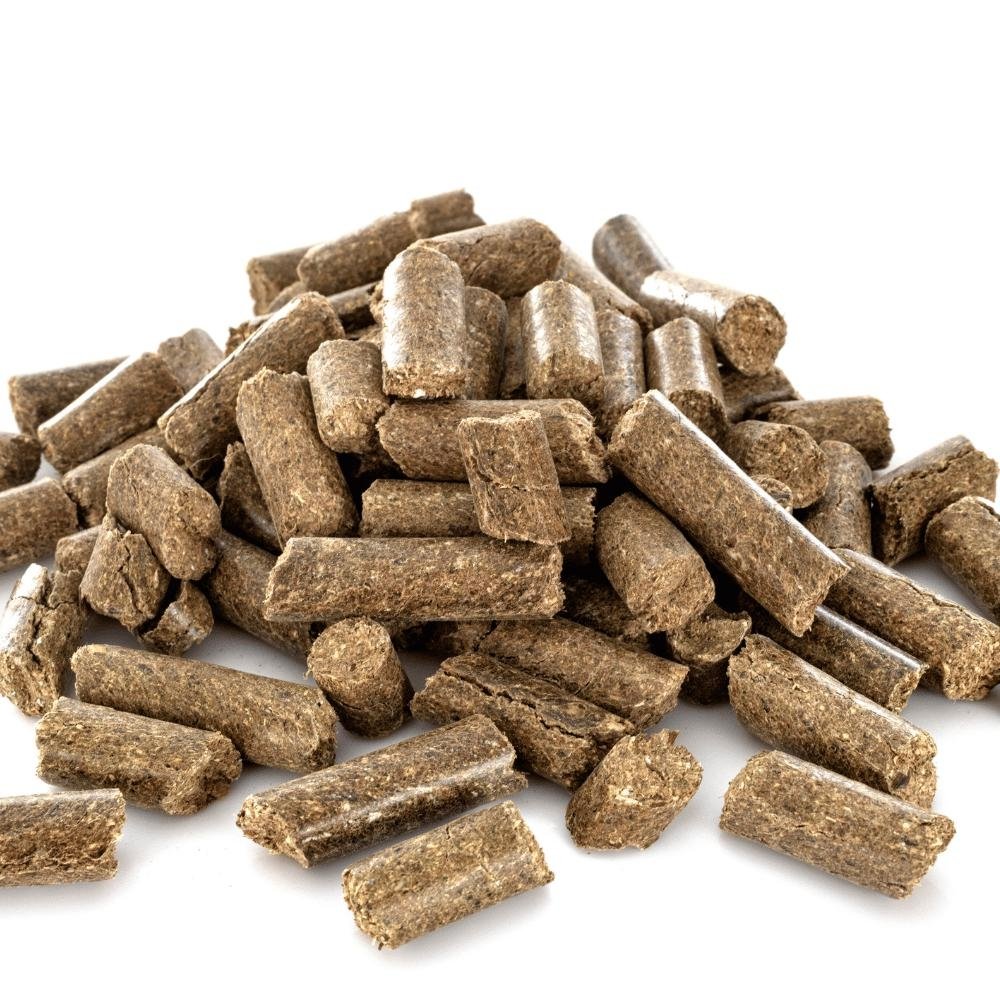
Animal Feed Processing
Batch blending grain powders, pelleted feed, and certain feed premixes to accommodate different formulations.
Note: If materials tend to form lumps or stick to the vessel walls, or if the components differ substantially in particle size or density, a blending trial is recommended before confirming whether a V-type mixer is suitable.
How to Choose the Right V-Type Mixing Machine
Choosing a V-type mixer requires more than checking its total vessel volume. Batch weight, material characteristics, and production capacity also need to be considered. The following four factors can help determine the appropriate model and configuration.
1. Select the Vessel Size Based on Batch Weight
The total volume of a V-type mixer is not the same as its actual loading volume. To select a model, calculate the space required using the batch weight and material bulk density.
Bulk density describes how much a given volume of material weighs in its naturally settled state. For example, if 1 L of powder weighs 0.8 kg, its bulk density is 0.8 kg/L.
Material volume (L) = Batch weight (kg) ÷ Bulk density (kg/L)
Example: A 200 kg batch of powder with a bulk density of 0.8 kg/L requires: 200 ÷ 0.8 = 250 L.
The GUOFENG V-500 has a working volume of 210 L and cannot accommodate this loading requirement. The V-1000, with a working volume of 425 L, can be considered as a candidate, subject to confirmation of the operating fill level and mixing requirements.
2. Check Material Suitability
Material flowability, particle size, density differences, and moisture content all affect blending performance and should be reviewed during model selection.
| Factor | What to check |
|---|---|
| Material flowability | Dry powders and granules that slide and tumble freely are generally more suitable. |
| Particle size | Large differences in particle size between components may lead to segregation after mixing. |
| Material density | Significant density differences between components require attention to the risk of segregation. |
| Moisture content and stickiness | Damp materials, materials that form lumps, or materials that stick to the vessel walls may affect mixing performance. |
For materials that are more difficult to blend, a material trial is recommended before selecting the model.For further guidance on loading volume, mixing speed, and material flowability, see this V-blender technical guide.
3. Calculate Hourly Production Capacity
A V-type mixer operates in batches. When calculating production capacity, include the time required for loading, mixing, and discharge.
Example: Assume a batch weight of 200 kg, a mixing time of 10 minutes, and a combined loading and discharge time of 5 minutes. The total batch cycle is therefore 15 minutes.
Batches per hour: 60 ÷ 15 = 4
Theoretical hourly output: 4 × 200 = 800 kg/h
Under these assumptions, the theoretical production capacity is 800 kg/h. These cycle times are for calculation purposes only. Actual output depends on the material characteristics, mixing requirements, and production schedule.
4. Confirm Materials of Construction and Configuration
After selecting a model, check that the following configurations meet the requirements of your production site.
| Selection factor | Details to confirm |
|---|---|
| Materials of construction | Select according to the material properties and the requirements of food, pharmaceutical, or chemical production. |
| Loading and discharge | Confirm inlet and outlet sizes, loading height, and how the discharged material will be collected. |
| Operation and controls | Confirm whether timing, speed control, or other control functions are required. |
| Cleaning requirements | Consider how frequently formulations will change and the acceptable level of material residue. |
| Installation space | Check overall machine dimensions, clearance for vessel rotation, and operator access. |
Selection support: If you are unsure which model to choose, tell GUOFENG what material you need to blend, the batch weight, and your production requirements. We can help calculate the required vessel volume and recommend a suitable model and configuration.
V-Type Mixer vs Double Cone Blender
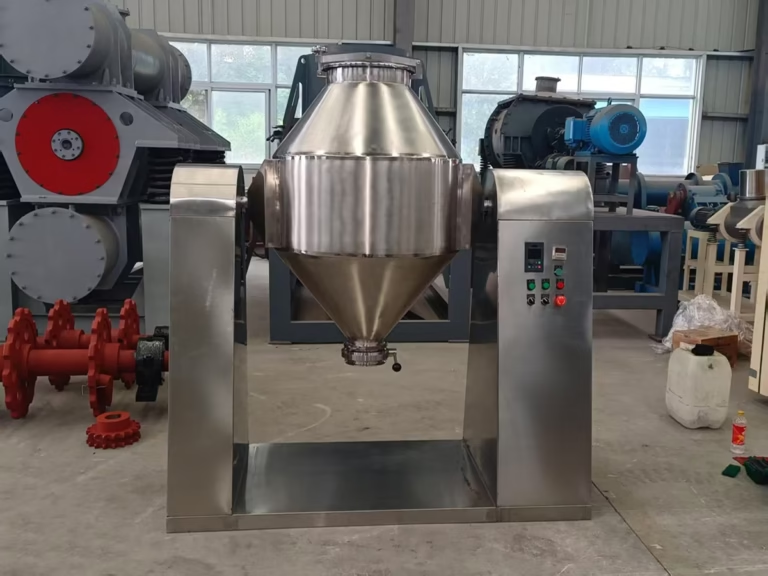
Both V-type mixers and double cone blenders (W-type mixers) use gravity to blend dry powders and granules. The main difference is how materials move inside the rotating vessel.

| Comparison | V-Type Mixer | Double Cone Blender (W-Type) |
| Mixing action | Materials repeatedly split and recombine between two vessel arms. | Materials tumble and redistribute inside the double-cone vessel. |
| Mixing applications | Worth considering for blending multiple dry ingredients, including small-proportion additives. | Worth considering for routine batch mixing of free-flowing powders and granules. |
| Particle protection | Gentle mixing without internal agitator blades. | Gentle mixing without internal agitator blades. |
| Loading and discharge | Typically two charging openings and one bottom discharge valve. | Typically one charging port and one discharge valve. |
| Cleaning and installation | Both vessel arms require cleaning access and rotation clearance. | The vessel interior requires cleaning access and rotation clearance. |
V-Type Mixing Machine Options and Customization
GUOFENG offers V-Type Mixing Machine customization based on material characteristics, batch size, and installation requirements. Common options are listed below.
Available Configuration Options
| Customization item | Configuration details |
|---|---|
| Vessel volume | Standard sizes range from 50 to 5,000 L. Special vessel volumes can be discussed according to project requirements. |
| Materials of construction | Product-contact materials can be selected according to material characteristics, hygiene requirements, and corrosion resistance needs. |
| Inlet and outlet connections | Connection sizes and types can be confirmed according to the loading method, receiving equipment, and production line layout. |
| Control system | A timer is included. Speed control and other control functions can be discussed according to requirements. |
| Sealing and surface finish | Sealing arrangements and internal surface finishes can be confirmed according to dust control, material residue, and cleaning requirements. |
| Installation dimensions | The installation arrangement can be confirmed according to the available space, loading height, vessel rotation clearance, and discharge position. |
Selection guidance: Both machines are suitable for gentle batch mixing. Choose based on material flowability, batch size, loading requirements, and the required mixing uniformity. For difficult formulations, mixing trials can help determine which design performs better.
Information Needed for Customization
Material details: Material name, particle size, bulk density, and flowability.
Mixing requirements: Batch weight and required hourly or daily output.
Installation conditions: Available space, loading method, and discharge position.
Other requirements: Materials of construction, sealing, cleaning, and control functions.
If you do not have all the technical details, start by telling us what material you need to blend and the approximate weight per batch. GUOFENG can help identify a suitable model and configuration based on your production requirements.

Why Choose GUOFENG?
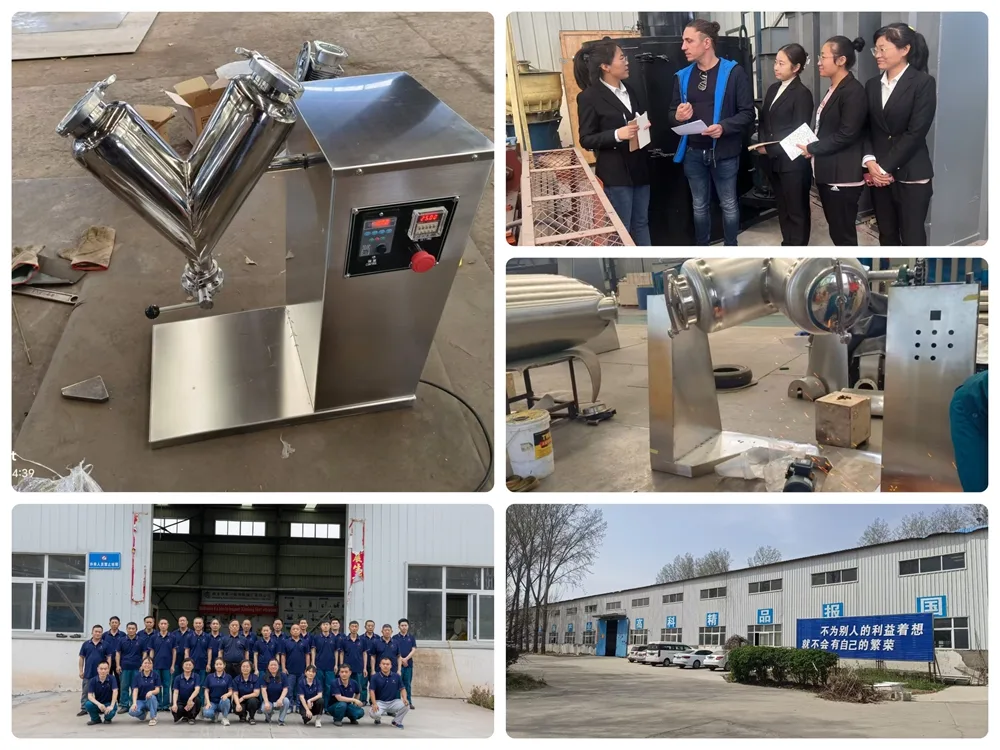
Founded in 1999, GUOFENG has 27 years of experience in industrial equipment manufacturing. Our product range covers screening, conveying, feeding, lifting, and mixing equipment. For V-type mixing machines, we offer 10 standard models, with attention to vessel welding, internal polishing, sealing, and the assembly quality of drive components. From reviewing material characteristics and calculating loading requirements to confirming the equipment configuration, we provide clear communication and timely answers to help make equipment selection and purchasing straightforward.
Before shipment, we check vessel operation, the discharge valve, and control functions. Packaging, securing, and protection are arranged according to the machine dimensions and transport method, with particular attention to the inlets, outlets, and drive components. After delivery, GUOFENG provides installation guidance, operation and maintenance advice, and spare parts support. If installation or operating issues arise, contact us for assistance throughout the equipment’s use.
FAQs
How Many Kilograms Can a V-Type Mixing Machine Blend per Batch?
Batch weight depends on the machine’s working volume and the material’s bulk density. For example, the V-500 has a working volume of 210 L. With a powder bulk density of 0.8 kg/L, the estimated load is approximately 168 kg per batch. The actual loading weight must also account for material characteristics and mixing requirements.
How Long Does a V-Type Mixer Take to Blend a Batch?
Mixing time depends on material flowability, particle size, loading volume, and the required blend uniformity. Running the machine longer does not necessarily improve the result. A material trial is recommended to determine an appropriate mixing time, which can then be set using the machine’s timer.
Does a V-Type Mixer Need Cleaning After Every Use?
Not necessarily. When processing the same material continuously, cleaning can be scheduled according to production requirements. When changing formulations or material types, remove any residue to prevent it from affecting the next batch. Food and pharmaceutical production must also follow applicable cleaning requirements, with particular attention to the inlets, outlets, seals, and discharge valve.
What Is the Difference Between a V-Type Mixer and a Double Cone Blender?
Both machines use vessel rotation and gravity to tumble and blend materials. A V-type mixer repeatedly divides and recombines materials between two vessel arms, while a double cone blender tumbles materials inside a double-cone-shaped vessel. Both are suitable for free-flowing dry powders and granules. Selection depends on material characteristics, loading requirements, and cleaning needs.
What Affects the Price of a V-Type Mixing Machine?
The price depends mainly on vessel volume, materials of construction, the control system, and customization requirements. Larger vessels, special materials, or nonstandard inlet and outlet connections may increase the cost. Providing the material name, batch weight, and configuration requirements helps us prepare a more accurate quotation.
Can GUOFENG Customize a V-Type Mixer for My Materials?
Yes. GUOFENG can help select a suitable model and confirm the materials of construction, inlet and outlet connections, and control configuration according to your material characteristics, batch weight, and installation conditions. If detailed specifications are not yet available, provide the material name, estimated batch weight, or photos of the installation site. We can help review your requirements and recommend a suitable equipment solution.
Discuss Your Batch Mixing Requirements
Tell us what material you need to blend, the approximate weight per batch, and your production requirements. GUOFENG can help identify a suitable V-type mixing machine and configuration.