
Food powder screening is an important step in maintaining product consistency and removing oversized particles, lumps, and foreign materials before further processing or packaging. In food production, screening equipment must do more than separate particles by size. Its structure, material selection, sealing, and cleaning access also affect production hygiene and changeover efficiency.
A sanitary circular screener is designed for food and other hygiene-sensitive powder applications. It combines circular vibration with hygienic structural features to support screening, inspection, and cleaning. This article explains how the equipment works, which hygienic features matter, the available cleaning methods, and how to select a suitable configuration for different food powders.
What Is a Sanitary Circular Screener?
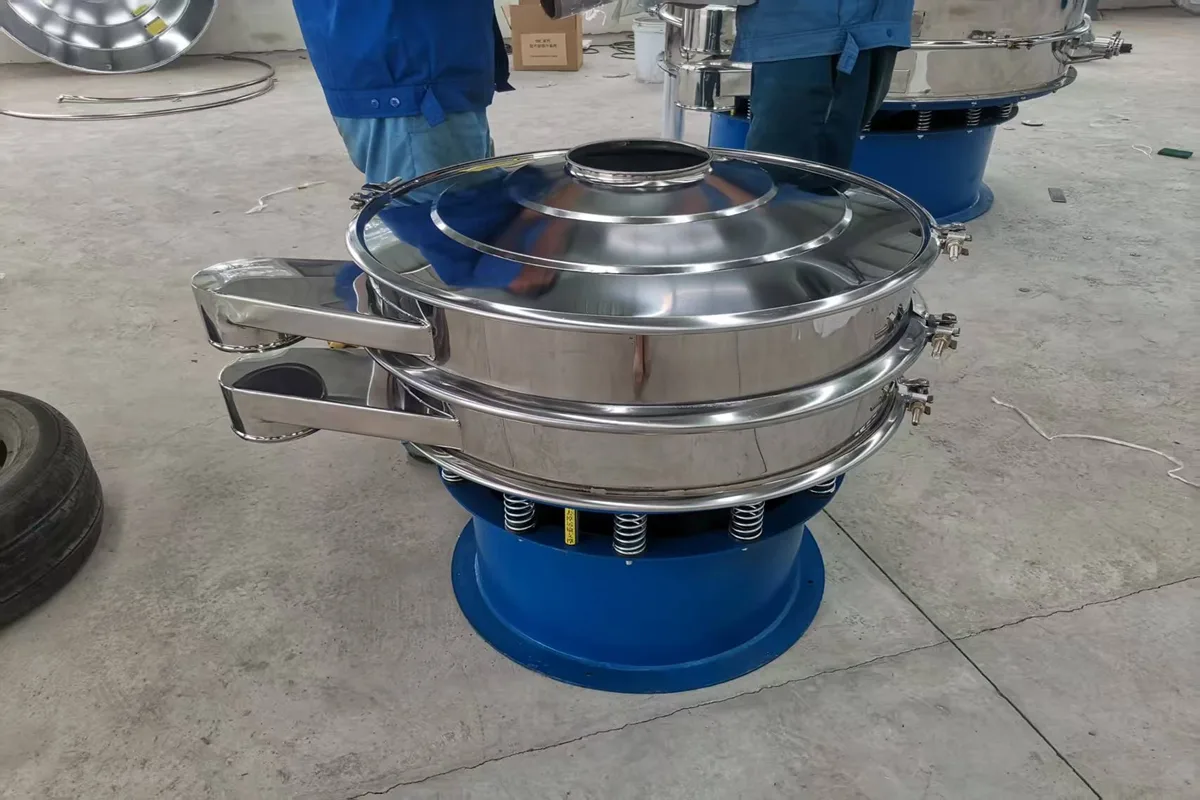
A sanitary circular screener is a vibrating screening machine designed for separating and classifying food powders while supporting hygienic production requirements. It uses a circular vibration motion to move material across the screen surface. Particles smaller than the mesh openings pass through, while oversized particles remain on the screen and discharge through a separate outlet.
Compared with a standard circular vibrating screener, a sanitary design focuses not only on product-contact materials but also on reducing internal gaps and areas where powder can accumulate. Quick-release clamps, removable screen frames, and accessible covers make disassembly, inspection, and cleaning easier. Sealed connections also help reduce dust leakage and the risk of external contamination.
How Does a Sanitary Circular Screener Work?
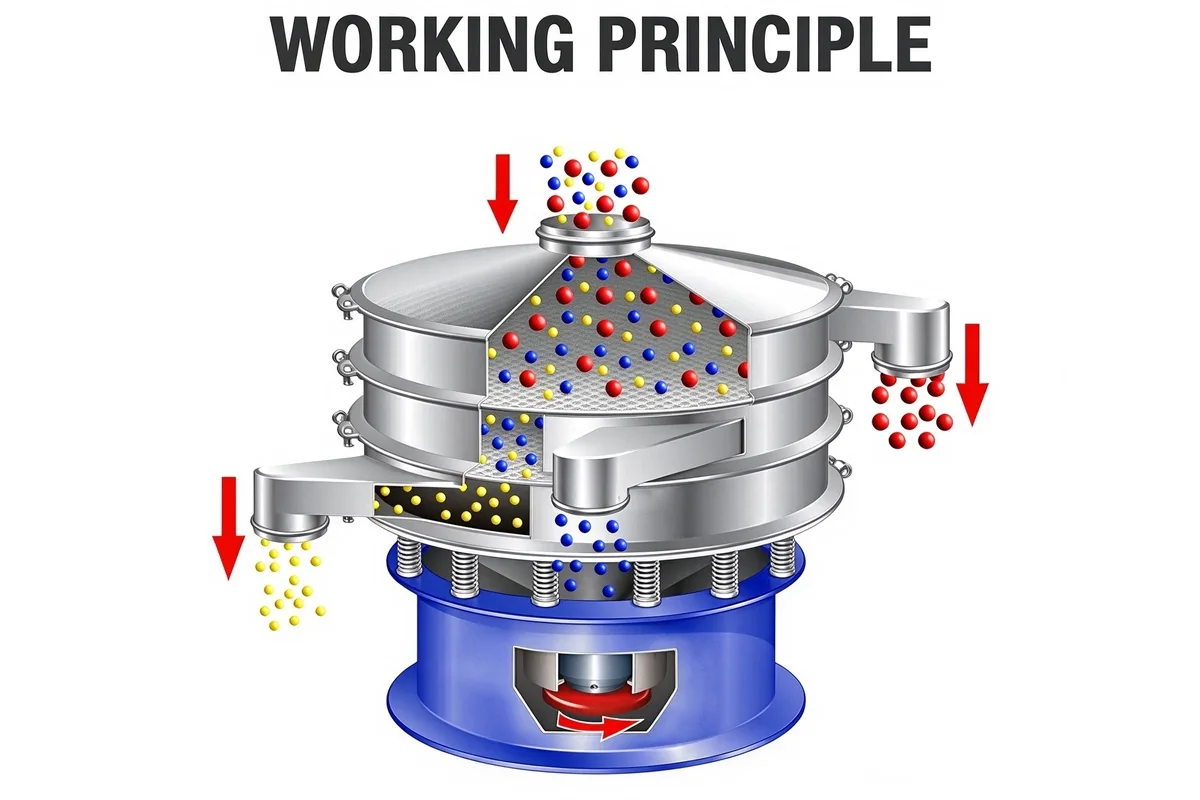
The screening process is driven by a vibration motor that generates a combined vibration motion. This movement distributes material across the screen surface and promotes particle separation.
Material Feeding and Distribution
Food powder enters through the inlet and spreads across the screen surface. Even material distribution helps make effective use of the screening area and reduces localized accumulation.
Circular Vibration
The vibration motor generates a three-dimensional vibration that moves the material along the screen. Particles continuously travel across the mesh while being exposed to the openings.
Particle Separation
Particles smaller than the screen openings pass through and become the undersize fraction. Larger particles, lumps, and oversized materials remain on the screen surface and move toward the oversize discharge.
Separate Discharge
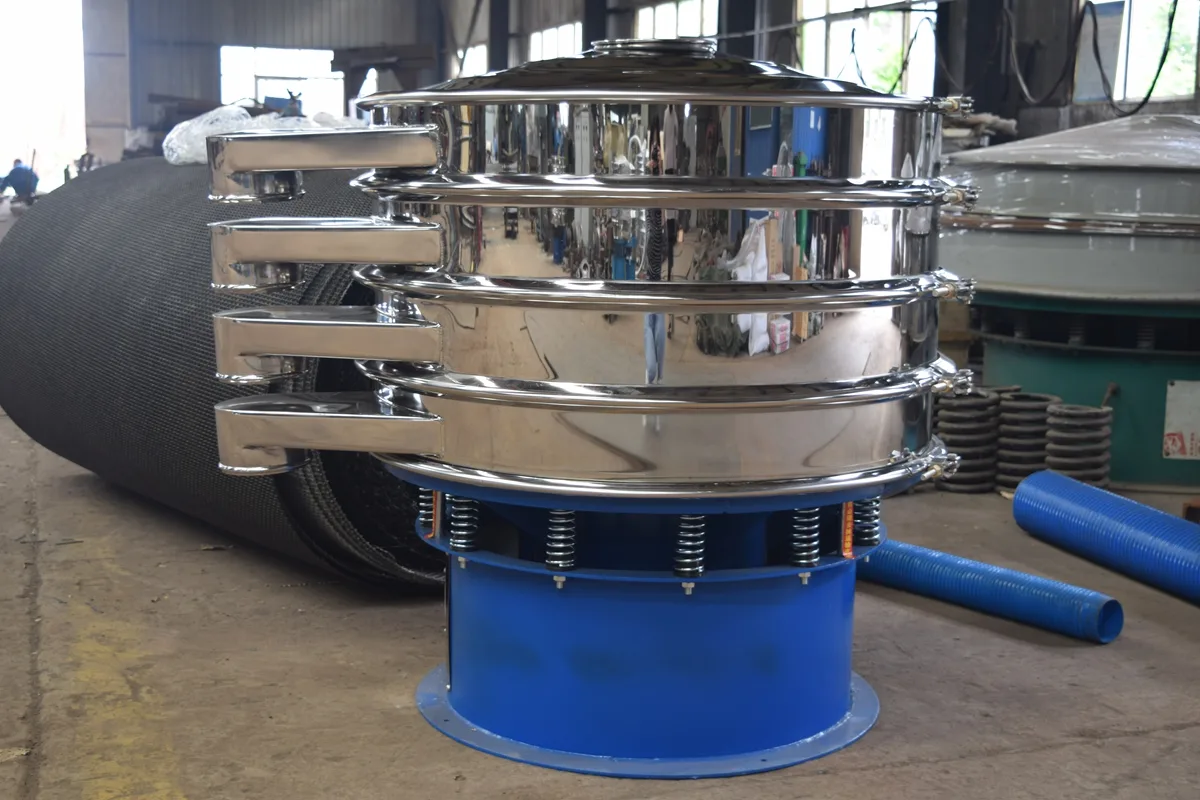
The screened powder and retained oversized material leave through separate outlets. A single-layer screener is commonly used for check screening or removing oversized particles, while a multi-layer configuration can divide material into several particle-size fractions.
Why Does Food Powder Screening Require Sanitary Design?
Food powder production involves frequent material handling, product contact, and equipment cleaning. A hygienic screening structure helps address several practical production requirements.
Foreign Material Removal
Screening can retain oversized foreign materials, fibers, and other unwanted particles that are larger than the selected mesh openings. It is commonly used as a check-screening step before mixing, processing, or packaging. Screening does not replace magnetic separation or metal detection, which are required for detecting metal contaminants.
Lump and Particle-Size Control
Powders may form lumps during storage or handling. Screening separates oversized agglomerates from the usable powder and helps maintain a more consistent particle-size range. However, a screener is not a substitute for a crusher when material contains hard or heavily compacted lumps.
Reduced Product Residue and Cross-Contamination
Powder can accumulate around joints, corners, welds, and poorly accessible internal areas. A sanitary structure with accessible contact surfaces and fewer product-retention points makes cleaning and inspection easier, especially when production switches between different products.
Dust Containment
Fine food powders can become airborne during feeding and screening. Sealed covers and dust-tight connections help limit powder leakage, maintain a cleaner working area, and reduce product loss.
What Hygienic Design Features Should a Sanitary Circular Screener Have?
The hygienic performance of a circular screener depends on its material selection, internal structure, connection design, and accessibility for cleaning. The following features are important when configuring equipment for food powder production.
Stainless Steel Product-Contact Parts
Stainless steel is commonly used for surfaces that come into contact with food materials. Grade 304 is widely used in general food-processing environments, while 316L offers greater resistance to pitting and corrosion in applications involving more aggressive cleaning agents or chloride exposure.
Quick-Release Clamps
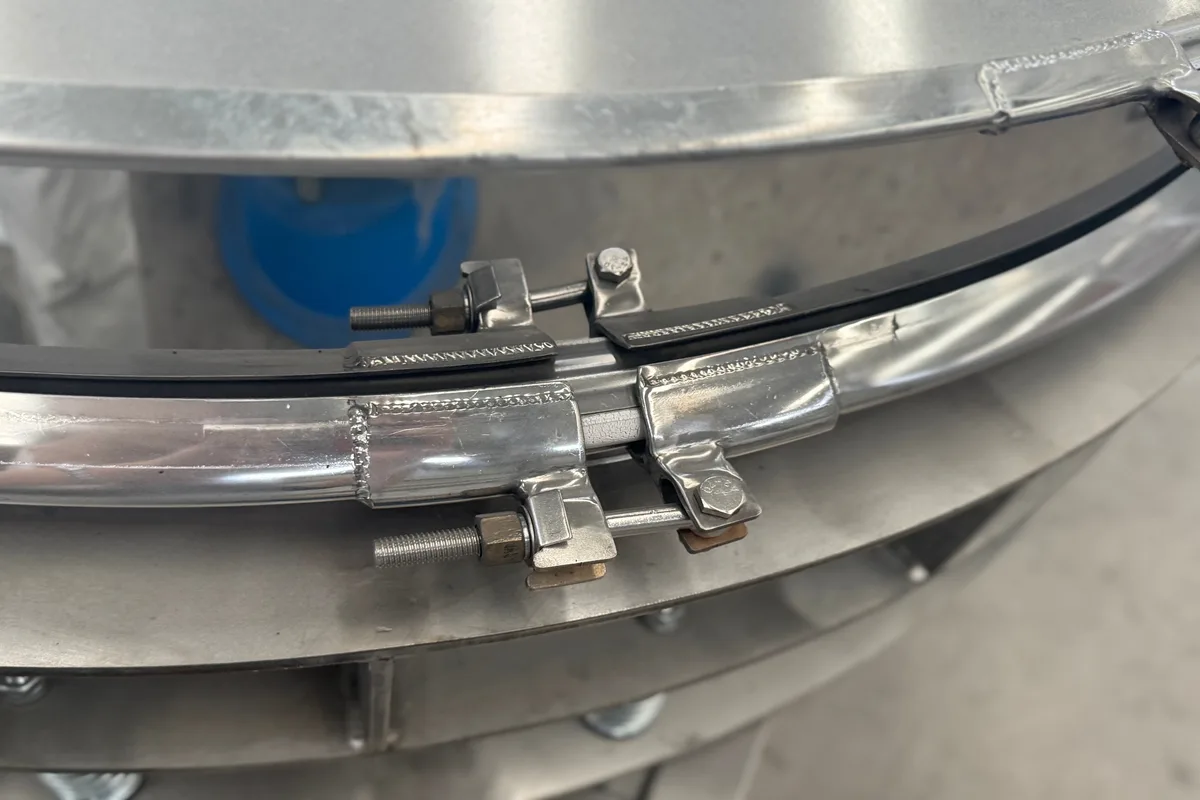
Quick-release clamps allow operators to open the equipment and access internal components without complicated disassembly. They are useful for routine inspection, screen replacement, and cleaning between production batches.
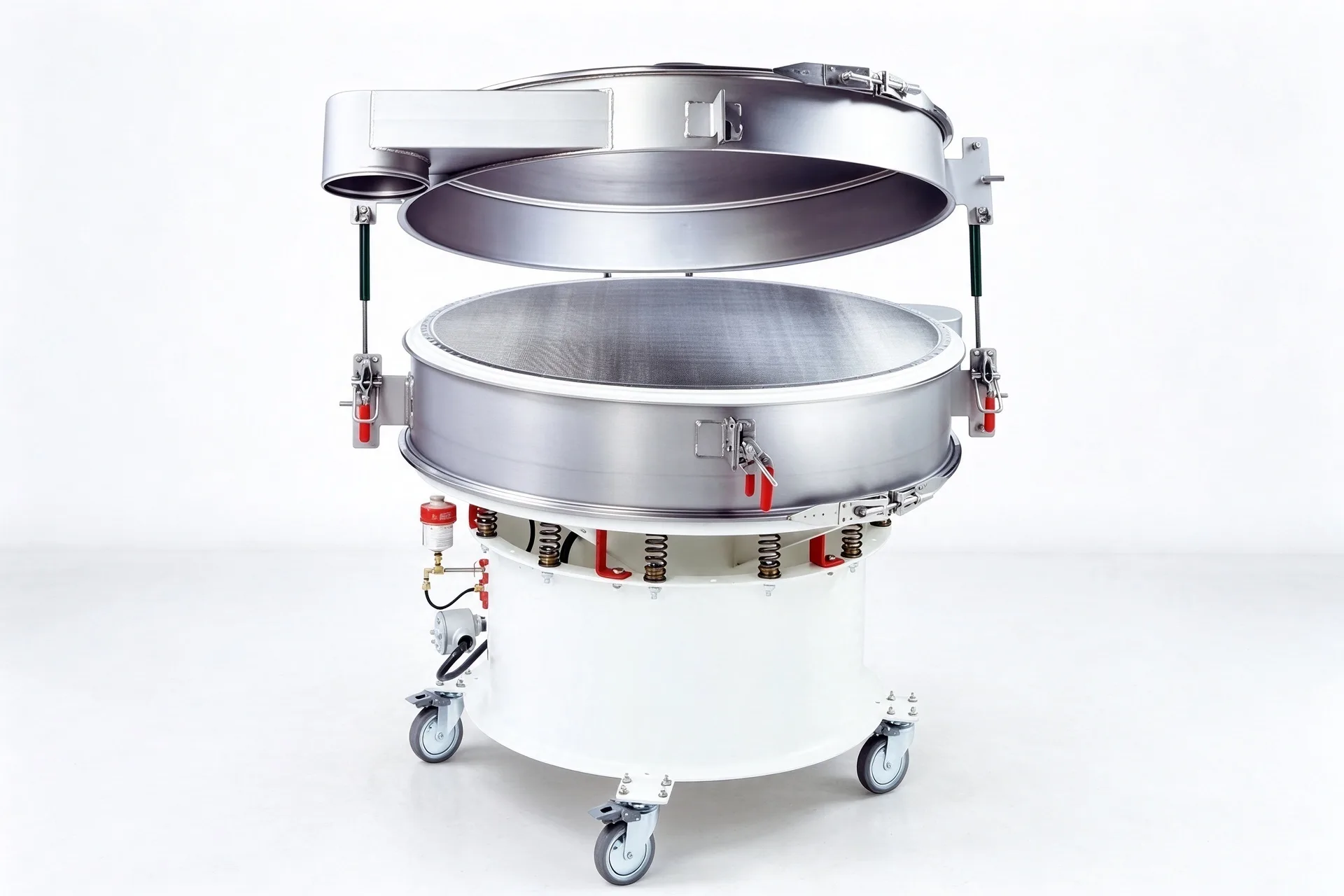
Airlift or Clamshell Lid
An airlift or clamshell lid provides access to the screen assembly and internal contact surfaces. This structure makes it easier to inspect the screening area and remove components for cleaning.
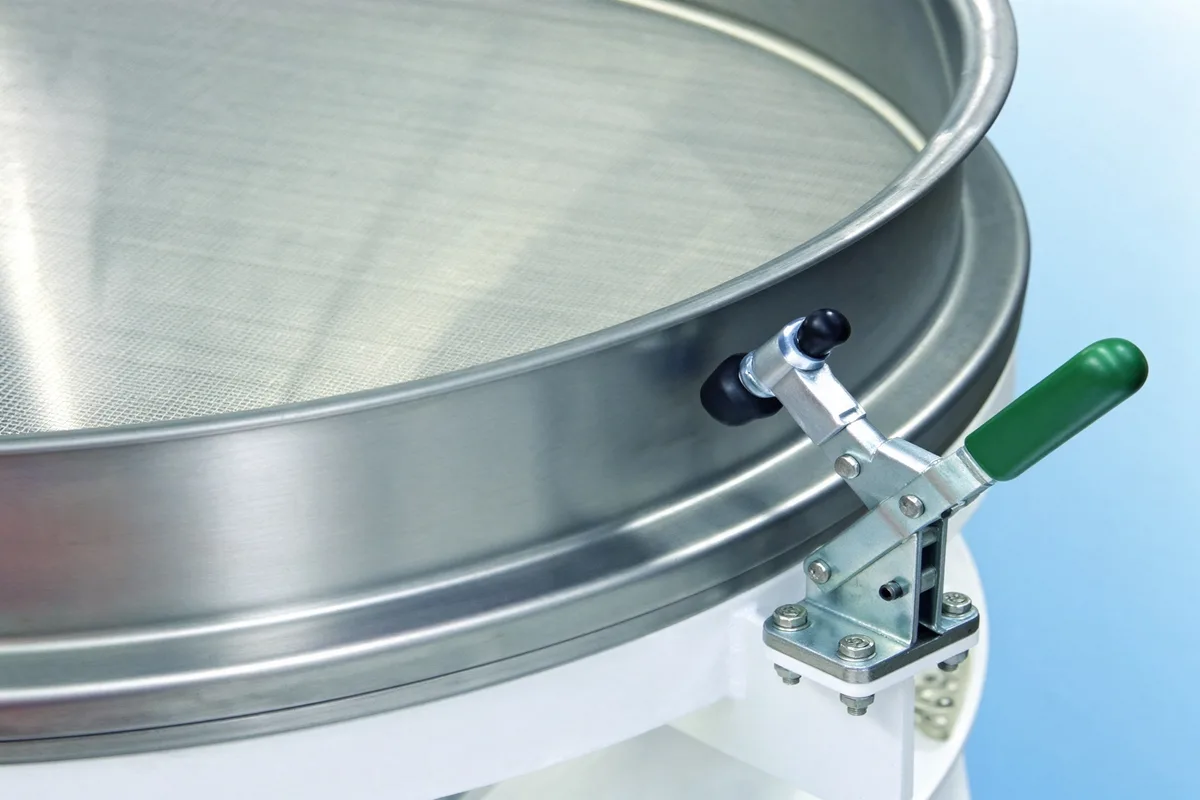
Gap-Free Screen Frame
A screen frame with a gap-free contact structure helps reduce areas where powder can accumulate. It also makes the screening assembly easier to inspect and clean after operation.
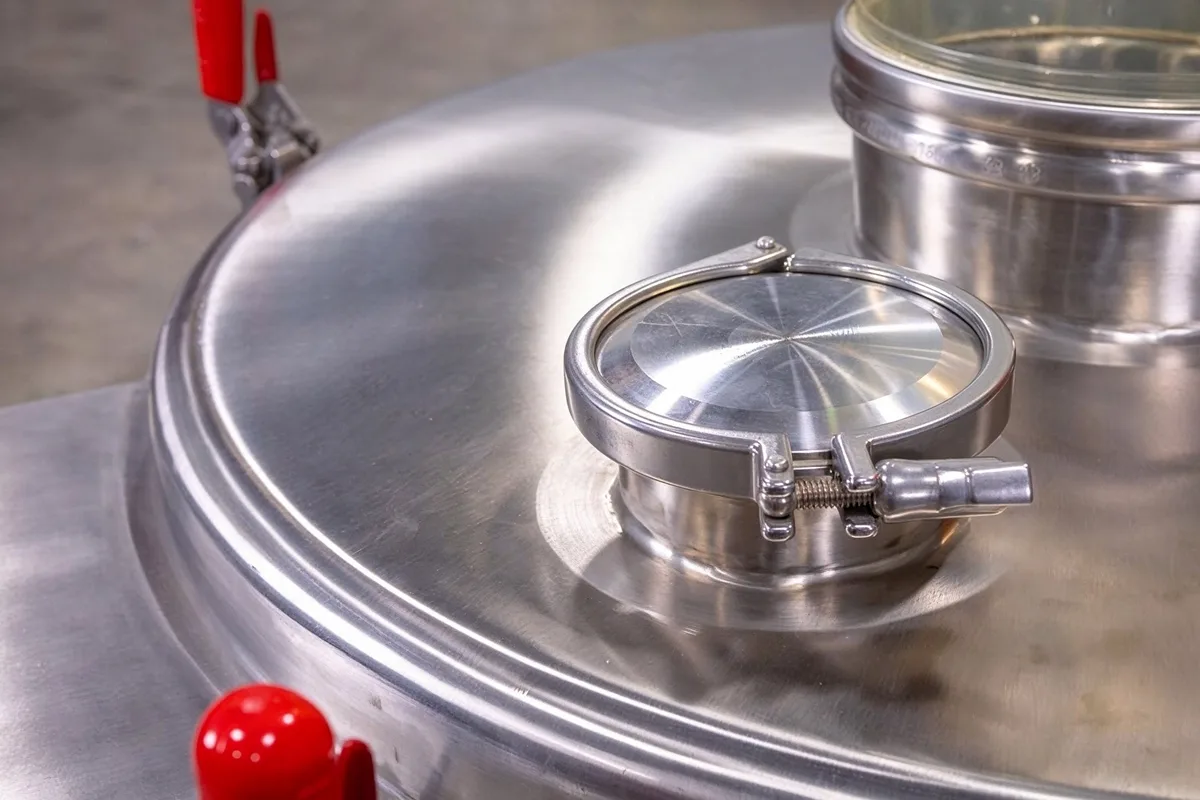
Rounded Corners and Polished Welds
Rounded internal corners and properly finished welds reduce sharp edges and difficult-to-clean areas. Smooth product-contact surfaces help prevent powder residue from collecting around joints and weld seams.
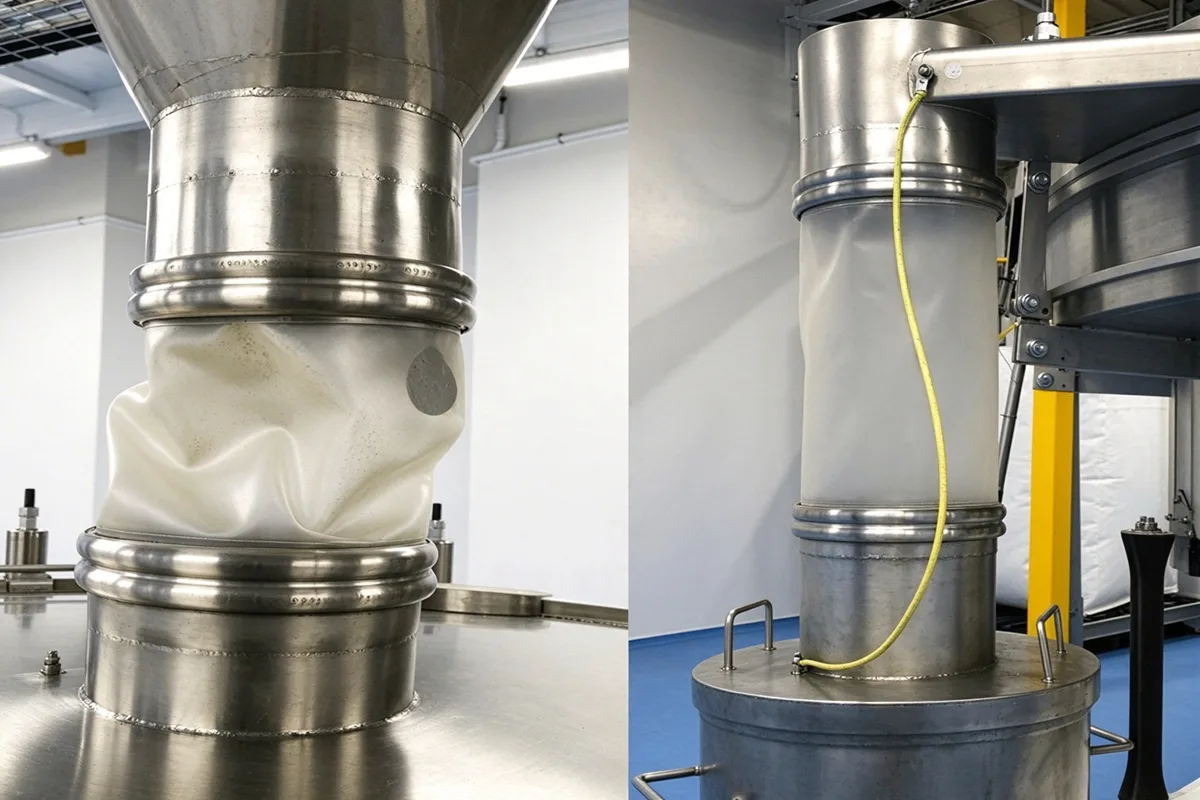
Dust-Tight Connections
Sealed connections between the screener, feeding equipment, and discharge lines help prevent powder leakage and limit the entry of external contaminants. They are particularly important when handling fine or easily airborne powders.
What Cleaning Methods Are Used for Sanitary Circular Screeners?
Cleaning a sanitary circular screener involves two different tasks: cleaning the machine and its product-contact components, and preventing the screen mesh from becoming blocked. Manual disassembly, COP, and CIP are mainly used for equipment and contact-surface cleaning. Bouncing balls, brushes, and ultrasonic systems are used to reduce screen blockage. These methods serve different purposes and are not interchangeable.
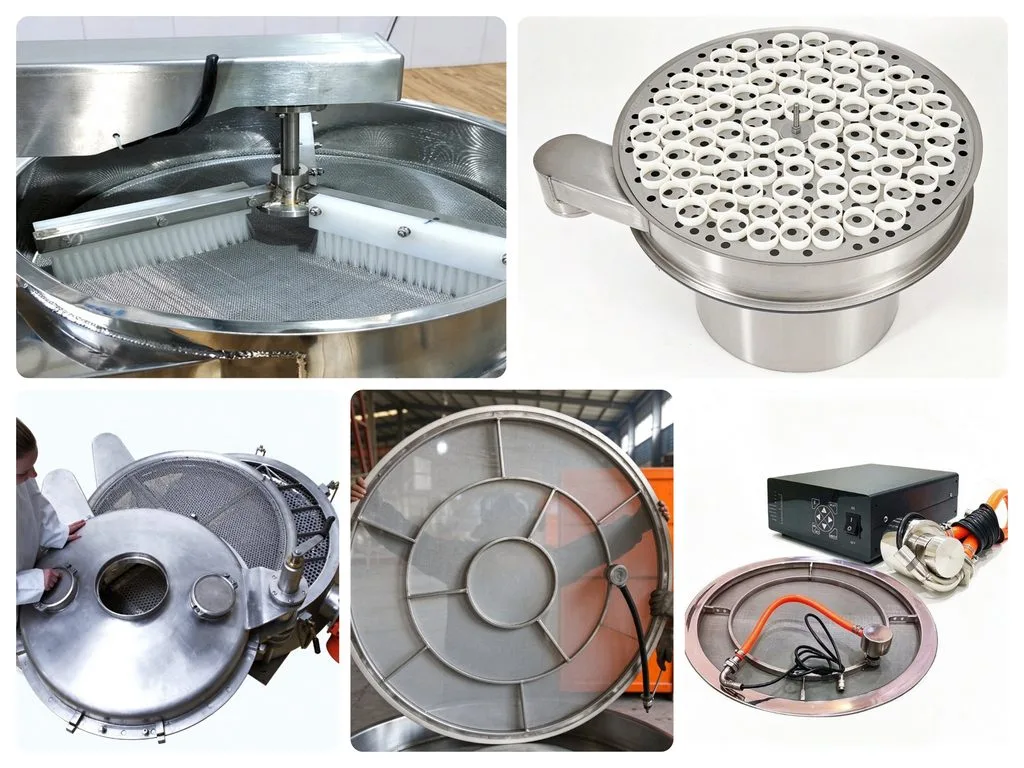
Manual Disassembly and Cleaning
The operator opens the equipment, removes the screen frame, and cleans the mesh, frame, internal walls, and other product-contact areas. This method allows direct visual inspection and is suitable for production lines with relatively simple cleaning requirements or fewer product changeovers.
COP (Clean-Out-of-Place)
Removable components, such as screen frames, are taken out of the machine and cleaned separately. After washing, the components are dried, inspected, and reinstalled. COP is useful when screen assemblies require thorough cleaning or when different products are processed on the same equipment.
CIP (Clean-in-Place)
CIP spray nozzles deliver cleaning liquid to internal surfaces without requiring the entire machine to be dismantled. A CIP arrangement needs suitable liquid supply, spray coverage, and drainage. Screen mesh openings, shielded areas, and locations where liquid cannot drain easily still require attention and inspection.
Bouncing Ball Cleaning
Bouncing balls are installed beneath the screen mesh. During operation, the vibration causes the balls to repeatedly strike the underside of the screen, helping dislodge particles lodged in the openings. This method is commonly used for powder and granule screening where particle blockage is a concern.
Brush Cleaning
A rotating brush contacts the screen surface and removes powder adhering to the mesh or particles blocking the openings. Brush cleaning can be considered for materials that tend to stick to the screen. Brush material, wear, and the possibility of bristle loss must be considered to prevent foreign-material contamination.
Ultrasonic Screen Cleaning
An ultrasonic system transmits high-frequency vibration to the screen mesh, helping reduce fine-powder adhesion and blockage. It is particularly useful when screening fine powders through small mesh openings. Ultrasonic cleaning is a screen-cleaning method, not a replacement for cleaning the machine’s internal surfaces.
For more detail on ultrasonic mesh deblinding, read Ultrasonic Screen Deblinding: How the System Prevents Mesh Clogging.
How to Choose a Cleaning Method
- For general particle blockage, bouncing ball cleaning is a common option.
- For powders that tend to adhere to the mesh, brush cleaning can be evaluated.
- For fine powders and small mesh openings, ultrasonic screen cleaning can help reduce mesh blockage.
- For frequent product changes, removable screen frames and COP can make cleaning and inspection easier.
- For cleaning internal machine surfaces with less manual disassembly, a CIP spray system can be considered.
For low-moisture food powders such as flour, milk powder, and sugar powder, wet cleaning must be followed by thorough drainage and drying before production resumes.
Which Food Powders Are Suitable for Sanitary Circular Screening?
Sanitary circular screeners are used for a range of food powders that require check screening, lump removal, or particle-size classification. The screen mesh and cleaning arrangement should be selected according to the characteristics of each material.

| Food Powder | Typical Materials | Screening Requirements |
|---|---|---|
| Flour & Starch | Wheat flour, corn starch, potato starch, rice flour | Remove fibers, lumps, and oversized particles; prevent fine powder buildup on the mesh. |
| Sugar & Sweeteners | Granulated sugar, powdered sugar, glucose powder | Remove lumps and oversized particles; control dust leakage. |
| Milk Powder & Dairy Ingredients | Whole milk powder, skimmed milk powder, whey powder, whey protein powder | Remove agglomerates and maintain hygienic conditions between batches. |
| Cocoa & Chocolate Powder | Cocoa powder, chocolate powder, cocoa-based ingredients | Remove oversized agglomerates and reduce mesh blockage. |
| Spices & Seasonings | Chili powder, black pepper powder, curry powder, blended seasonings | Remove fibers and coarse particles; prevent cross-contamination during changeovers. |
| Coffee & Tea Powder | Ground coffee, instant coffee powder, tea powder | Remove oversized particles and reduce fine-powder blockage. |
How to Select a Sanitary Circular Screener for Food Powder Production
Selecting a sanitary circular screener requires consideration of material properties, target screening accuracy, processing capacity, and cleaning requirements. The following factors are important when determining the equipment configuration.
Material Characteristics and Particle Size
Fine powders such as flour, milk powder, and powdered sugar can adhere to the screen mesh, so screen blockage and cleaning requirements should be considered. Fibrous materials such as spices and tea powder require attention to the removal of fibers and coarse particles. For materials that readily absorb moisture and form lumps, check the raw material’s moisture condition. A vibrating screener alone cannot resolve severe agglomeration.
Processing Capacity and Equipment Diameter
For small-batch or laboratory production, equipment with a diameter of 600–800 mm may be considered. A diameter of 1000–1200 mm can be evaluated for conventional production lines, while larger lines may require diameters of 1500 mm or above. Increasing the equipment diameter provides a larger screening area, but capacity does not increase in direct proportion to diameter. Fine powders, low-flowability materials, and small mesh openings generally require more screening area.
Screen Mesh Opening and Number of Layers
When the main purpose is to remove lumps, foreign materials, and oversized particles, a single-layer screen is usually the simpler option and is easier to clean. Double- or triple-layer configurations can be considered when several particle-size fractions need to be separated at the same time. Smaller mesh openings increase the risk of screen blockage, particularly when screening fine powders.
Product-Contact Material and Surface Finish
For general dry food powders, 304 stainless steel is commonly considered. When the equipment is frequently cleaned with chlorine-containing agents or exposed to more corrosive media, 316L should be evaluated. For food-processing equipment, the finish of screen-frame connections, welds, and internal walls is just as important as the stainless steel grade.
Cleaning Method and Changeover Frequency
For production involving the same material with few product changes, manual disassembly and cleaning may be sufficient. If the production line changes materials several times a day, quick-release clamps and removable screen frames can make COP cleaning more practical. A CIP spray system can be evaluated when reducing manual disassembly is a priority. For fine powders that frequently block the mesh, ultrasonic cleaning can be considered. Bouncing balls are suitable for general particle blockage, while brush cleaning can be evaluated for materials that tend to adhere to the screen.
Equipment Structure and Production-Line Connections
When the screener is connected directly to a hopper or mixer, confirm the inlet height, discharge direction, and connection dimensions before installation. This helps prevent excessive material drop and mismatched interfaces. Production lines that require frequent cleaning should also provide enough space to open the lid and remove the screen frame. Without sufficient operating space, quick-release structures cannot deliver their full cleaning and maintenance benefits.
Conclusion
A sanitary circular screener supports food powder production by combining particle separation with hygienic structural design. Material selection, smooth product-contact surfaces, accessible screen assemblies, reliable sealing, and suitable cleaning methods all contribute to effective operation and easier maintenance.
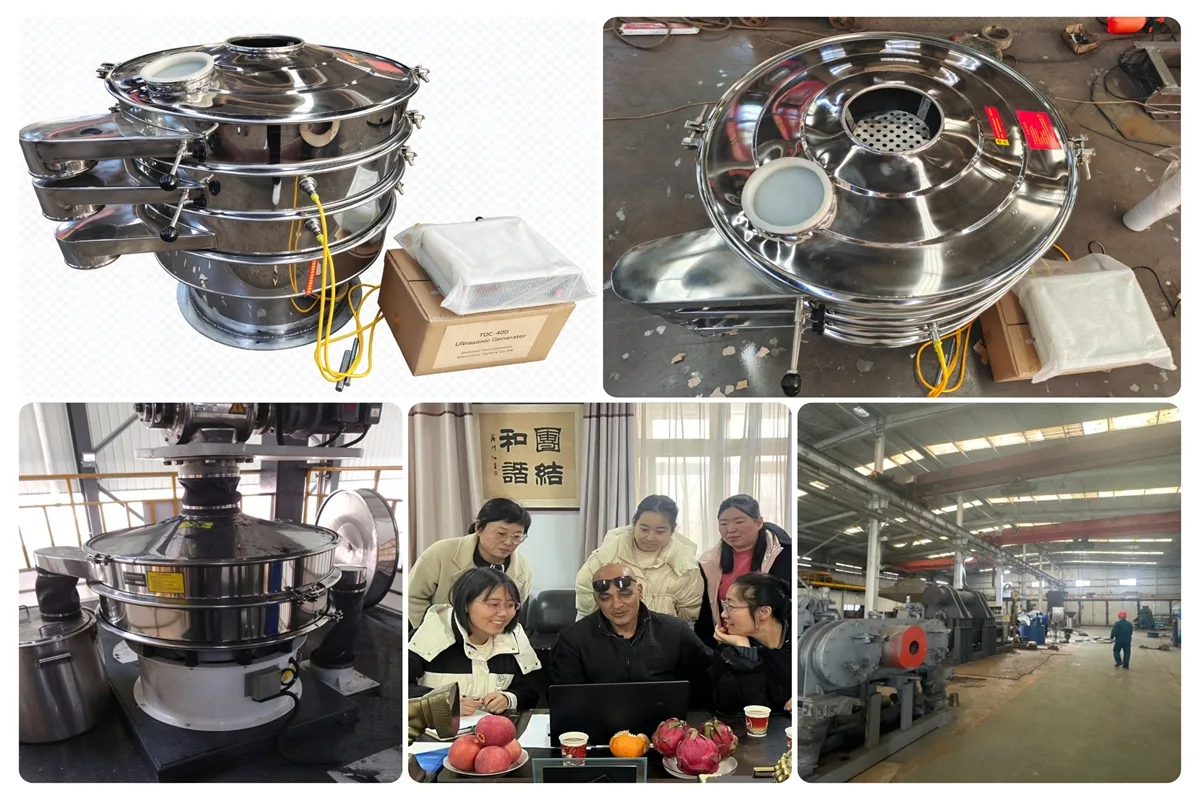
For food manufacturers, the equipment configuration should be based on the powder’s particle size, flowability, moisture condition, screening target, processing capacity, and cleaning frequency. GUOFENG provides multiple structural configurations and can configure hygienic features such as quick-release clamps, removable screen frames, dust-tight connections, CIP spray nozzles, bouncing ball cleaning, and ultrasonic screen cleaning for food powder screening applications.
To discuss your food powder screening requirements, contact GUOFENG with your material, target mesh opening, throughput and cleaning needs.
FAQ
Can a sanitary circular screener remove metal contaminants from food powder?
A circular screener can retain oversized metal fragments if they are larger than the mesh openings, but it cannot reliably detect or remove all metal contaminants. Magnetic separators and metal detectors are used for dedicated metal-contamination control.
Can a sanitary circular screener handle wet food materials?
Circular screeners can be configured for certain wet-screening applications, but the screen type and machine structure must match the material’s moisture and flow characteristics. Sticky materials may adhere to the mesh and reduce screening efficiency. For dry food powders, the equipment is generally used under dry-screening conditions.
What is the difference between COP and CIP cleaning?
COP involves removing components such as screen frames from the machine and cleaning them separately. CIP uses spray nozzles to deliver cleaning liquid to internal surfaces without fully dismantling the equipment. COP provides direct access to removable components, while CIP reduces some manual disassembly work.
Is ultrasonic cleaning suitable for all food powders?
No. Ultrasonic cleaning is mainly used to reduce fine-powder adhesion and blockage on the screen mesh, especially with small mesh openings. It does not replace manual cleaning, COP, or CIP for the machine’s product-contact surfaces.
Should a food powder screener use 304 or 316L stainless steel?
304 stainless steel is widely used in general food-processing environments. 316L provides better resistance to pitting and corrosion in more demanding chemical or cleaning conditions. The choice should consider the material being processed and the cleaning agents used.
How many screening layers does a food powder production line need?
A single-layer screen is generally sufficient for check screening and removing oversized particles. Two or more layers are used when the process requires separation into multiple particle-size fractions. The required number of layers depends on the target size ranges and production process.
Need help with a similar request?
Share your product requirements, timeline and cooperation goals. We can help clarify the next step.