
What Is a W-Type Double Cone Mixer?
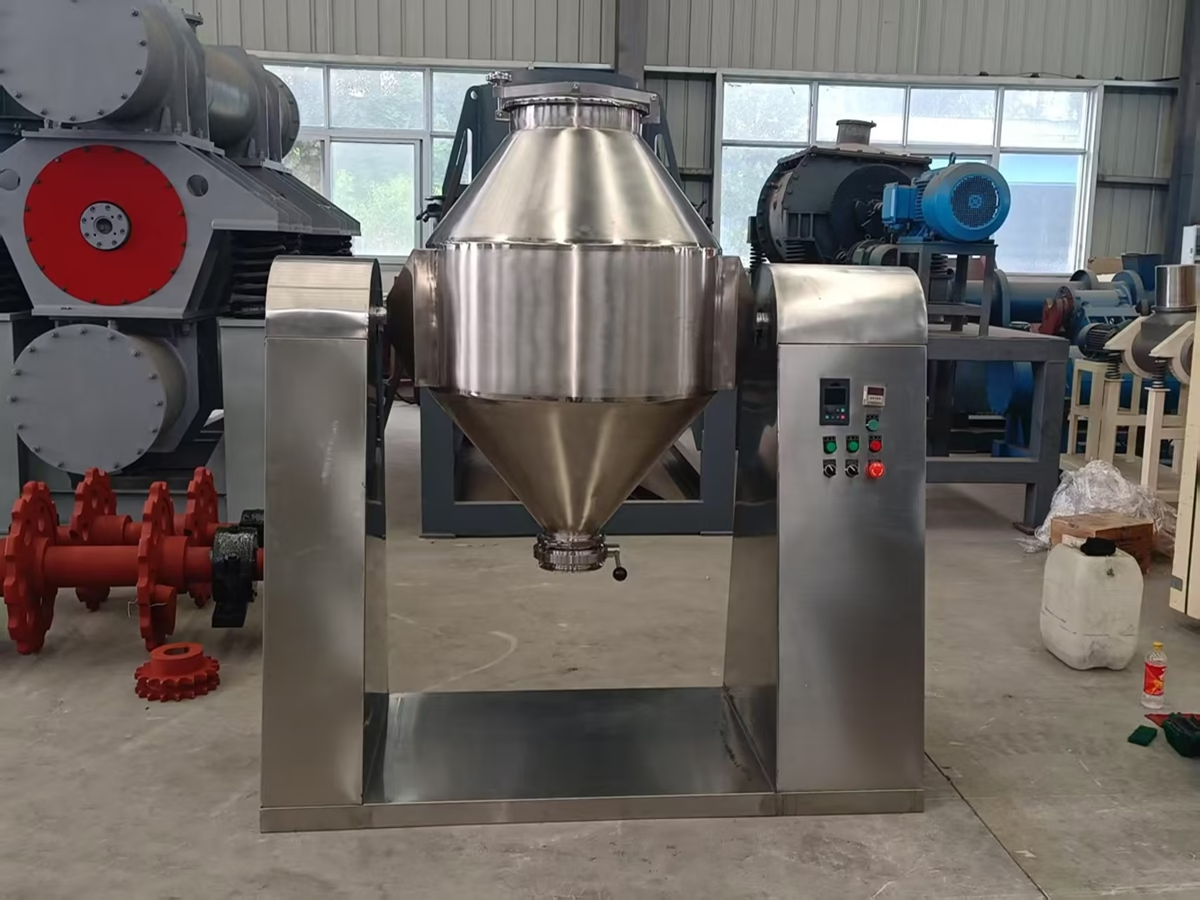
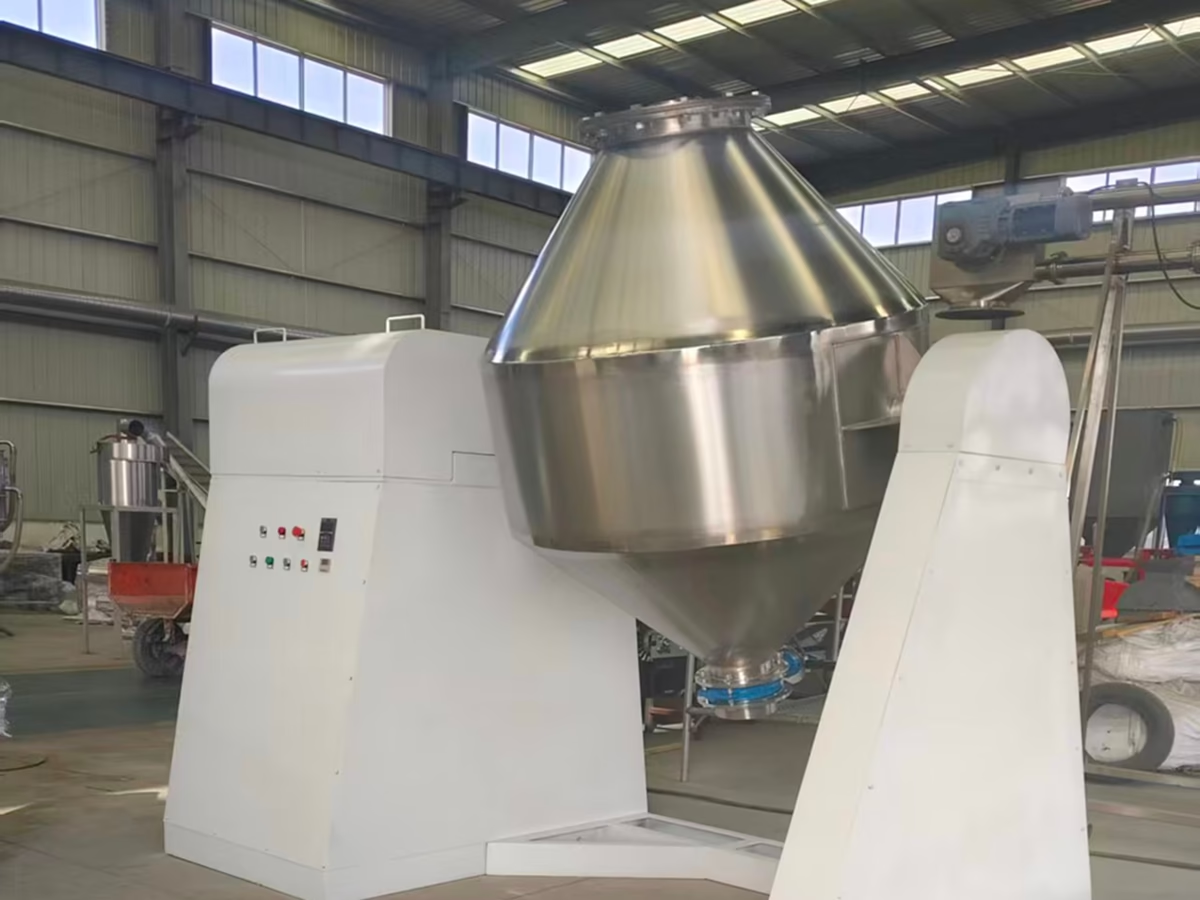
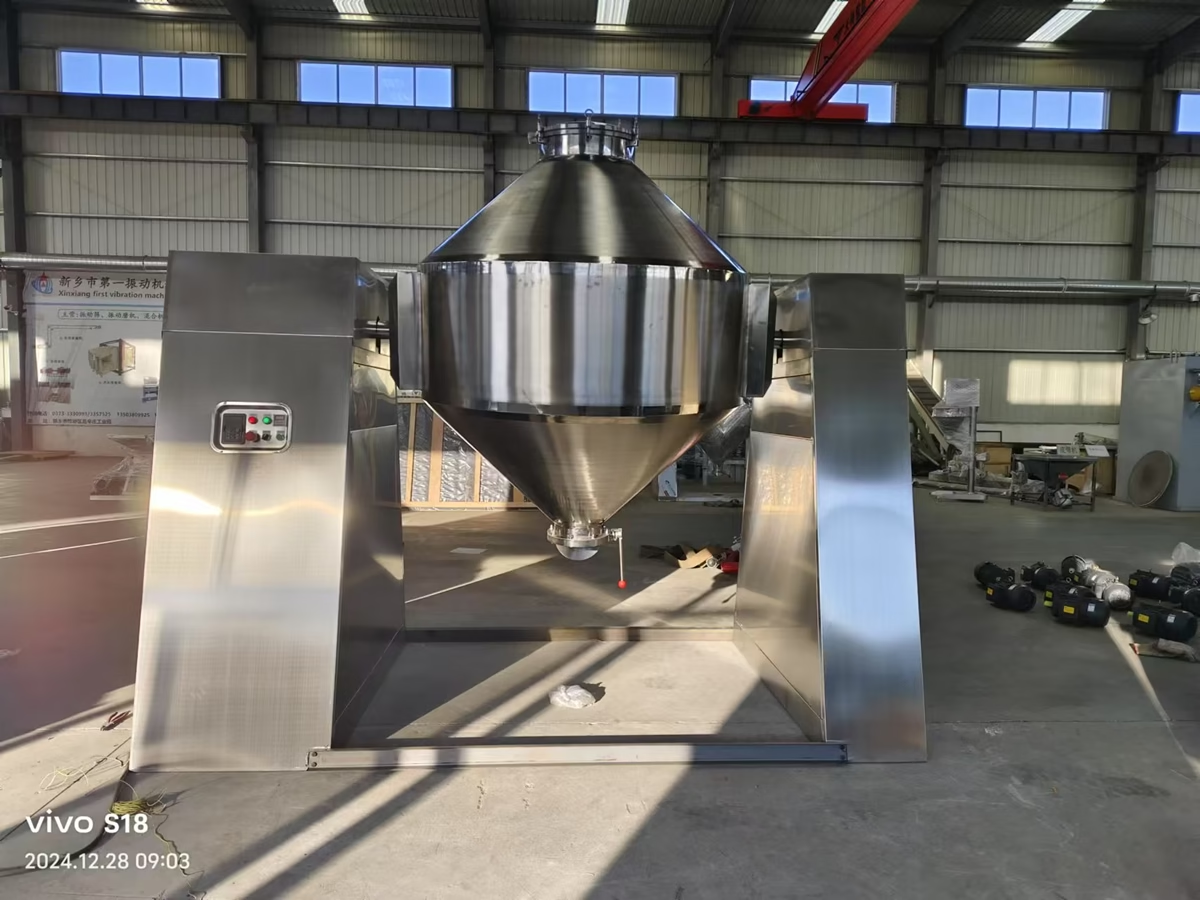
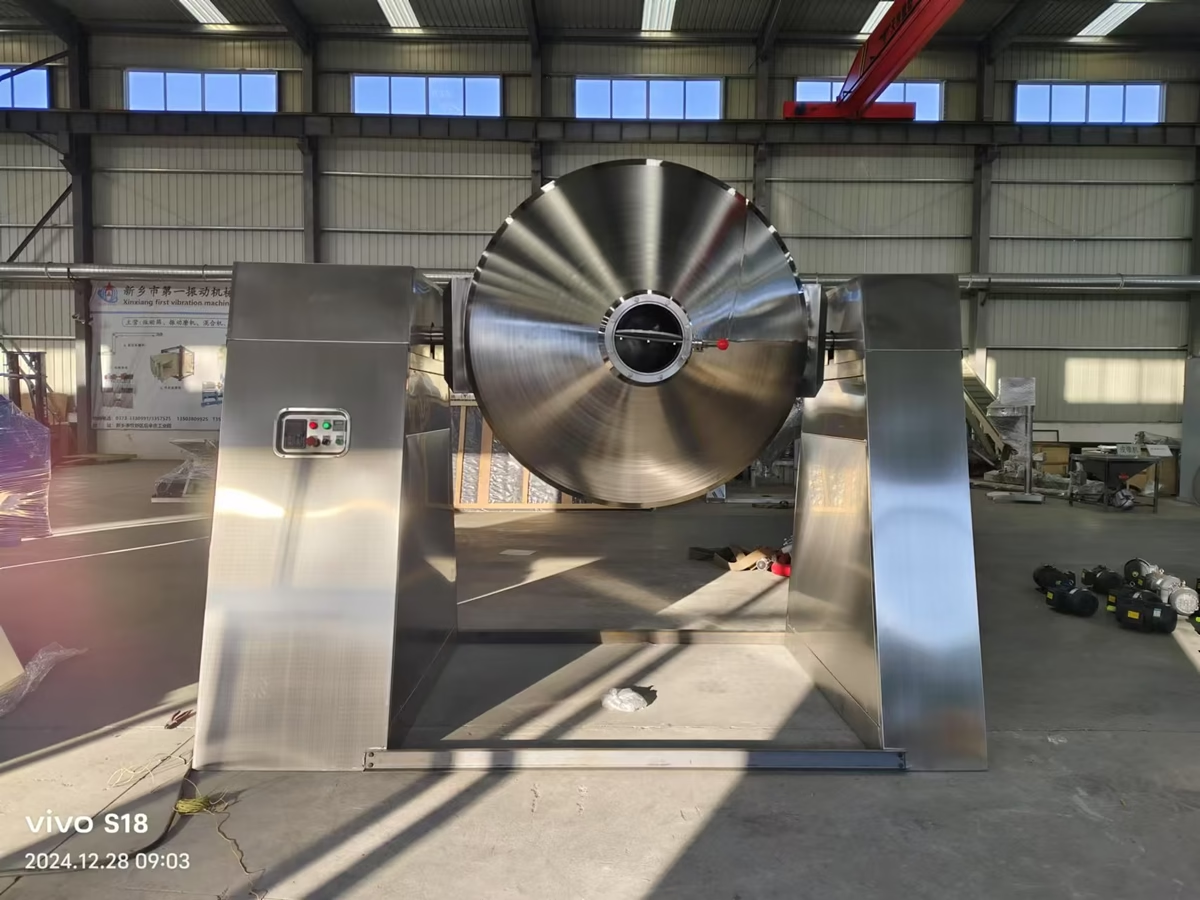
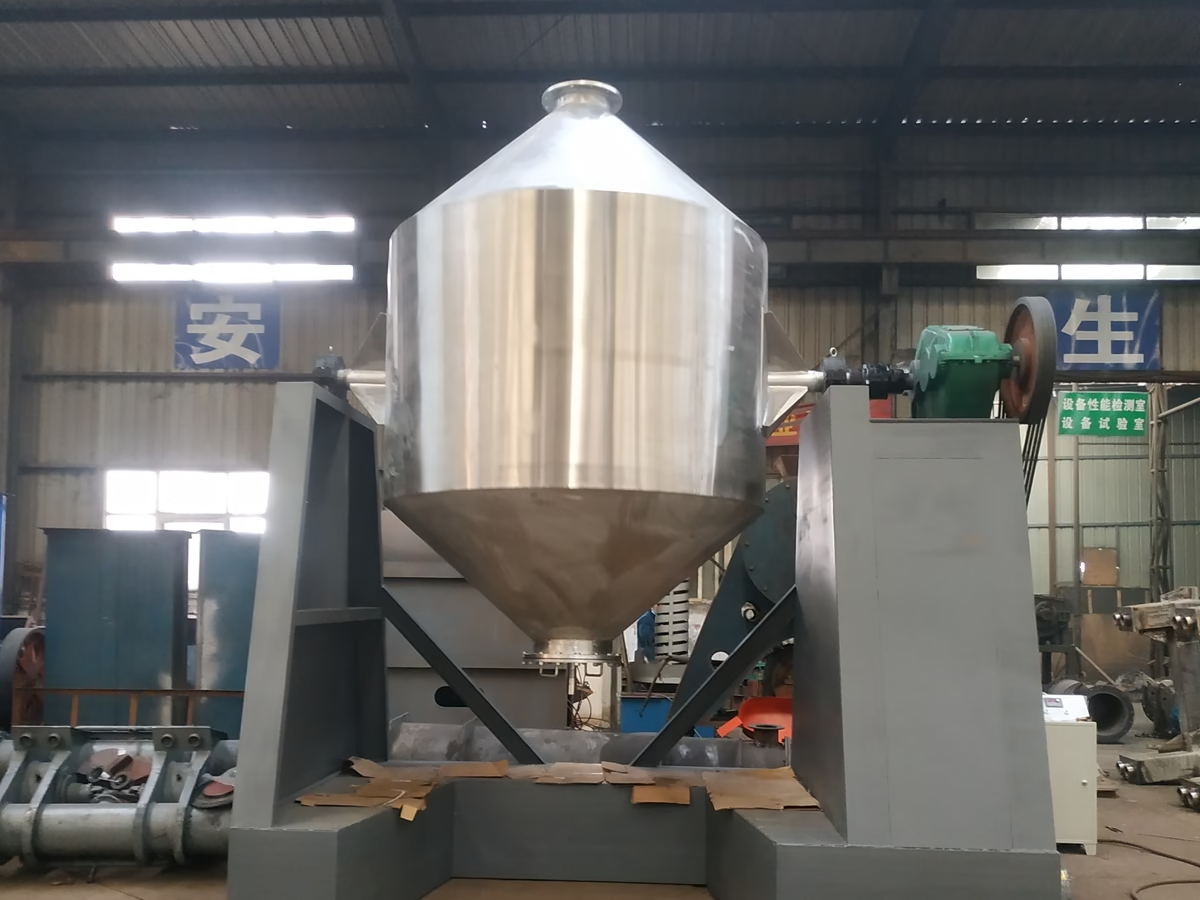
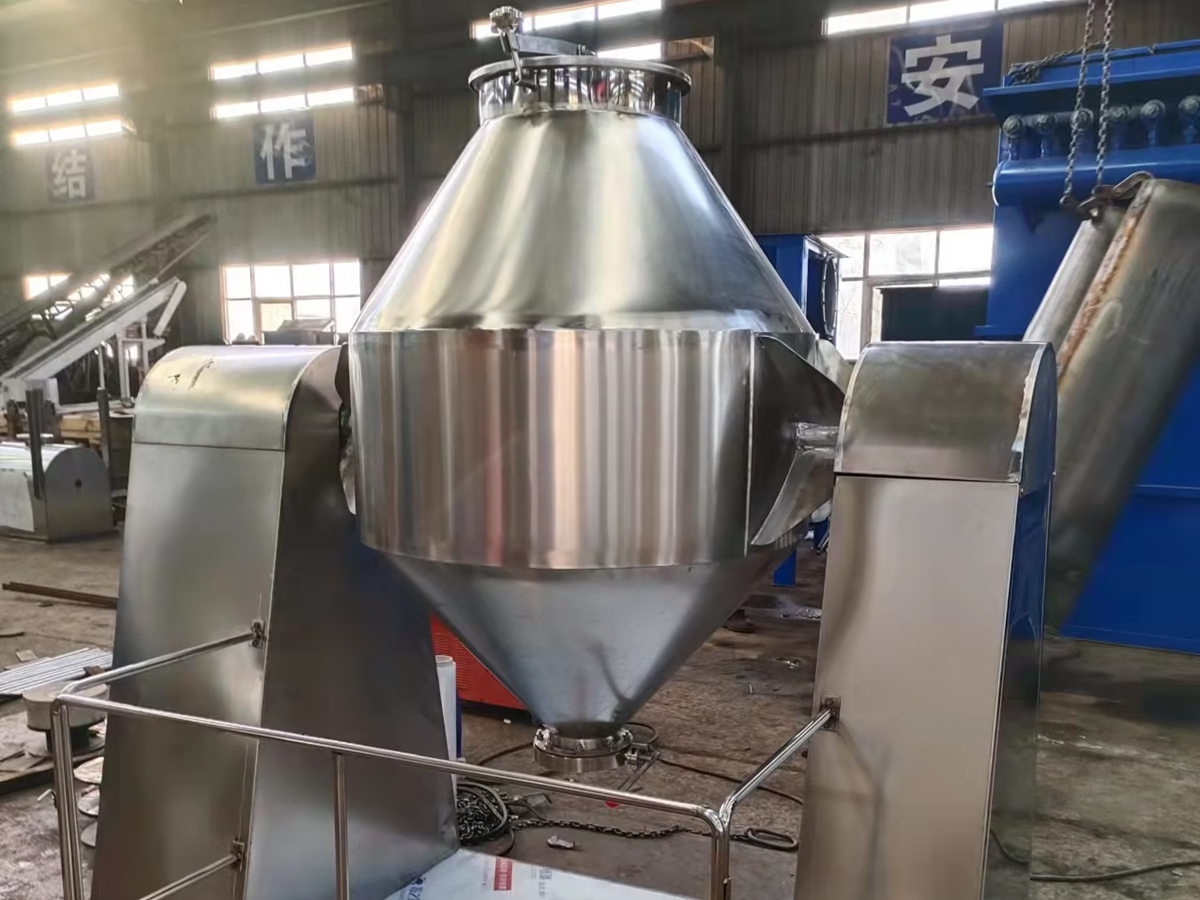
A W-type double cone mixer is a batch blender for dry powders and free-flowing granules. Its vessel has two conical ends joined by a short cylindrical section and rotates around a horizontal axis. Material lifts and cascades under gravity, redistributing particles through repeated tumbling. This equipment is also known as a double cone blender.
Choose a double cone powder mixer when the formulation can circulate freely through a tumbling vessel. The GUO FENG W series lists total volumes of 100–20,000 L and batch ratings of 40–10,000 kg. Check working fill, bulk density, load rating, charging sequence, and segregation risk together. Standard blending relies on vessel rotation; an optional intensifier requires a separately confirmed configuration.
Double Cone Blender Working Principle and Construction
Tumbling and Gravity-Based Blending
The double cone blender working principle is based on tumbling and particle redistribution. As the vessel rotates, the powder bed rises and then cascades over a newly exposed surface. Repeated movement brings ingredients into contact throughout the batch. The required mixing time depends on the formulation, fill level, speed, and acceptance criteria.

Charging
With the drum stopped and the charging port facing upward, material enters through the top opening. The normal working fill is about 40–50% of the drum’s total volume.
Lift and Fall
As the drum rotates, its inner wall lifts the material. Once the bed reaches its natural angle of repose, it slides and cascades back through the drum.
Cascading and Redistribution
Material moves across the central section and between the conical ends as the vessel turns. Repeated cascading redistributes the ingredients; confirm blend uniformity through an agreed sampling and testing procedure.
Discharge
After mixing, the drum is positioned with the discharge outlet facing downward. The batch is released through the selected discharge valve; actual emptying time depends on material flowability and batch size.
Construction and Labeled Diagram
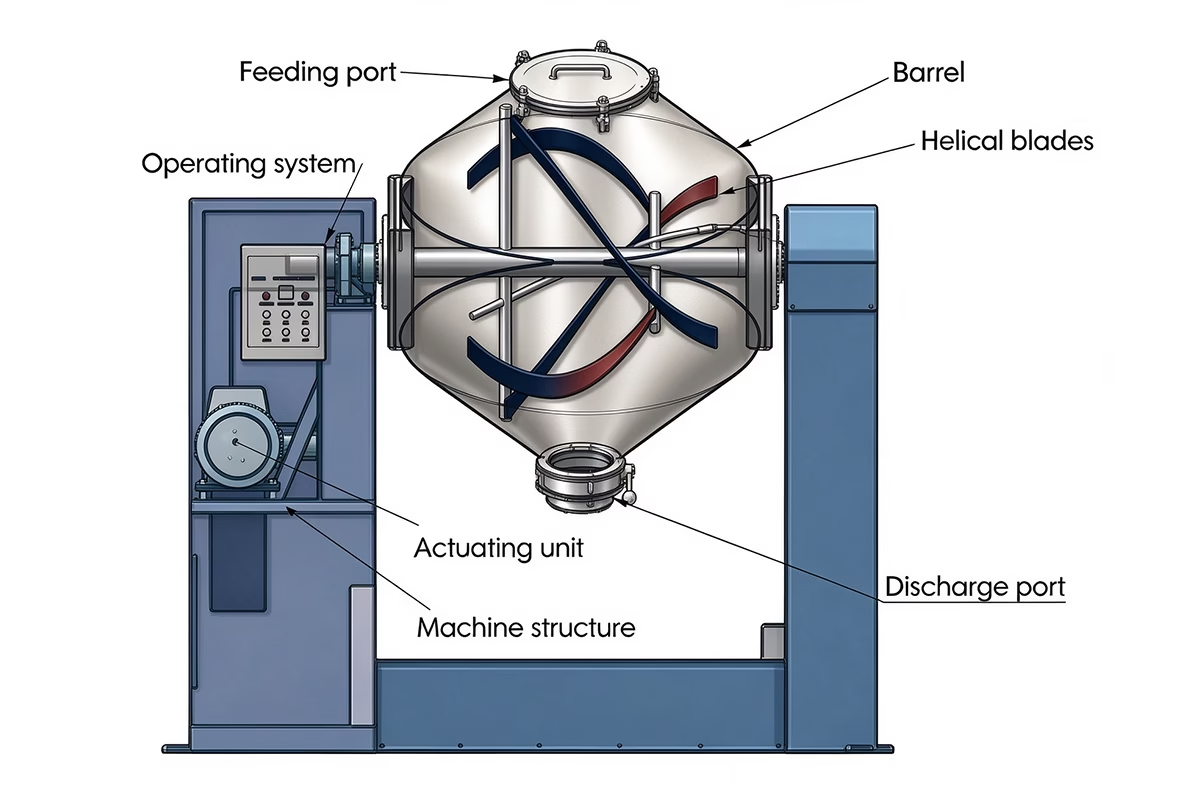
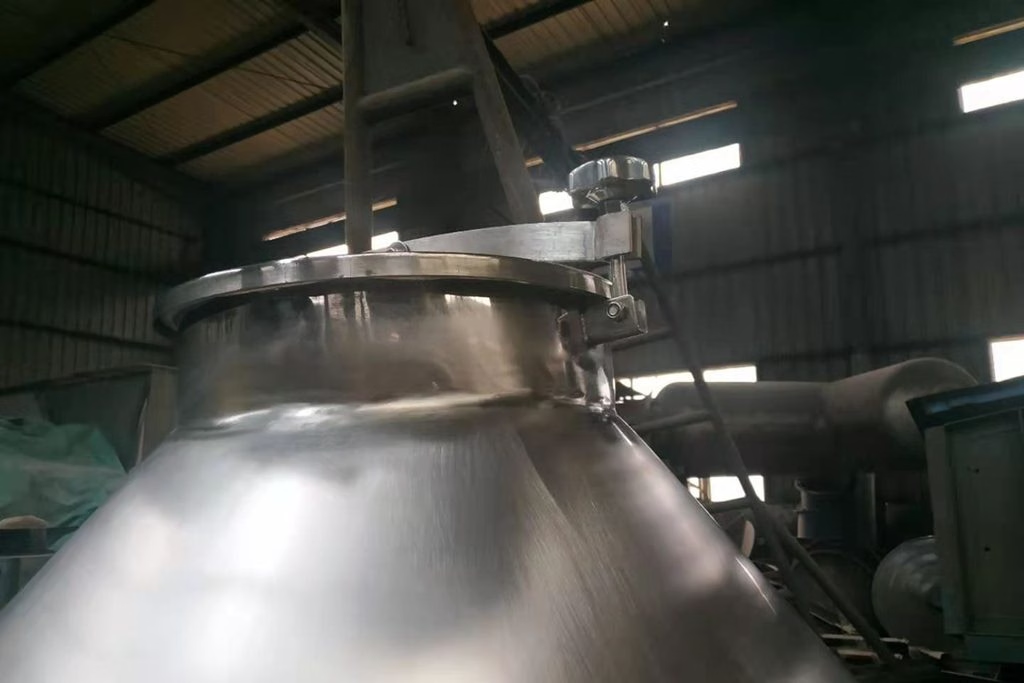
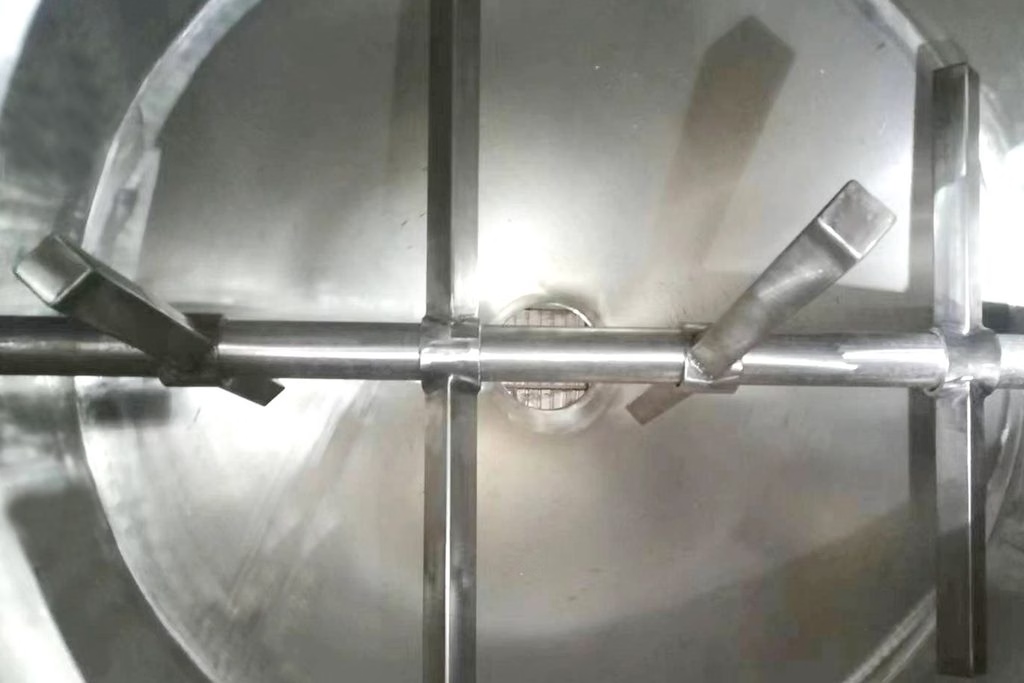
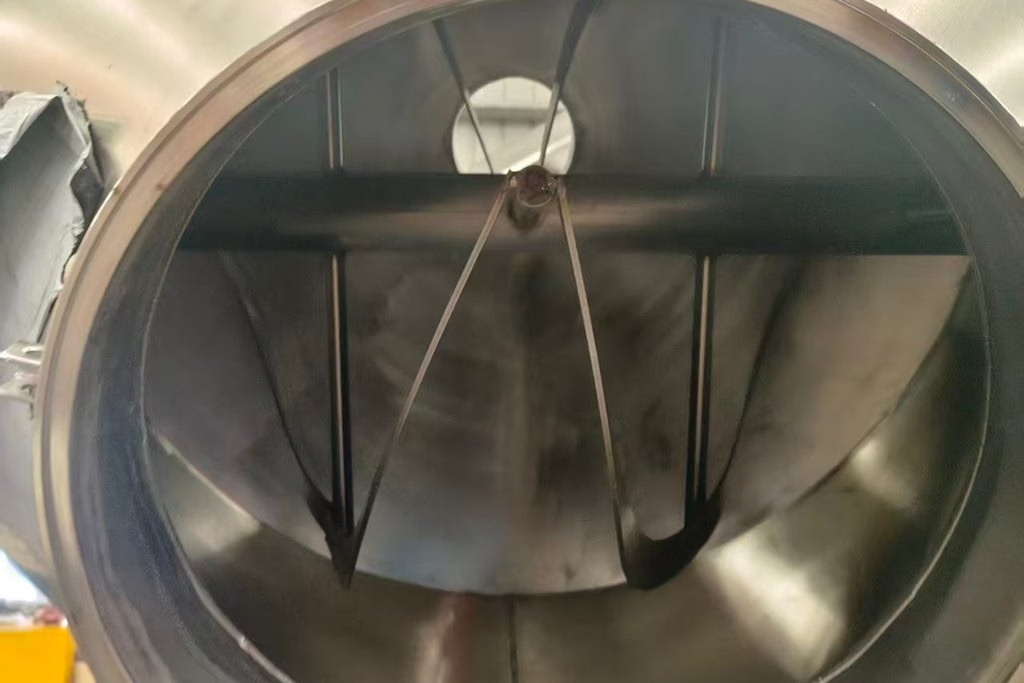
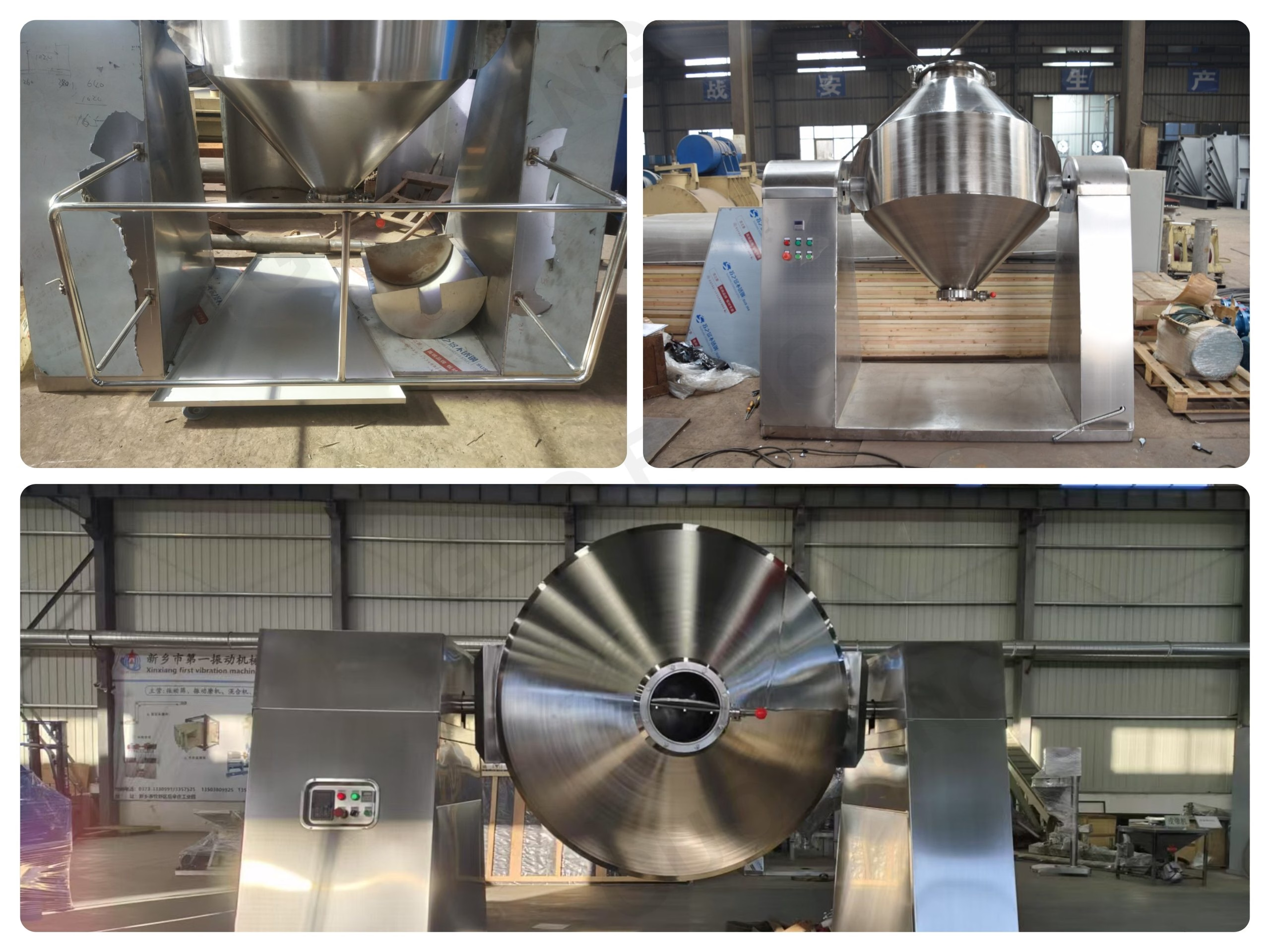
Double cone blender construction includes the vessel, trunnion shafts, bearings, support frame, drive, charging port, discharge valve, and controls. The diagram below identifies the main assemblies. Internal mixing elements shown in this illustration are configuration-dependent; agree the actual internal arrangement and optional intensifier in the approved machine drawing.
| Part | Function |
|---|---|
| Drum shell | Two cones plus centre cylinder; holds the batch |
| Support frame | Carries trunnion loads into the floor |
| Trunnion shafts | Two stub shafts on the drum axis; one is driven |
| Bearings | Take radial and axial load; greased from the frame |
| Drive unit | Gearmotor, sprocket, V-belt, and guard |
| Shaft seal | Keeps powder out of the bearing housing |
| Charging port | Opening and cover arrangement to the approved model drawing; listed options include 200/300/400 mm |
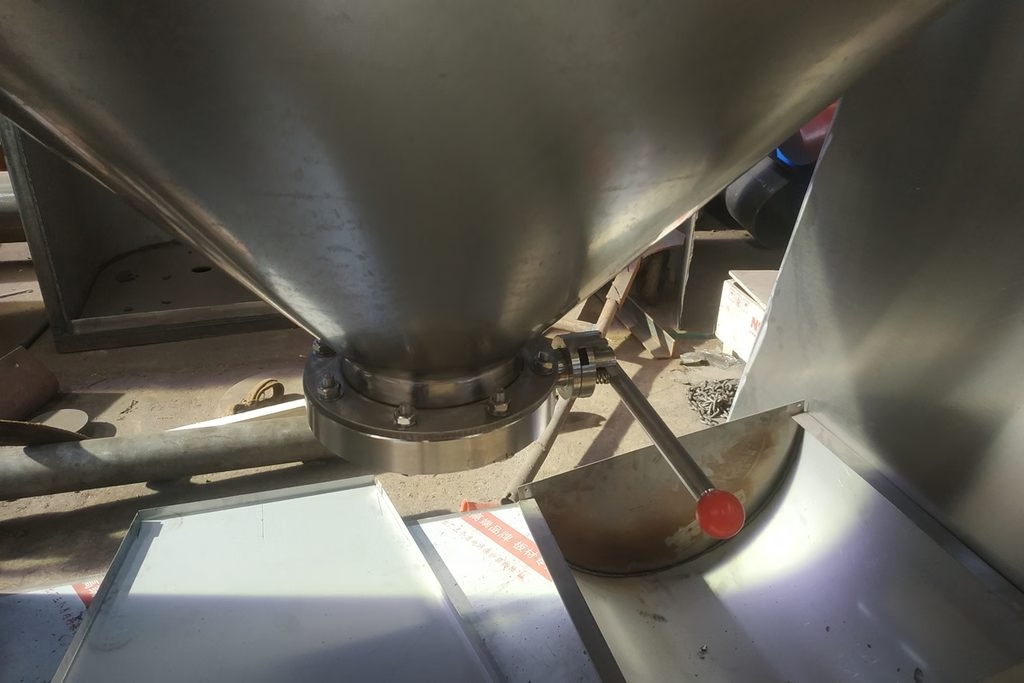
| Discharge valve | Valve type and port size to the approved model drawing; customization options are listed below |
| Jacket (optional) | Half-pipe or dimple jacket for specified heating / cooling service; not a product-chamber pressure rating |
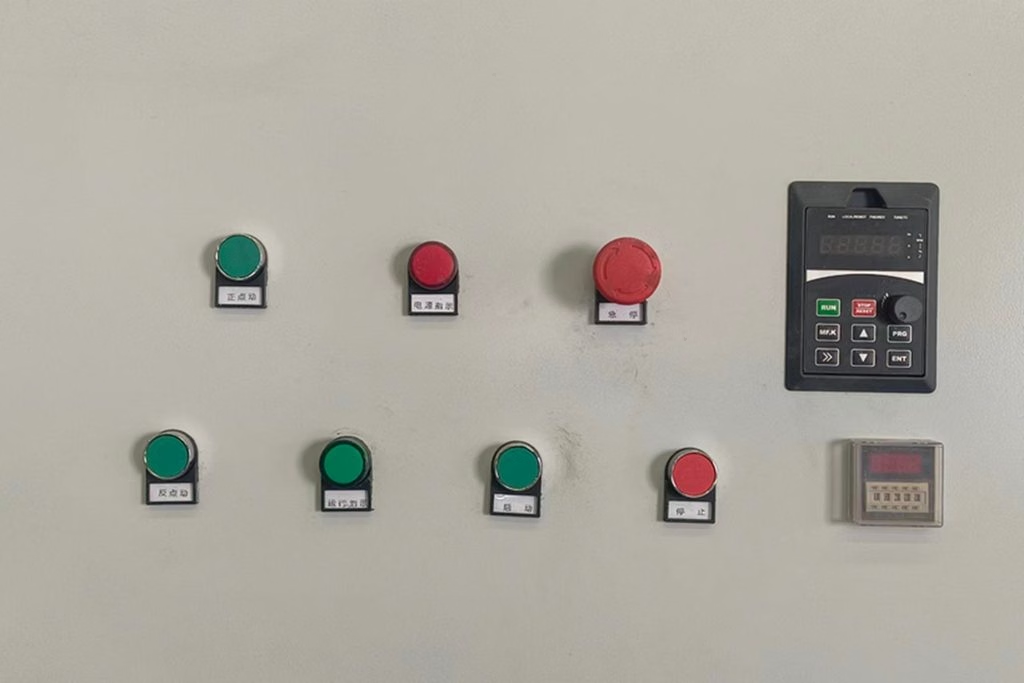
| Control panel | Start, stop, batch timer, guard and outlet interlock |
CONTACT US
Replacing a V-type or an old double cone on the existing frame?
Send the existing frame and mounting drawings, outlet height, and batch weight. Frame strength, shaft alignment, drive loads, and the rotating envelope must be checked before confirming whether the existing frame can be reused.
Double Cone Blender Components

Features for Dry Powder Batch Blending
A double cone blending machine uses low-speed vessel rotation to mix suitable dry solids. The W-type design provides a choice of batch sizes and contact materials, with the mixing cycle and optional equipment selected around the formulation. Confirm the final result with a representative blend trial.
Gentle Tumbling Action
The rotating drum lifts and rolls materials through the mixing chamber. This low-speed tumbling action reduces excessive mechanical impact on particles.
Uniform Batch Blending
Continuous material movement in the rotating drum promotes repeated mixing and redistribution. It helps achieve a consistent blend of powders and granules throughout the batch.
Low-Shear Mixing
The mixer relies on drum rotation rather than high-speed blades. This makes it suitable for blending fragile granules and materials that do not require intensive shear.
Flexible Batch Capacity
Models from W-100 to W-20000 cover working volumes from small to large batches. This allows users to select a mixer according to batch size and production requirements.
Double Cone Blender vs V-Type and Ribbon Mixers
Compare the mixing action, working volume, material flow, and cleaning access of the W-type double cone design with V-type and ribbon mixers. Machine selection should follow the formulation and process requirements rather than vessel shape alone.

| Indicator | W-type double cone (this series) | V-type | Ribbon (horizontal) |
|---|---|---|---|
| Working fill | 40–50% of total volume; observe model batch rating | Confirm for the selected model and material | Confirm for the selected model and material |
| Total drum / vessel volume | 100–20,000 L | Model dependent | Model dependent |
| Mixing time | 4–20 min by model; validate for the blend | Model and material dependent | Model and material dependent |
| Mixing action | Low-speed tumbling in the standard configuration | Tumbling | Driven internal ribbon |
| Cohesive or oily material | May not tumble freely; trial required | May not tumble freely; trial required | Evaluate a suitable ribbon / plough design |
| Cleaning between products | Accessible drum interior; verified cleaning procedure required | Assess access to legs, junction, and outlet | Assess trough, ribbon, shaft, and seals |
When Not to Use It
- Highly cohesive materials: Powders that stick strongly together may not circulate and blend effectively.
- Sticky or smear-forming materials: Materials that adhere to the drum wall can interfere with the tumbling action.
- Hard lumps: Materials containing hard agglomerates may require additional crushing or pre-treatment.
- High segregation risk: Large differences in particle size or bulk density may cause ingredients to separate instead of forming a uniform blend.
- Wet or high-liquid recipes: Consider a ribbon blender or plough mixer with a suitable liquid-addition system.
- Very low-density powders: A larger drum may be needed to accommodate the required batch weight.
Choosing the Right Mixer
- W-Type Double Cone Mixer: Suitable for free-flowing powders and granules that require large-batch, low-shear tumbling and easy access to the drum interior.
- V-Type Mixer: A potential choice for smaller batches of fragile granules.
- Ribbon Blender or Plough Mixer: Consider for moist, oily, sticky powders or formulations that require a higher filling ratio.
CONTACT US
W-type or V-type for your blend?
Send the component list, particle sizes, bulk densities, batch weight, and required uniformity. Mixer selection also depends on flowability, segregation risk, cleaning needs, and trial results.
W-Type Double Cone Mixer Specifications
Compare the 11 listed W-series models by total vessel volume, rated batch mass, mixing time, drive power, speed, and installation dimensions. Total volume is not the usable batch volume: apply the selected working fill and observe the model load rating. The listed mixing times require confirmation for your blend.
| Model | Rated batch capacity (kg/batch) | Total volume (L) | Mixing time (min) | Motor power (kW) | Drum speed (r/min) | Overall dimensions (L×W×H, mm) |
|---|---|---|---|---|---|---|
| W-100 | 40 | 100 | 4–8 | 1.1 | 22 | 1350×600×1600 |
| W-200 | 100 | 200 | 4–8 | 1.5 | 15 | 1680×650×1600 |
| W-300 | 150 | 300 | 4–8 | 1.5 | 15 | 1750×700×1650 |
| W-500 | 200 | 500 | 4–8 | 2.2 | 15 | 2080×750×1900 |
| W-1000 | 450 | 1000 | 6–12 | 3 | 12 | 2150×850×2100 |
| W-1500 | 700 | 1500 | 6–12 | 4 | 12 | 2300×1000×3100 |
| W-2500 | 1200 | 2500 | 6–15 | 5.5 | 10 | 2500×1600×2400 |
| W-4000 | 2000 | 4000 | 6–15 | 7.5 | 10 | 2980×1580×2800 |
| W-6000 | 3000 | 6000 | 8–20 | 11 | 8 | 3270×2000×3150 |
| W-10000 | 5000 | 10000 | 8–20 | 18.5 | 8 | 3840×2500×3950 |
| W-20000 | 10000 | 20000 | 8–20 | 30 | 6 | 4940×3600×5100 |
Batch Capacity and Fill Rate
Calculate batch mass as total drum volume in m³ × working fill fraction × bulk density in t/m³ × 1,000. The table uses 40–50% fill and limits the W-2500 and W-6000 calculations to their listed ratings of 1,200 kg and 3,000 kg.
| Bulk density (t/m³) | Calculated kg per 1,000 L at 40–50% fill | W-2500: within 1,200 kg rating (kg) | W-6000: within 3,000 kg rating (kg) |
|---|---|---|---|
| 0.4 | 160–200 | 400–500 | 960–1,200 |
| 0.6 | 240–300 | 600–750 | 1,440–1,800 |
| 0.8 | 320–400 | 800–1,000 | 1,920–2,400 |
| 1.0 | 400–500 | 1,000–1,200 | 2,400–3,000 |
| 1.2 | 480–600 | 1,200 at 40% fill | 2,880–3,000 |
| 1.6 | 640–800 | No overlap: 40% fill exceeds rating | No overlap: 40% fill exceeds rating |
For example, 600 kg at 0.55 t/m³ occupies approximately 1,091 L. At a 45% working fill, the calculated drum volume is about 2,424 L. The W-2500 gives an actual fill of approximately 43.6% and the load is below its listed 1,200 kg rating, making it a candidate for material trials rather than a confirmed selection.
Contact Materials and Configuration Options
Specify the contact material, surface finish, charging method, discharge valve, controls, and any process options for the required batch. Confirm the internal arrangement and cleaning access before ordering. Jacket, spray, and intensifier options require their own engineering and process checks.
| Option | Configuration choices | Selection considerations |
|---|---|---|
| Drum volume | 100 to 20,000 L in 11 steps | Batch weight at your density |
| Contact material | SUS304, SUS316L, or specified coated carbon steel | Confirm chemical compatibility, food / pharmaceutical contact requirements, and coating suitability for the intended service |
| Surface finish | 180 grit, 240 grit, or specified polished finish | Specify roughness units, acceptance criteria, and the cleaning procedure; grit and Ra are not interchangeable |
| Jacket (optional) | Half-pipe or dimple; proposed 0.3–0.6 MPa design range subject to approved design | Heating / cooling medium, temperature, and jacket pressure; product-chamber pressure / vacuum and drying capability require separate confirmation |
| Liquid addition (optional) | Spray nozzle and lance; proposed 1–5% by weight subject to trials | Check wetting, distribution, wall adhesion, and whether the material remains free-flowing |
| Intensifier (optional) | Breaker bar or chopper arrangement subject to engineering confirmation | Adds internal components; verify shear, drive, sealing, cleanability, and material compatibility |
| Charging | 200/300/400 mm port, quick-release cover, screw feeder | Dust control and charging rate |
| Discharge | Butterfly valve 100/150/200 mm, rotary valve, or slide gate as specified | Confirm port diameter, valve type, actuation, containment, and discharge rate in the selected model drawing |
| Drive and power | 1.1–30 kW, 380–415 V 50 Hz, 440 V 60 Hz, VFD | Local supply and soft start |
| Controls and hazardous-area options | Push-button, batch timer, PLC recipe; suitable motor and electrical configuration where specified | Confirm interlocks and site hazard classification; an Ex motor alone does not establish suitability of the complete mixer for combustible dust |
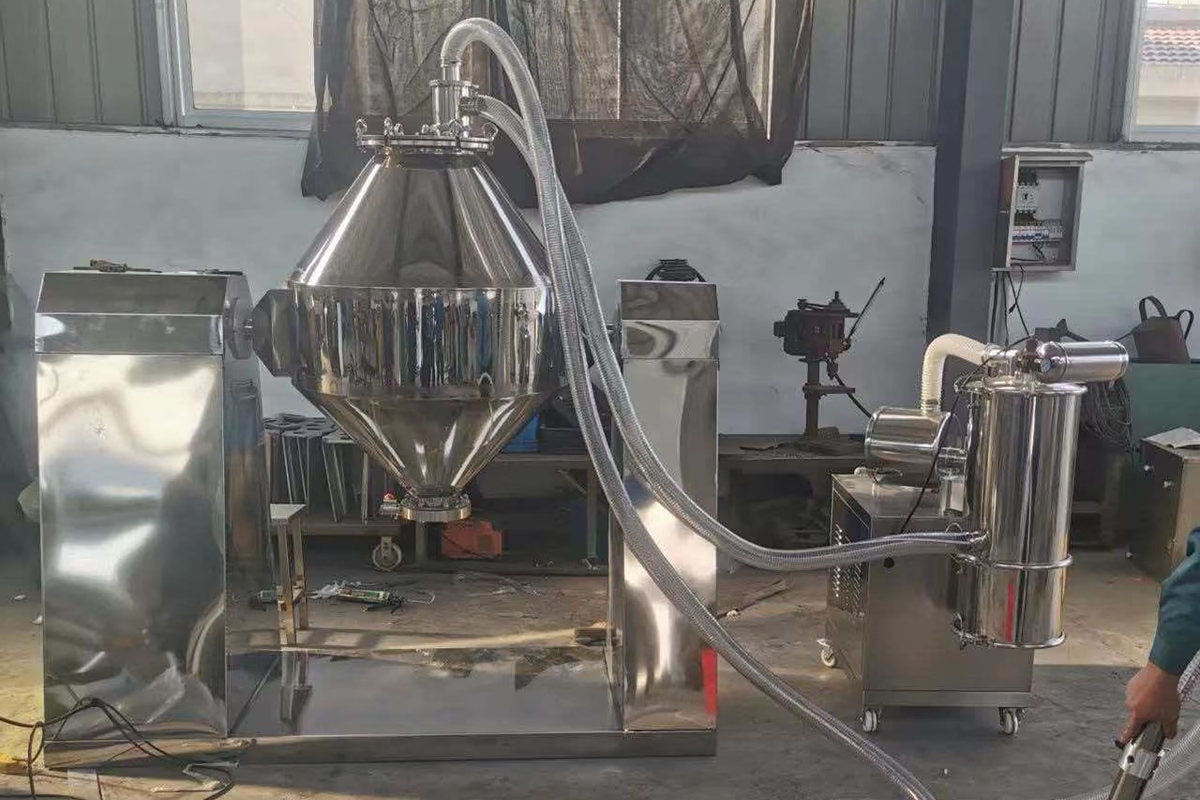
For enclosed powder charging, review the Vacuum Powder Feeder. Feeder integration and mixer connections should be confirmed for the material and installation.
CONTACT US
Need a drum size outside 100–20,000 L?
Send the target batch weight, bulk density, process conditions, and installation limits. Sizes outside the listed standard range require a separate engineering assessment and confirmed specifications.
Double Cone Powder Blending Applications
The W-type double cone mixer can be assessed for dry ingredient blends, powder additives, mineral mixtures, and suitable granules. Common application areas include food ingredients, pharmaceuticals, chemicals, feed premixes, plastics, and building materials. Suitability depends on flowability, ingredient ratios, segregation risk, and the required cleaning and product-contact conditions.
Food and Beverage
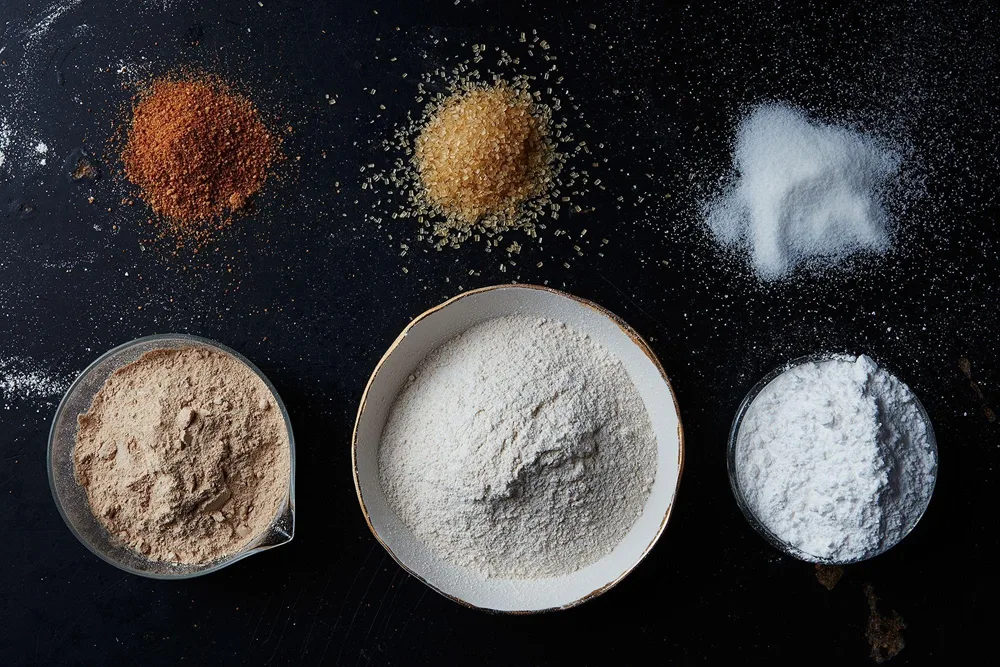
Common materials include flour, sugar, salt, milk powder, spices, and dry food premixes. The rotating double-cone drum gently tumbles these free-flowing ingredients to distribute different components throughout each batch.
Pharmaceutical and Nutraceutical
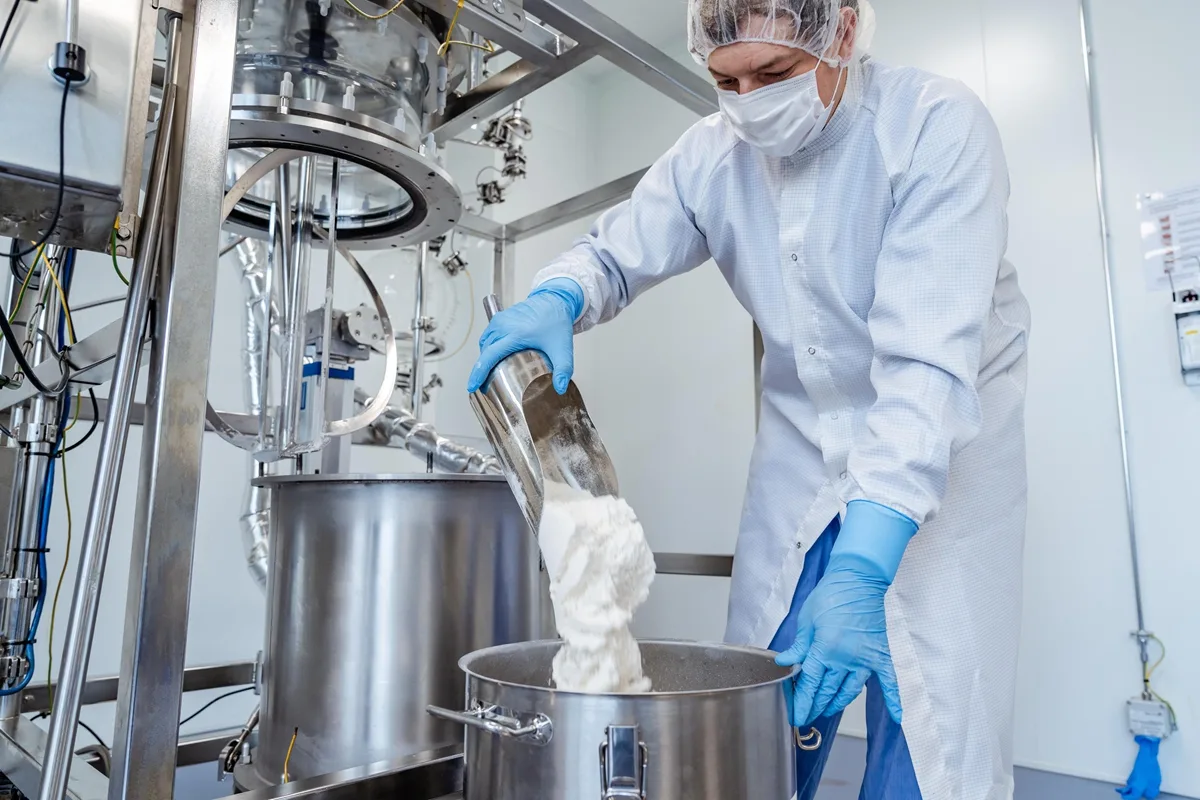
Typical materials include pharmaceutical excipients, vitamin powders, mineral blends, and dry nutraceutical ingredients. The tumbling action provides batch mixing without high-speed agitation, while stainless steel contact surfaces can be selected to meet product hygiene requirements.
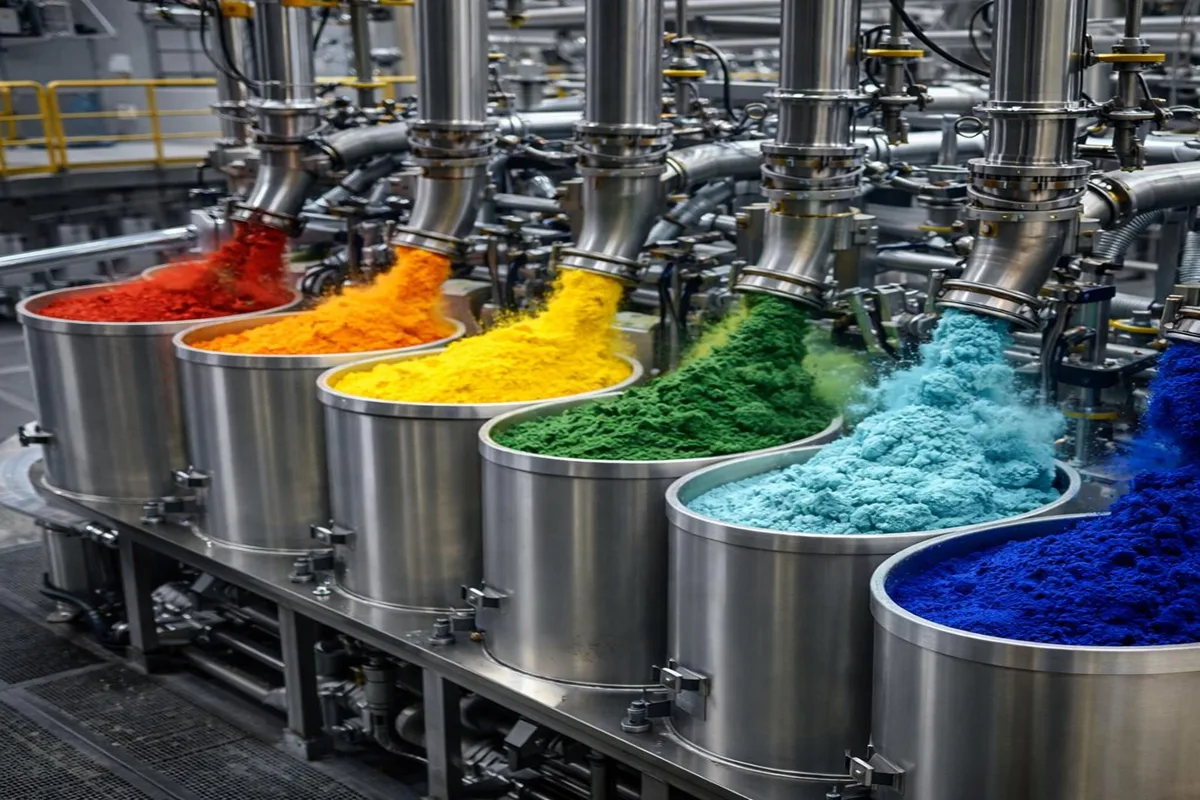
Chemical and Fine Chemical
Common materials include powdered pigments, dry chemical additives, resin powders, and other free-flowing chemical ingredients. The rotating drum repeatedly lifts and redistributes the materials, making it suitable for batch blending where excessive shear is unnecessary.
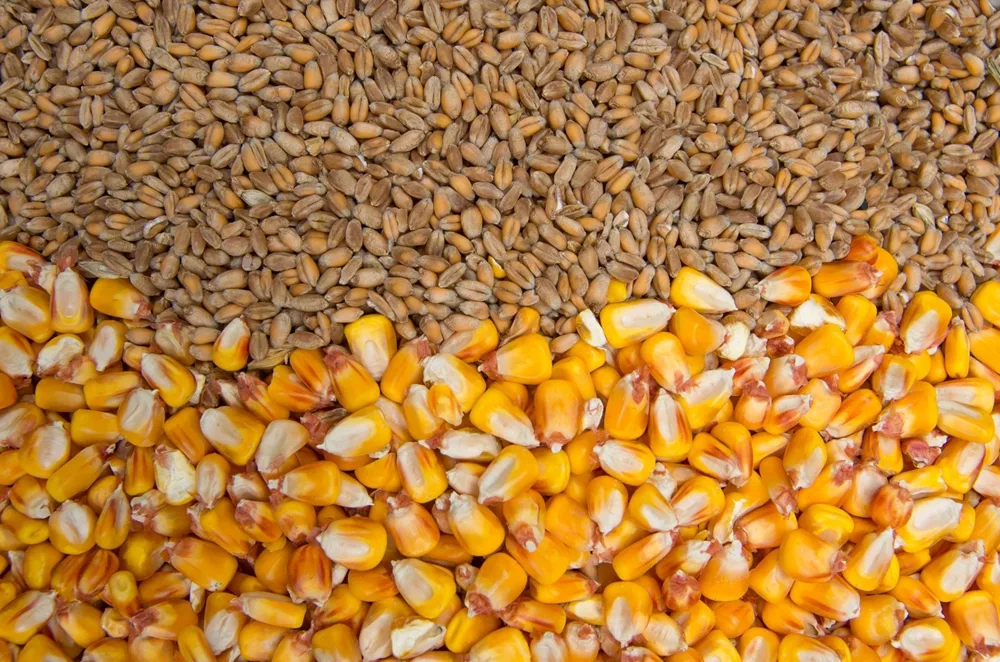
Feed and Premix
Typical materials include feed carriers, powdered minerals, vitamins, and dry feed additives. The tumbling motion helps distribute ingredients throughout the batch, making the mixer suitable for preparing dry feed blends and premixes.

Plastics and Battery Materials
Common materials include plastic resin granules, powdered additives, and selected dry battery material blends. The drum rotation mixes materials through repeated tumbling rather than high-speed mechanical agitation, but differences in particle size, density, and flowability should be evaluated to reduce segregation.
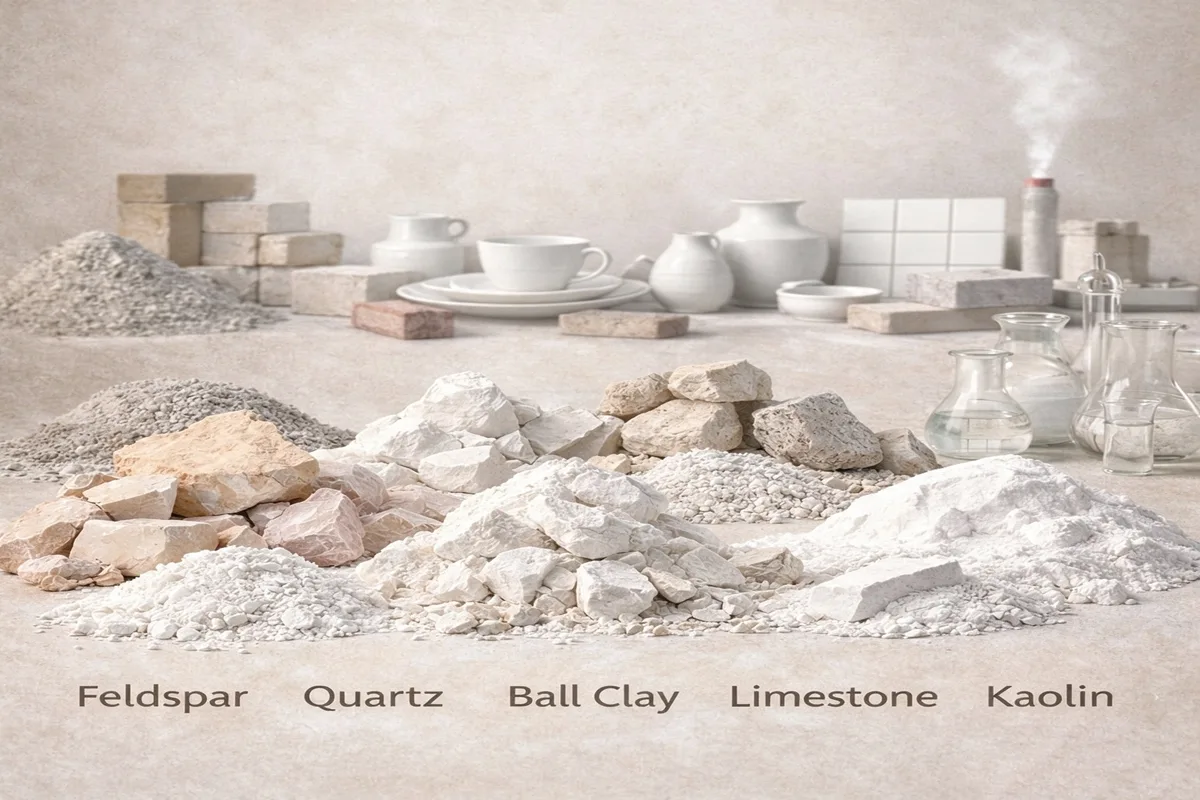
Building Materials and Minerals
Typical materials include dry cement additives, powdered pigments, mineral fillers, and selected dry mortar ingredients. The double-cone drum supports batch blending of free-flowing powders, helping distribute multiple components before they enter the next production stage.
When planning access around a rotating drum and drive, review the OSHA machine guarding requirements.
CONTACT US
Not sure your powder will blend in a rotating drum?
Send the formulation, bulk density, particle-size range, target batch weight, and acceptance criteria. Agree the sample quantity, test machine, working fill, and schedule before sending material. A trial should verify blend uniformity, discharge, and particle condition.
Choosing a Double Cone Blender Manufacturer
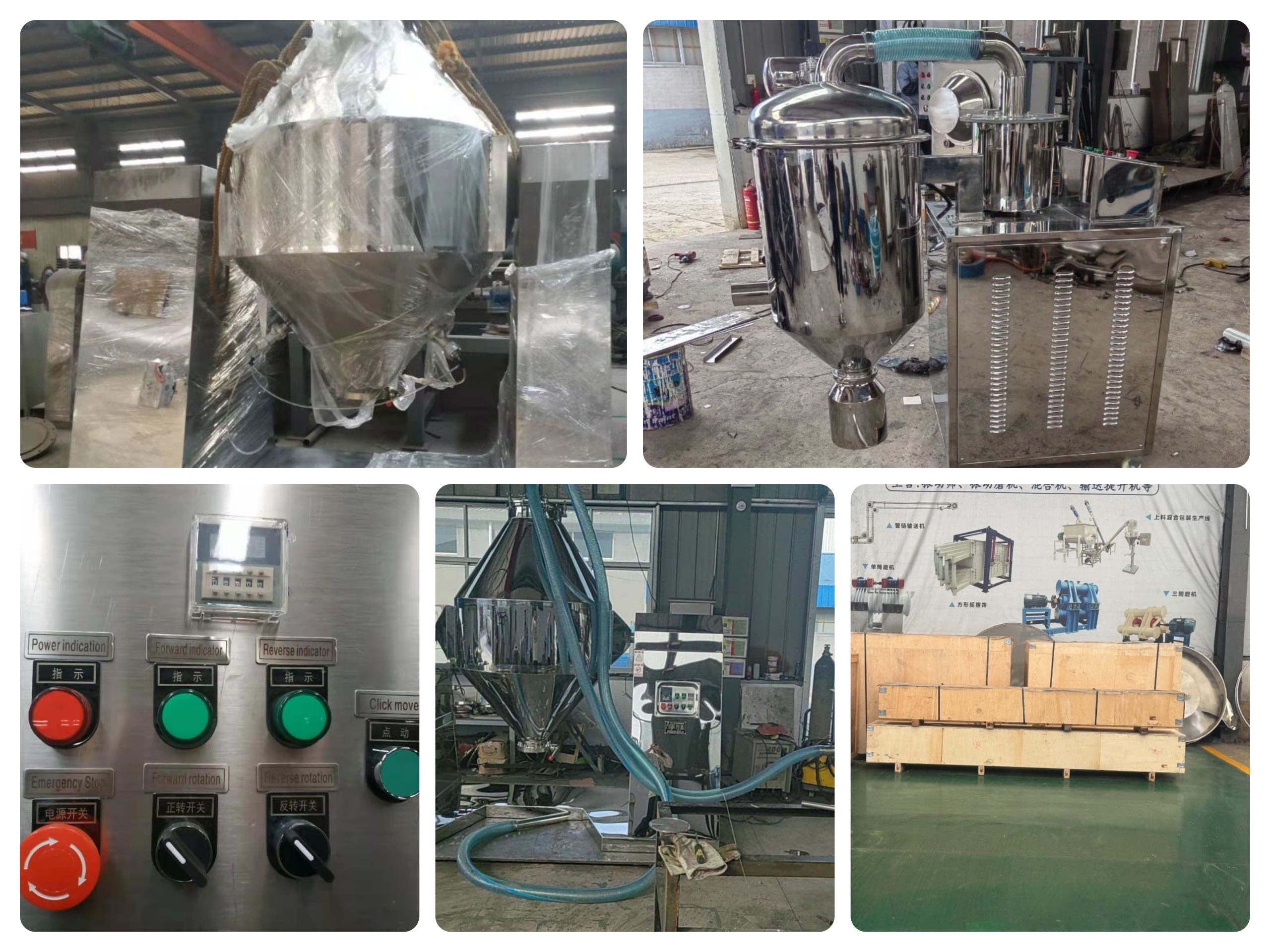
GUO FENG manufactures mixing and bulk material handling equipment, with capabilities covering equipment design, machining, fabrication, welding, assembly, and inspection. For the W series, model selection considers material properties, bulk density, batch weight, working fill, and installation space. Contact materials, surface finish, charging, discharge, and controls can be specified for the application.
When comparing double cone blender manufacturers, request an itemized proposal covering rated load and working volume, contact-material specifications, surface finish, guards and interlocks, discharge clearance, test scope, and documentation. Provide your formulation and acceptance criteria for a material trial. A mechanical run test checks machine operation; it does not establish blend uniformity for your recipe.
W-Type Double Cone Mixer FAQ
What is the double cone blender principle?
The vessel rotates around a horizontal axis, lifting the powder bed and allowing it to cascade under gravity. Repeated tumbling redistributes the particles throughout the batch. Performance depends on material flow, ingredient ratios, fill level, speed, and mixing time; trial the formulation against its uniformity criteria.
How do I select the capacity of a W-type double cone mixer?
Listed batch capacities range from 40 kg for the W-100 to 10,000 kg for the W-20000, referenced to 1.0 t/m³ and model-specific fills within 40–50%. Lower-density powders can reach the working volume before reaching the batch rating. Higher-density materials can reach the weight rating first. Check both limits, and confirm the required operating fill and material suitability.
Is a W type mixer the same as a double cone blender?
The W series on this page is a rotating double cone blender. The term W type mixer can also be used for other equipment, including horizontal mixers with internal mixing shafts. Confirm the vessel construction, drive arrangement, and approved drawing when comparing similarly named machines.
How does a double cone blender compare with a V-type mixer?
A V-type mixer uses two joined cylindrical legs, while this W-Type drum has two cones joined by a centre cylinder. Compare the selected models by working volume, batch rating, material flow, cleaning access, and installation space. A representative blend trial is needed where segregation or low-dose distribution is critical.
How long does a batch take?
Typical mixing times are 4–8 minutes for the W-100 to W-500, 6–12 minutes for the W-1000 and W-1500, 6–15 minutes for the W-2500 and W-4000, and 8–20 minutes for the W-6000 to W-20000. Total batch cycle time also includes charging and discharge. The required mixing time should be confirmed by a trial or process validation.
Can it mix wet, sticky, or heat-sensitive material?
Suitability depends on moisture, cohesion, wall adhesion, and temperature sensitivity. Sticky or smear-forming materials may not tumble freely and require evaluation. A jacket can provide heating or cooling if configured for the specified medium and conditions. Its pressure rating does not establish a pressure or vacuum rating for the product chamber. Drying requires a separately confirmed process and equipment design.
What information should I send for a double cone blender quotation?
Send the formulation, ingredient ratios, bulk densities, particle-size range, required batch mass, target uniformity, and cleaning requirements. Include charging and discharge arrangements, contact material, site power, and layout limits. Ask the proposal to identify the model, working fill, rated load, options, guards, interlocks, and agreed test scope.
Which parts wear?
Typical inspection points include the shaft seals, discharge-valve seat, port gasket, drive belt, and trunnion bearings. Inspection and replacement intervals depend on operating hours, material abrasiveness, and cleaning conditions; follow the maintenance schedule supplied with the machine.
How is it installed?
Install the frame on a level, load-bearing foundation and secure it according to the installation drawing. Check access for charging, discharge, maintenance, and lifting before positioning the machine. Installation time and delivery lead time are confirmed against the project scope and order configuration.