
In mining, aggregate processing, and coal production, materials often need to be screened into different particle sizes to meet downstream processing and production requirements. A vibrating screen is a common type of industrial screening equipment that uses mechanical vibration to move material across a screening surface and separate particles through openings of different sizes.
This article explains what a vibrating screen is, how it works, its main components, and the most common types, along with its applications in industrial production.
What Is a Vibrating Screen?
A vibrating screen is a machine that uses mechanical vibration to screen and classify bulk materials by particle size. As material moves across the screening surface, particles smaller than the screen openings pass through, while larger particles continue along the surface and leave at the discharge end. By using screens with different opening sizes, the machine can separate mixed material into several size fractions.
Unlike a stationary screen, which relies mainly on gravity, a vibrating screen uses mechanical vibration to spread and move material across the screening surface. This gives particles more opportunities to come into contact with the openings, making the equipment suitable for continuous screening of large volumes of material.

Main Functions of a Vibrating Screen
Particle size classification
Separates material into different size fractions to meet the requirements of downstream production processes.
Removal of unwanted material
Separates unwanted impurities or particles that do not meet the required specifications.
Pre-screening
Removes material that already meets the required size before crushing or other processing, reducing the load on downstream equipment.
How Does a Vibrating Screen Work?
A vibrating screen uses a vibration mechanism to generate an excitation force that keeps the screen box and screening surface in motion. Once material enters the screen, vibration moves it forward and gradually separates the material bed into layers. Particles smaller than the screen openings pass through, while larger particles remain on the surface and leave at the discharge end.
The vibrating screen working principle can be explained in four steps.

1. Generating Vibration
A vibrating motor or exciter generates a periodic excitation force through rotation, causing the screen box and screening surface to move in a set direction and pattern. Different screen types use different vibration patterns, which affect how material moves across the surface.
2. Feeding Material onto the Screening Surface
Material enters through the feed inlet. Continuous vibration moves it forward and spreads it across the screening surface, allowing particles to come into contact with the screen openings.
3. Material Stratification and Passage through the Screen
As material moves across the screen, particles gradually form layers according to size. Smaller particles move toward the bottom of the material bed and pass through openings large enough to accommodate them. Larger particles remain on the surface and continue moving forward.
4. Discharging Different Size Fractions
Particles that pass through the screen fall into a collection area below and leave through the corresponding outlet. Larger particles that do not pass through are discharged from the end of the screening surface. In a multi-deck vibrating screen, each deck uses a different opening size to separate the material into several size fractions.
The main components include the screen box, screen mesh or panels, vibration mechanism, isolation springs, and support frame. These components work together to keep the machine operating and separate material by size.

| Main Component | Function |
|---|---|
| Screen Box | The screen box forms the main body of the machine and supports the screen mesh and related components. During operation, it vibrates together with the screening surface to move material across the screen. |
| Screen Mesh and Screen Panels | The screen mesh or screen panels are the screening components that come into direct contact with the material. Their opening size determines the particle size at which separation takes place. Different opening sizes, materials, and screen designs can be selected according to the material properties and screening requirements. |
| Vibrating Motor or Exciter | The vibrating motor or exciter generates the excitation force needed to move the screen box and screening surface. The drive arrangement and method of generating vibration vary between screen types. |
| Vibration Isolation Springs | Isolation springs are usually installed between the screen box and the supporting structure. They support the vibrating assembly, cushion its movement, and reduce the vibration transmitted to the equipment foundation. |
| Support Frame | The support frame carries the screen box and related components, providing structural stability during operation. |
| Feed Inlet and Discharge Outlets | The feed inlet directs material onto the screening surface, while the outlets discharge the screened material. Multi-deck screens usually have several discharge paths so that different size fractions can be collected separately. |
What Are the Common Types of Vibrating Screens?
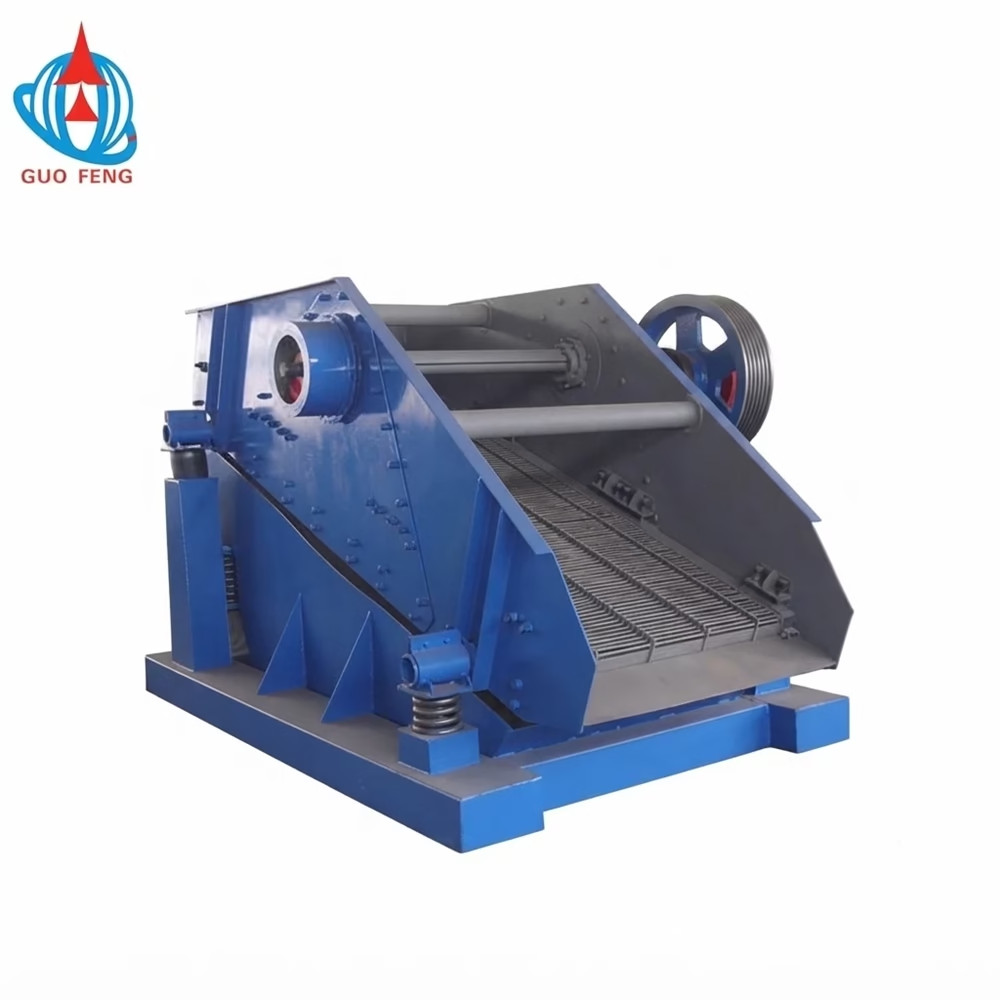
Circular vibrating screen
The screening surface moves in a circular motion. This type is commonly used to classify ore, aggregates, and coal by particle size.
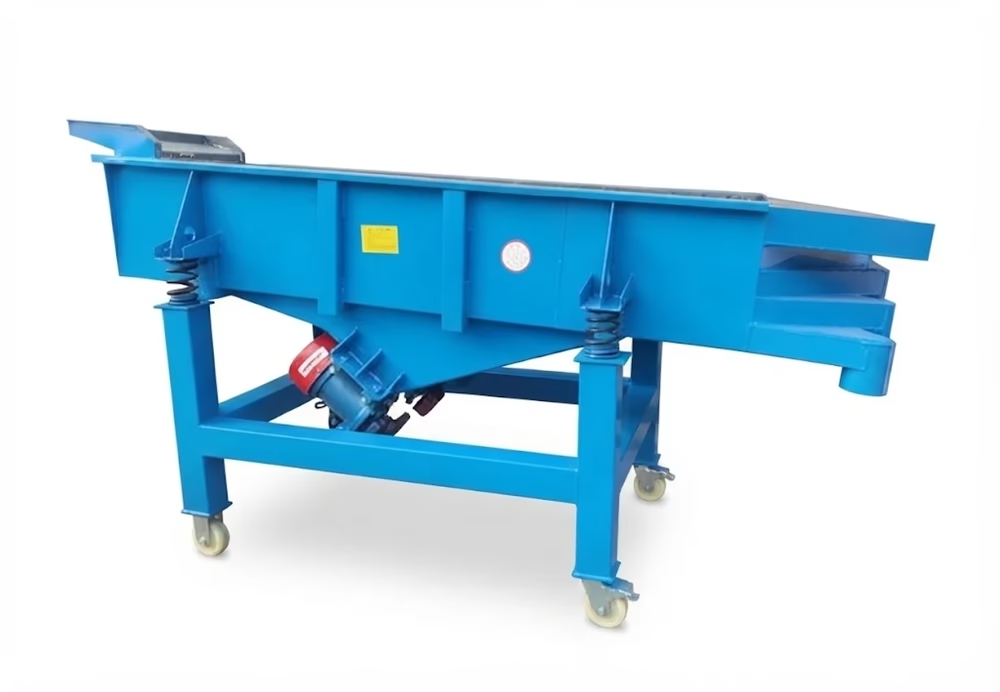
Linear vibrating screen
The screening surface moves in a straight-line motion. It is suitable for continuous screening of ore, coal, sand, gravel, and industrial granular materials.

Elliptical vibrating screen
The screening surface follows an elliptical path. This type is commonly used to screen bulk materials such as ore and coal.

High-frequency vibrating screen
Uses a higher vibration frequency and a smaller amplitude, primarily for screening and classifying fine mineral particles.
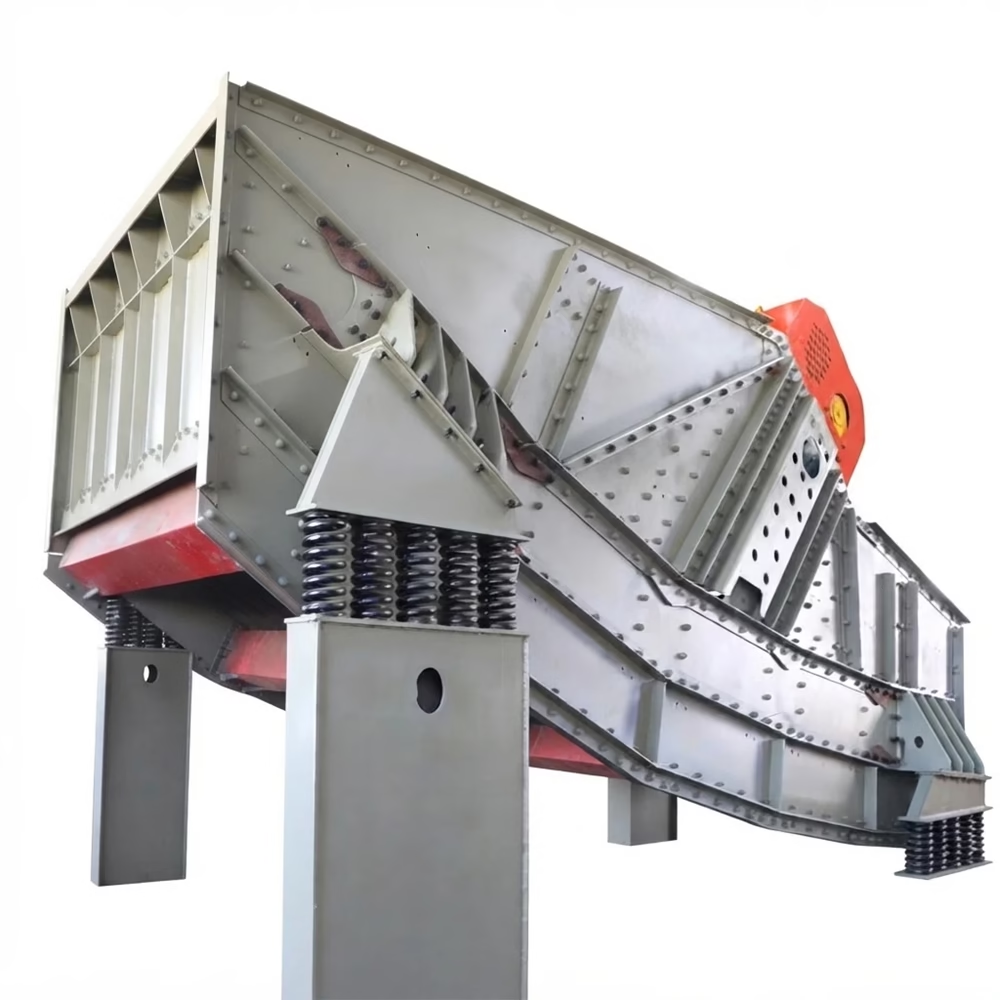
Banana screen
Uses several screening sections set at different angles. It is suitable for high-capacity screening of materials such as ore and coal.
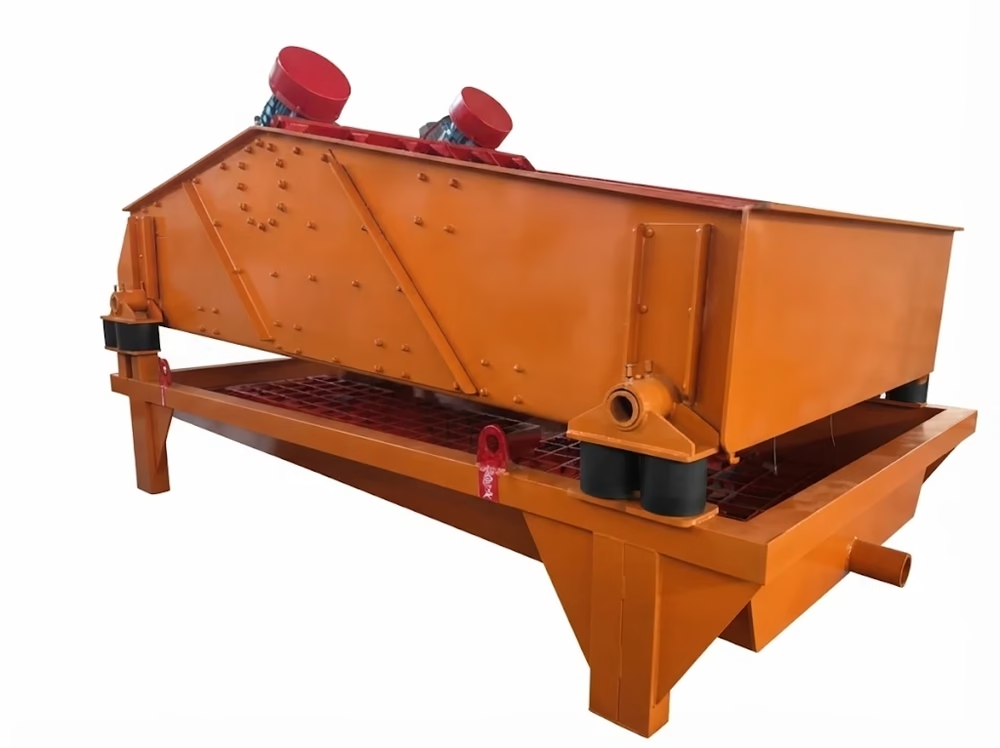
Dewatering screen
Uses vibration and drainage to reduce the moisture content of wet materials such as sand, aggregates, coal, and minerals.
What Materials Can a Vibrating Screen Process?
Vibrating screens are widely used in mining, aggregate production, coal processing, building materials, and metallurgy for screening, size classification, and dewatering. Screen media and machine configurations can be selected according to particle size, moisture content, and the required screening results.
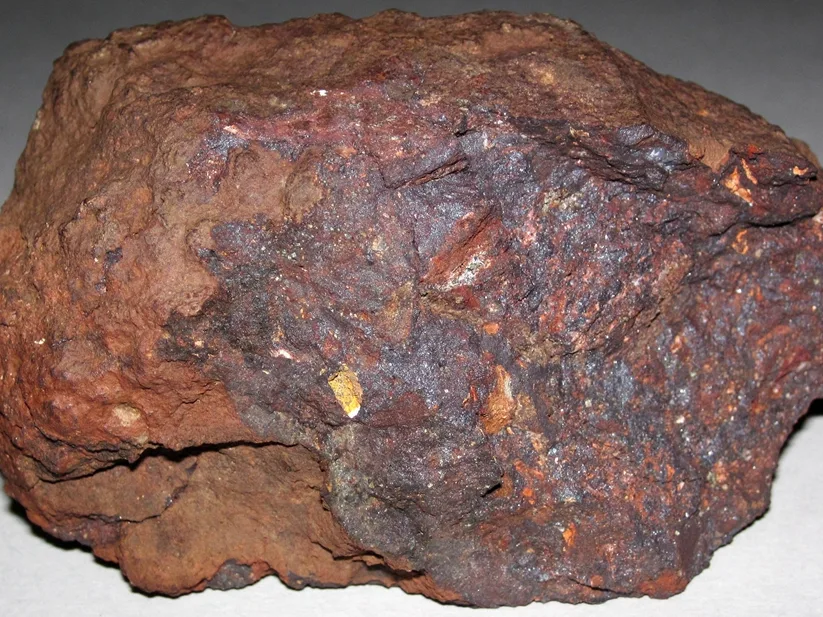
1. Ores and Minerals
Iron ore, copper ore, gold ore, and molybdenum ore require screening at different processing stages. Vibrating screens are mainly used for size classification after crushing and for separating different size fractions during mineral processing.
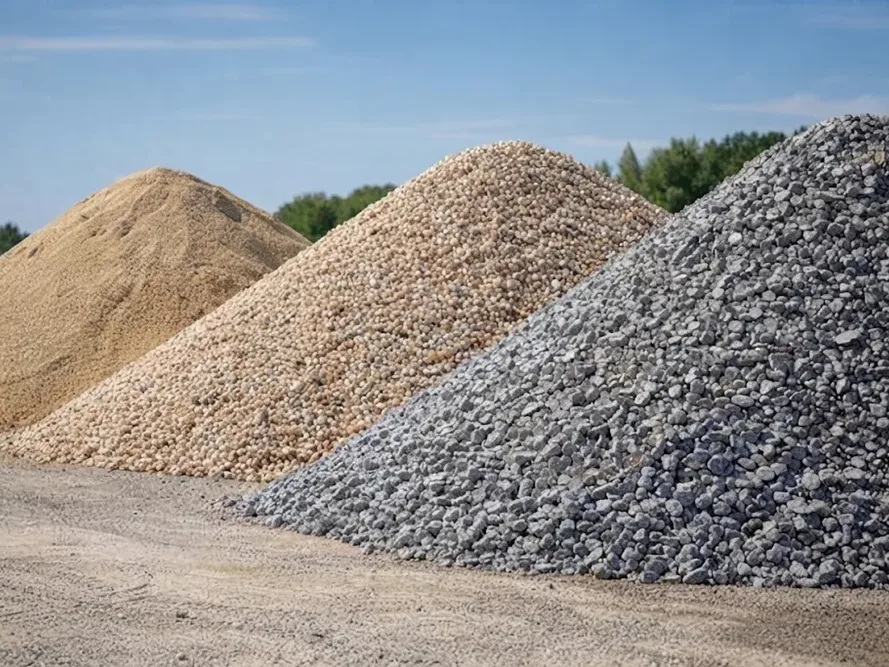
2. Sand, Gravel, and Aggregates
Natural sand, manufactured sand, crushed stone, and limestone are commonly separated into different size grades. Vibrating screens are widely used in aggregate production lines for aggregate screening and finished-product sizing, helping materials meet the requirements of concrete production, road construction, and other projects.

3. Coal
Raw coal, lump coal, and coal fines need to be screened according to particle size requirements. Vibrating screens are commonly used for coal sizing, coal preparation, and material screening. They can also be used as part of a dewatering process to reduce coal moisture content.

4. Construction and Industrial Raw Materials
Gypsum, limestone, clinker, and other industrial raw materials often require size classification and impurity removal during production to meet the material specifications needed for further processing.
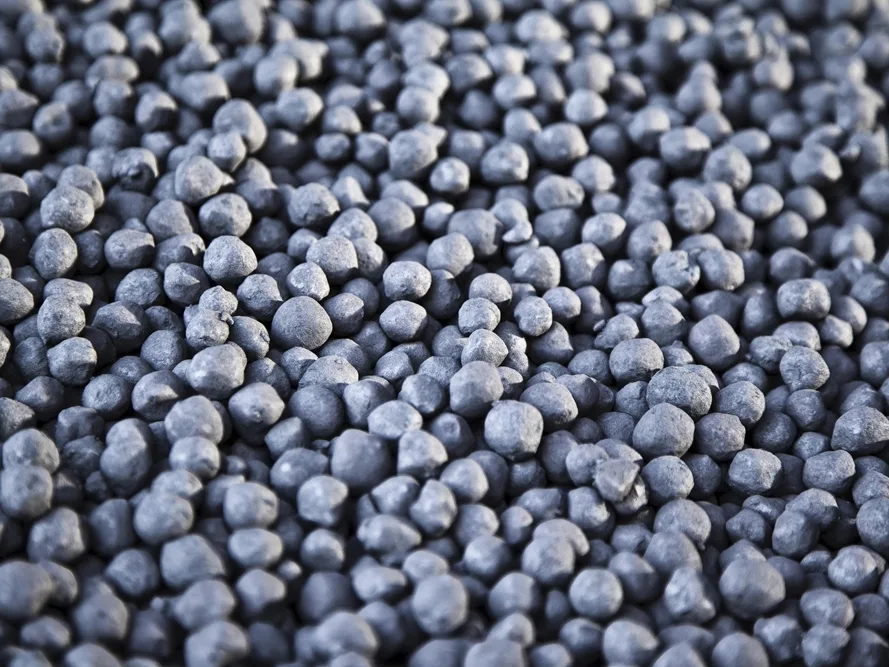
5. Metals and Metallurgical Materials
Sinter, iron ore pellets, slag, and other metallurgical feed materials require screening to control particle size. Vibrating screens are commonly used to screen and classify raw materials in metallurgical production.
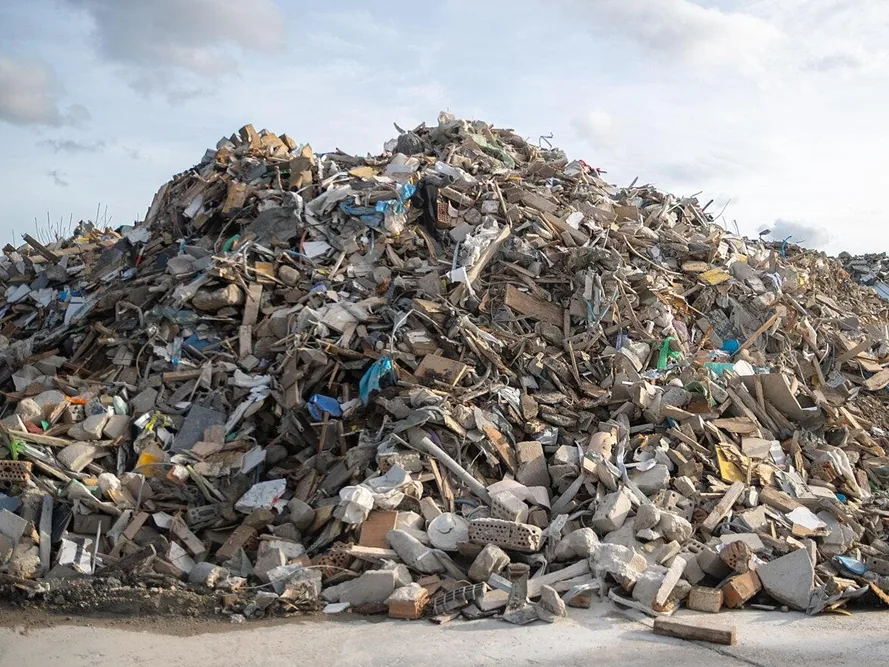
6. Construction Waste and Recycled Aggregates
Crushed waste concrete, bricks, and recycled aggregates require further screening after crushing. A vibrating screen separates these recycled materials into different size fractions for subsequent processing and use.
What Affects Vibrating Screen Performance and How Can It Be Improved?
Understanding what a vibrating screen is also means knowing what affects its performance. Screen specifications, vibration settings, feeding conditions, and material properties all influence screening results. They affect how material moves across the screen, how particles pass through the openings, and the resulting screening efficiency. When performance is unsatisfactory, identify the cause under the actual operating conditions before making adjustments.
Screen Opening Size and Screen Media
The screen opening size determines the separation size. Openings that are too small may restrict material passage, while openings that are too large may allow unwanted particles into the undersize product. The open area, material, and construction of the screen media also affect screening capacity.
How to improve it: Select the opening size according to the target product size, and choose screen media suited to the material being processed. Inspect the screen regularly for blockage, damage, and wear, and clean or replace it as needed.
Vibration Frequency
Vibration frequency is the number of vibration cycles the screening surface completes per second, usually expressed in hertz (Hz). It affects material movement and the opportunities particles have to contact the screen openings. An unsuitable frequency can reduce material transport and screening performance.
How to improve it: Determine the appropriate frequency according to particle size, machine design, and screening requirements. Keep adjustments within the equipment’s design parameters; increasing frequency alone does not necessarily improve screening efficiency.
Vibration Amplitude
Vibration amplitude is the maximum displacement of the screening surface from its equilibrium position. It affects how high material is thrown and how it moves across the screen. If the amplitude is too small, material may not spread sufficiently. If it is too large, operating loads and component wear may increase.
How to improve it: Check the condition of the vibration mechanism and related components. Set the amplitude according to the equipment’s design requirements, and keep it within the permitted operating range.
Screen Inclination
Screen inclination affects material travel speed and the time material spends on the screening surface. A steeper angle generally moves material faster but may reduce screening time. A shallower angle may increase retention time while reducing the conveying speed.
How to improve it: Select an appropriate inclination for the material properties and screening requirements, balancing material movement with sufficient time for screening.
Feed Rate and Material Distribution
An excessive feed rate can create a material bed that is too thick, preventing fine particles from reaching the screen openings. Uneven feeding can overload parts of the screening surface and reduce overall performance.
How to improve it: Maintain a continuous, evenly distributed feed. Adjust the feeding equipment and feed position to prevent material from accumulating on one side of the screen.
Material Properties
Particle size distribution, moisture content, stickiness, and particle shape all affect screening performance. For example, wet or sticky material may adhere to the screen and block the openings. Irregular particle shapes can also affect the ability of particles to pass through the screen.
How to improve it: Select screen media and a screening method suited to the material’s moisture content, stickiness, and particle characteristics. For fine powders prone to screen blinding, cleaning devices such as bouncing balls or ultrasonic assistance may be used where the equipment design allows.
What Should You Consider When Buying a Vibrating Screen?
Knowing what a vibrating screen is and how it works is only the first step in choosing suitable equipment. Material properties, screening requirements, and installation conditions are equally important. Confirming these details before purchasing can help reduce selection errors and production problems.
1. Is the Machine Suitable for Your Material?
Materials vary in particle size, moisture content, stickiness, and abrasiveness, so they place different demands on the screen media and machine design. Wet materials, for example, may block screen openings, while highly abrasive ores can accelerate screen wear.
Confirm before purchasing: Material type, particle size range, moisture content, stickiness, and abrasiveness. Provide material photos and arrange a screening test if necessary.
2. What Product Sizes Do You Need?
Feed size and target product sizes directly affect the screen opening sizes and screen configuration. If several product grades are required, the number of screen decks and discharge paths must also be considered.
Confirm before purchasing: Maximum feed size, target separation sizes, and the product grades you need.
For example, if the material needs to be separated into three grades of 0–5 mm, 5–10 mm, and 10–20 mm, explain these requirements to the manufacturer in advance.
3. What Throughput Is Required?
Actual screening capacity depends on more than the dimensions of the screening surface. It is also affected by particle size distribution, moisture content, screen opening size, and feeding conditions.For additional guidance on screen sizing and equipment selection, see McLanahan’s guide to sizing and selecting vibrating screens for aggregate applications.
Confirm before purchasing: Required throughput in metric tonnes per hour (t/h), continuous operating hours, and actual feeding conditions. Do not assess suitability solely on the machine’s stated maximum capacity.
4. Are the Screen Material and Design Appropriate?
Screen media directly affect screening performance and service life. The open area, wear resistance, and screen construction should suit the material being processed.
Confirm before purchasing: Opening size, screen material, open area, replacement method, and availability of wear parts.
5. Can the Machine Be Integrated into the Existing Production Line?
Vibrating screens usually operate alongside feeders, crushers, and conveyors. Incompatible feed positions, discharge directions, or machine dimensions may increase the cost of site modifications.
Confirm before purchasing: Available installation space, equipment layout drawings, feed and discharge directions, and connections to upstream and downstream equipment.
6. Is Maintenance Convenient?
Components such as screen media, springs, and bearings may wear during long-term operation. Ease of maintenance and timely spare parts supply both affect the machine’s continued operation.
Confirm before purchasing: Wear-part replacement procedures, spare parts lead times, routine maintenance requirements, and after-sales technical support.
What Information Should You Provide to a Vibrating Screen Manufacturer?
Prepare the following information before requesting a quotation so the manufacturer can assess the equipment selection and screening arrangement more accurately.
| Information Required | Details to Provide |
|---|---|
| Material type | Material name and site photos |
| Feed size | Maximum particle size and particle size range |
| Product requirements | Target particle sizes and finished-product specifications |
| Required capacity | Throughput in metric tonnes per hour (t/h) |
| Material properties | Moisture content, stickiness, and abrasiveness |
| Screening requirements | Dry or wet screening and the number of screen decks |
| Installation conditions | Available site space and production line layout |
If you are unsure which vibrating screen to choose, share your material details, screening requirements, and required throughput with us. GUOFENG can provide equipment selection advice based on your operating conditions and help you identify a suitable screening solution.
FAQ
Can a Vibrating Screen Separate Material into Several Size Fractions?
Yes. A multi-deck vibrating screen uses different opening sizes on each deck to separate mixed material into several size fractions. The required product grades determine the screen openings, number of decks, and discharge arrangement.
Does a Higher Vibration Frequency Always Improve Screening Efficiency?
No. The appropriate frequency depends on particle size, machine design, and screening requirements. An unsuitable frequency can reduce material transport and screening performance. Keep adjustments within the equipment’s design parameters rather than increasing frequency alone.
Why Do Vibrating Screen Openings Become Blocked?
Wet or sticky material may adhere to the screen and block its openings. Particle size distribution and irregular particle shapes can also affect passage through the screen. Check the material properties, screen condition, feed rate, and suitability of the screen media before making adjustments.
What Determines the Actual Capacity of a Vibrating Screen?
Actual capacity depends on the screening surface dimensions, particle size distribution, moisture content, opening size, and feeding conditions. Specify the required throughput in metric tonnes per hour (t/h) and actual operating conditions rather than relying solely on the machine’s stated maximum capacity.
What Information Is Needed to Select a Vibrating Screen?
Provide the material type, maximum feed size, target product sizes, required throughput, moisture content, stickiness, and abrasiveness. Also confirm dry or wet screening, the number of screen decks, installation space, and production line layout. Material photos and a screening test may help with equipment selection.
Need help with a similar request?
Share your product requirements, timeline and cooperation goals. We can help clarify the next step.